





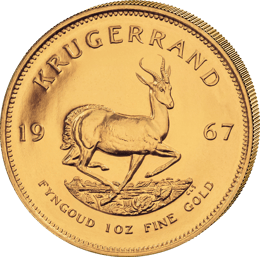
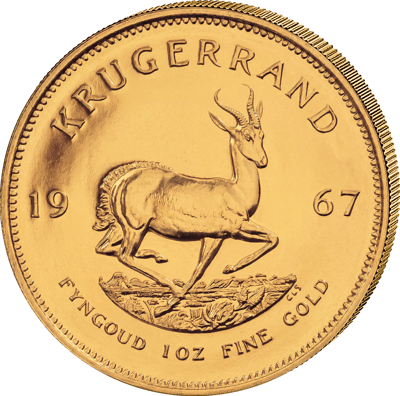

1 Ounce Gold Krugerrand 1967 PL (Mintage: 10,000 | Case | incl. SA-Mint Paper Bag)
- First year of issue: Start of a legend
- Untouched: Decades in the vault
- President Kruger: and the Springbok
- First year of issueFrom the year the series first began
- UntouchedStored in a Swiss vault right after issue
- President KrugerPresident of the South African Republic from 1883 to 1902



- First year of issue: Start of a legend
- Untouched: Decades in the vault
- President Kruger: and the Springbok
 Price alert
 Share

South African Mint · Year 1967
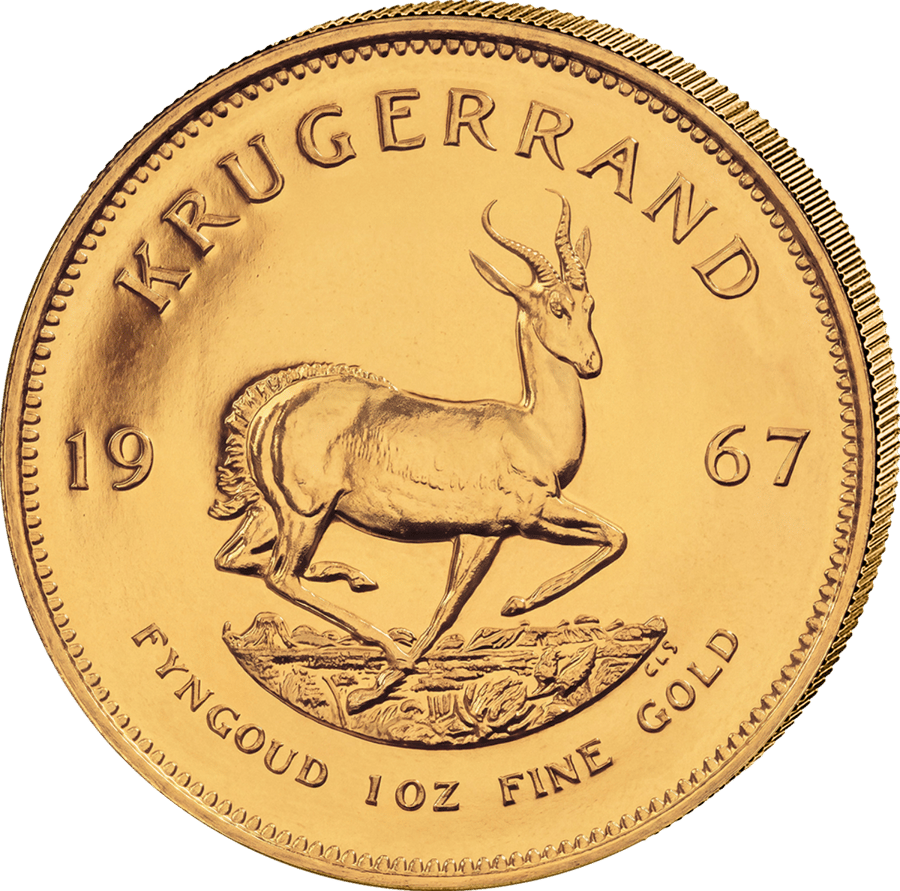
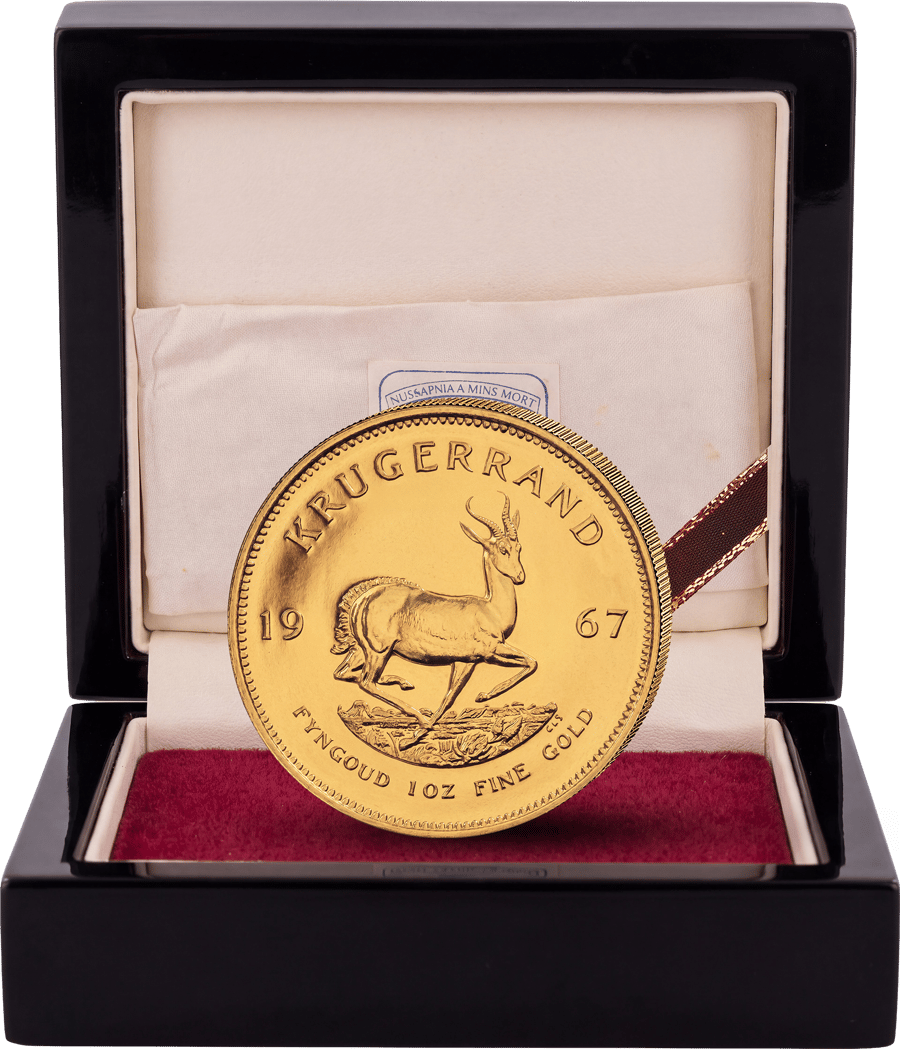
Krugerrand 1967 with paper sleeve: 1 ounce of gold from the year of the first leap.
On 3 July 1967, the South African Mint struck the first Krugerrand, 1 ounce of gold at 22 carats. This piece from the first year lies in a case and in the mint’s paper sleeve.
On 3 July 1967, the South African Mint struck the first Krugerrand, 1 ounce of gold at 22 carats. This piece from the first year lies in a case and in the mint’s paper sleeve.
The 1967 issue
The first year was struck by the South African Mint.
It was commissioned by the South African Reserve Bank and the Chamber of Mines.
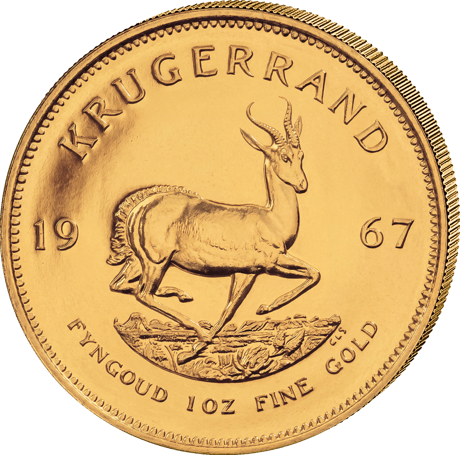
Every year since has carried the same design, only the date is new. On this piece, the digits 19 and 67 stand to the left and right of the springbok.
The mint’s sleeve
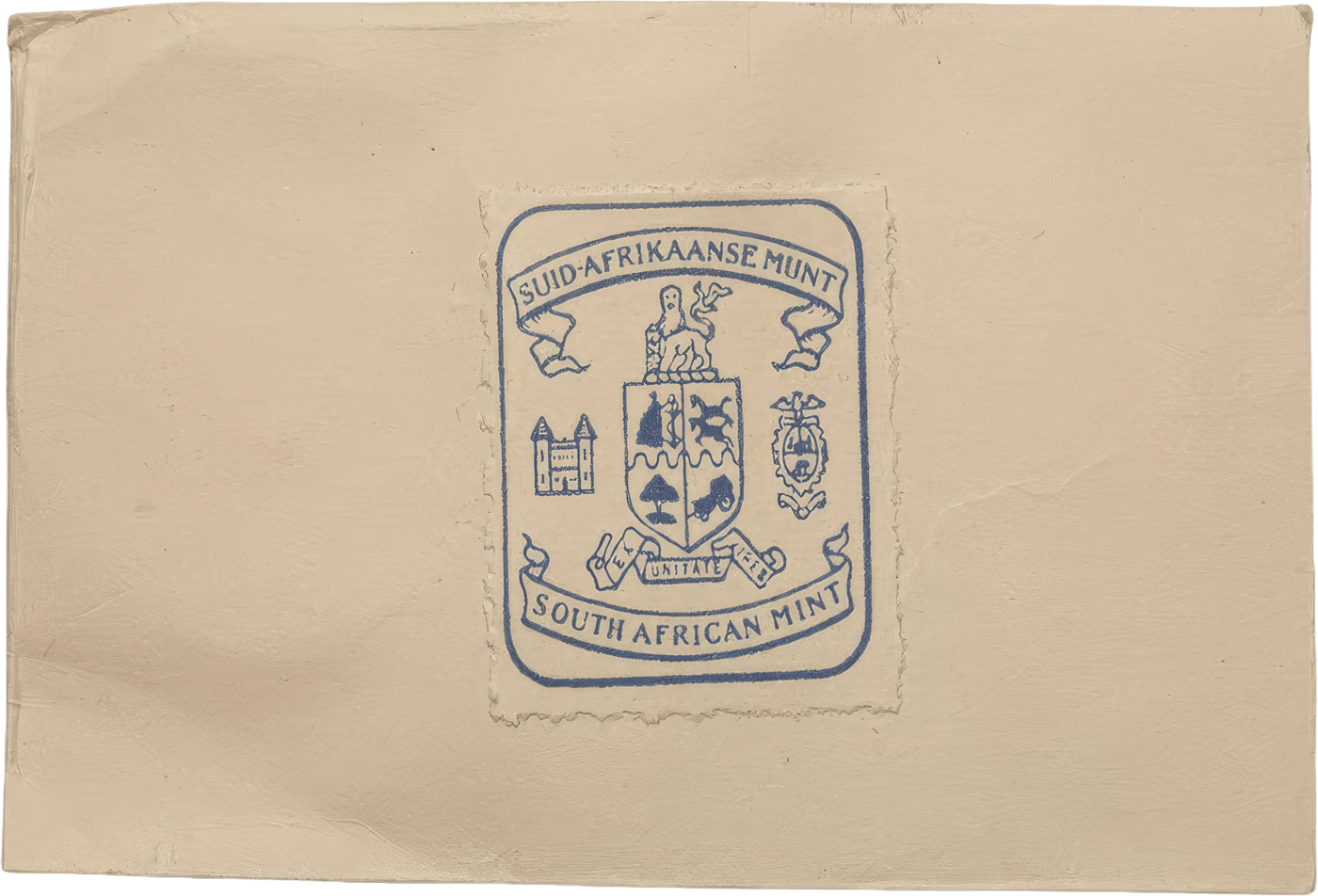
A stamp on paper, in Afrikaans and in English.
This piece comes with the paper sleeve of the South African Mint. Its blue stamp names the mint twice: in Afrikaans at the top, in English at the bottom.
Krugerrand · 1967 Issue
The leap that began in 1967.
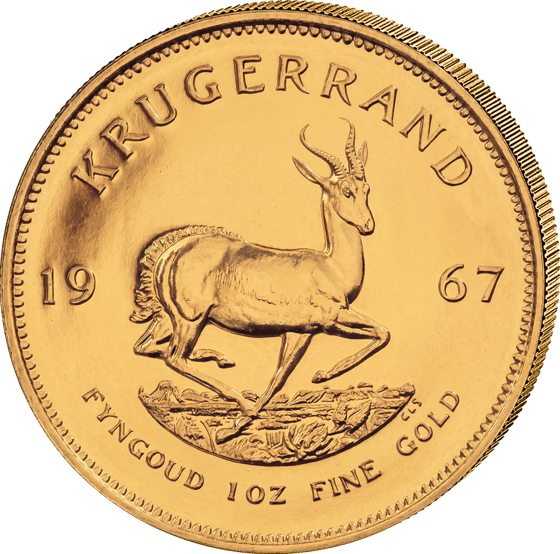
You are looking at the side with the springbok.
Gold for the hands of ordinary people.
In the late 1960s, around three quarters of the western world’s gold came from South Africa. The Chamber of Mines wanted ordinary people, too, to be able to own gold.
With the Krugerrand, a new kind of coin came into being for this purpose: exactly one ounce of fine gold, with no face value struck on it. Its value was meant to come directly from the gold it contains.
6,012,293
Krugerrand bullion coins were issued in 1978 alone, 187 tonnes of gold in all.
A leap through history
1886
Gold on the Witwatersrand
On the Witwatersrand, the ridge of white water, rich gold deposits are discovered. South Africa’s currency is also named after it: the rand.
1947
The springbok
The sculptor Coert Steynberg draws his springbok in 1946 and 1947. It first appears in 1947 on the 5-shilling coin marking the visit of the British royal family.
1967
The first Krugerrand
On 3 July, commissioned by the South African Reserve Bank and the Chamber of Mines, the South African Mint strikes the first Krugerrand.
1980
3 new sizes
The half ounce, the quarter ounce and the tenth ounce are added so that smaller sums can also be invested in gold.
2017
Fifty years
For the anniversary, the first silver Krugerrand appears, along with the 1/20 and 1/50 ounce in gold. For these coins, the designers go back to the original wax models and designs.
The motif
The springbok and the president
- The springbok
- South Africa’s national animal in mid-leap. The springbok owes its name to its characteristic leaps. It was designed by the sculptor Coert Steynberg.
- The aloe
- The motif includes an Aloe claviflora, one of South Africa’s best-known aloes. It grows in the dry interior of the country, where the springbok is also at home.
- Fyngoud
- Below the springbok is the fine gold content, framed by FYNGOUD in Afrikaans and FINE GOLD in English. Fyngoud means fine gold.
- Paul Kruger
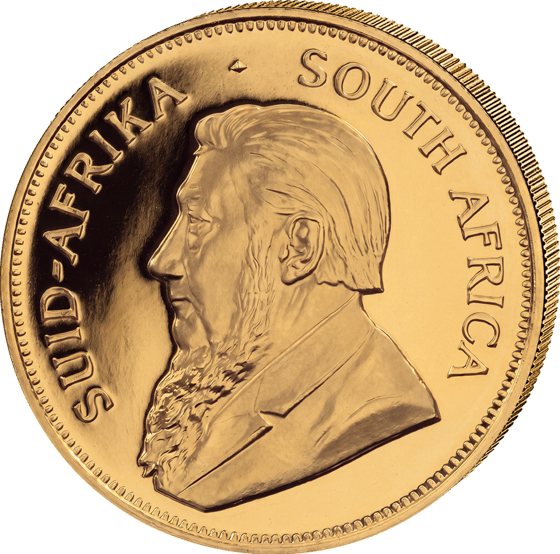
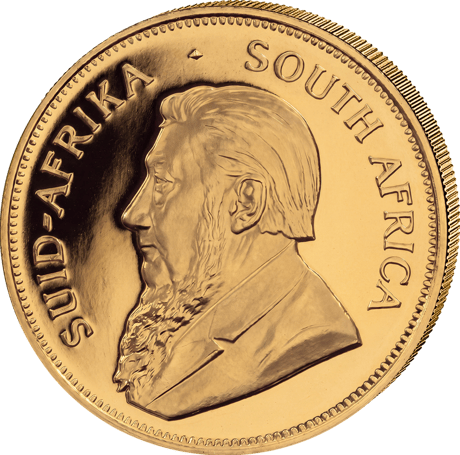
- The other side shows Paul Kruger in profile. In 1883 he became president of the South African Republic, also known as the Transvaal. The portrait was created by the die engraver Otto Schultz. According to the South African Mint, it goes back to the Kruger half-crown of 1892.
- The name
- Krugerrand combines the name Kruger with the rand, South Africa’s currency.
The alloy
Eleven parts gold, one part copper
The Krugerrand is made of 22-carat gold: eleven twelfths fine gold and one twelfth copper. The copper makes the coin harder and more resistant to scratches. It also gives the coin its warm, reddish sheen.
Every coin contains its full weight in fine gold, and the copper is added on top. That is why the one-ounce coin weighs 33.93 grams and yet contains exactly one ounce of fine gold.
The same leap since 1967.
This is where it began.
By its 50th anniversary in 2017, more than 60 million Krugerrands had been sold. The 1967 issue is part of this story, and the story goes on, in your hand and perhaps one day in the hand of someone you pass it on to.
31.1 g fine gold · 916.67/1,000
· Prooflike · Case
Issuing country: South Africa. The South African Mint is a wholly owned subsidiary of the South African Reserve Bank.
The 1 oz Gold Krugerrand 1967 PL: A Rarity with Incredible Value Appreciation Potential
- Limited: Low mintage of only 10,000 pieces worldwide
- Growth opportunities: Higher value appreciation potential due to limited mintage
- Very rare collector's coin / rarity
- Special feature: Most popular gold bullion coin in the world
- Investment goal: Inflation hedge, wealth preservation and crisis protection
- Design: The obverse features Paul Kruger, who was President of the South African Republic from 1883-1902. The reverse shows South Africa's national animal, the springbok.
- Named after: Paul Kruger and South Africa's legal tender since 1961, the Rand
- Material / Fineness: The Krugerrand is made of gold with a fineness of 916.67/1,000. The remaining portion consists of copper, which gives the coin its characteristic reddish-gold color and makes it more durable.
- Manufacturer: The coin is produced by the renowned South African Mint in South Africa.
- Country of origin: South Africa since 1967
The 1 oz gold Krugerrand coin from 1967 is a genuine collector's item and an absolute rarity. With a strictly limited mintage of only 10,000 pieces worldwide, this coin offers enormous value appreciation potential. This gold coin is not only a symbol of stability and security, but also a valuable collector's item with history.
A Piece of History in Your Hands
The gold Krugerrand coin was first minted in 1967 and is named after former South African President Paul Kruger and the "Rand" region, where gold was first discovered. It is the most well-known and oldest investment gold coin in the world and has no face value stamped on it, but is official legal tender in South Africa.
The coin features a portrait of Paul Kruger and a springbok, a species of antelope. The coin's key characteristics and origin are embossed in South Africa's national language and in English.
Excellent Condition and High-Quality Presentation
The gold Krugerrand coins are in pristine mint condition, having been securely stored in a Swiss vault for decades directly after issuance. Delivery includes a matching coin capsule and an elegant wooden case, as well as the original "SA Mint paper pouch" - only the 1967 first-strike coins were delivered to the first investors at the time in such an "SA Mint paper pouch".
An Investment with Added Value
Gold has been a stable and proven store of value for over 6,000 years. It has never had a value of zero, because it possesses intrinsic value. It protects against loss of purchasing power and serves as a hedge against inflation and currency risks. Gold is tradable worldwide and can be used as a medium of exchange. It offers protection against political and economic crises and can serve as long-term retirement provision, passing on wealth from generation to generation.
The 1 oz Gold Krugerrand 1967 PL is an excellent choice for collectors and investors who appreciate the beauty and historical value of this coin. With its strict limitation and high value appreciation potential, it is a worthwhile addition to any collection or investment portfolio.
Conclusion
The 1 oz Gold Krugerrand 1967 PL is more than just a coin. It is a piece of history, a symbol of stability and security, and a worthwhile investment with high value appreciation potential. With its strict limitation and excellent condition, it is a genuine rarity that should not be missing from any collection.
Product image may differ from the actual product.
 ManufacturerSouth African MintState mint · South AfricaAll products
