





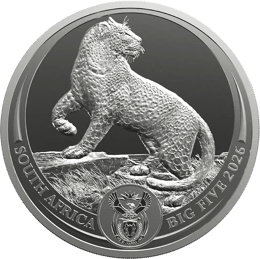


1 kg Silver Big Five III Leopard 2026 (Mintage: 100)
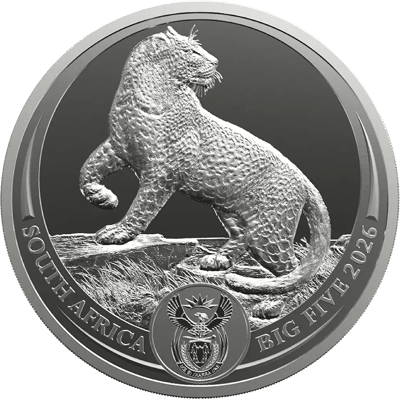












- Design art: stalking leopard
- Minting ended: never expandable again
- With certificate: capsuled in case
- Design artFinely detailed rosette fur and an engraved beetle
- Minting endedStrictly limited worldwide across all markets combined
- With certificateAuthenticity proven, minted by the South African Mint
 Price alert
  Share
Share
Big Five · South Africa 2026
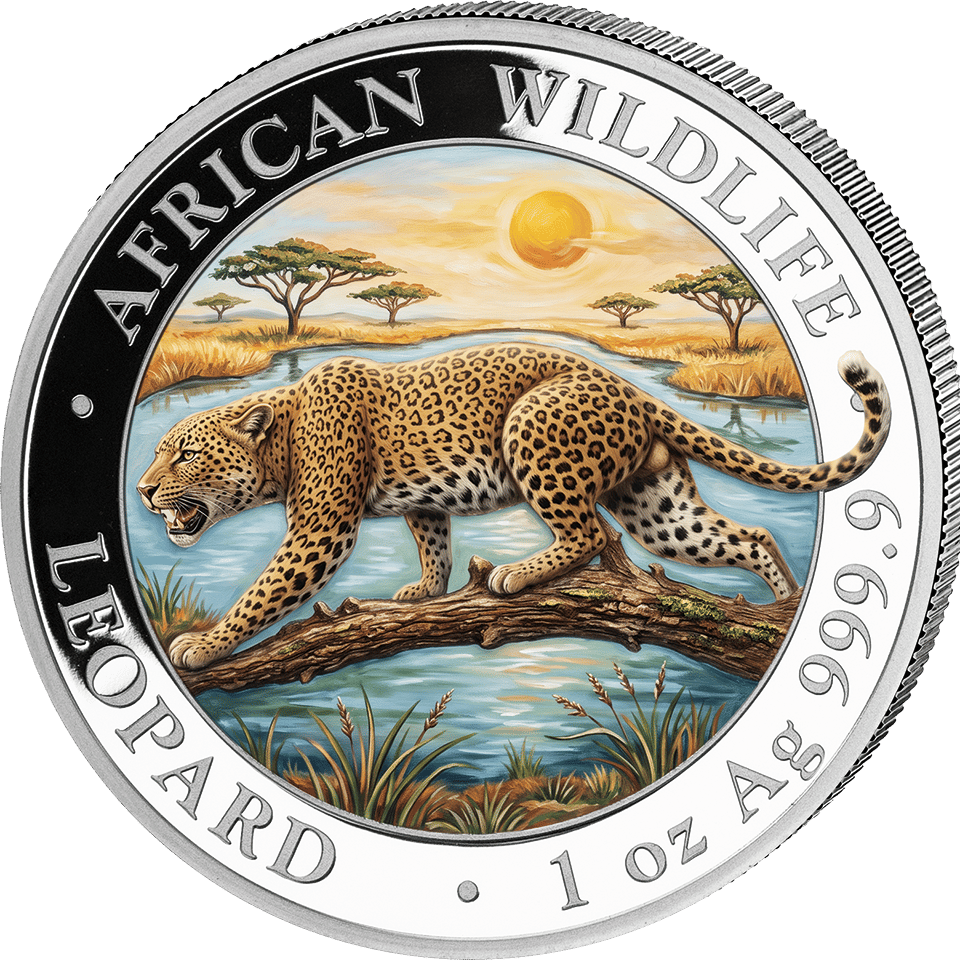
Rosette and spot, two coats for two worlds.

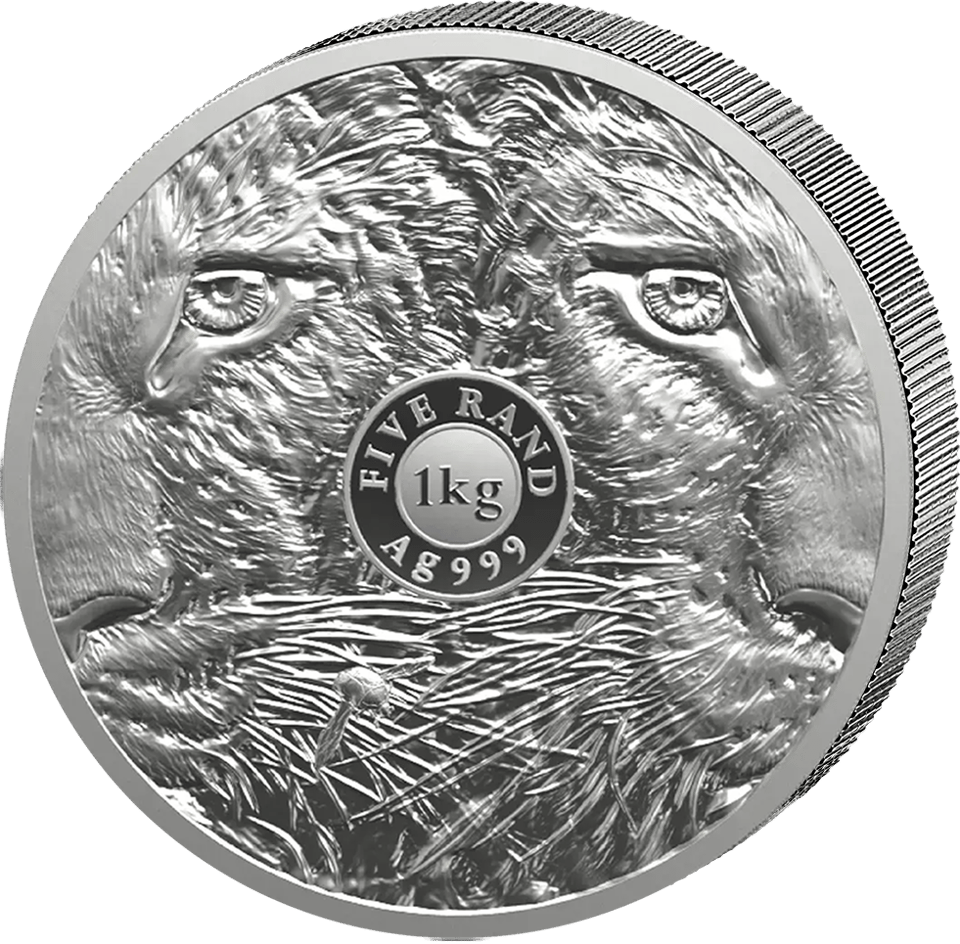
Big Five Leopard 2026, 1 kg silver, motif side
The leopard’s coat suits its life in trees, in the forest and at night. Among the Big Five, the leopard is known as the elusive one.
The leopard
From the desert to the rainforest
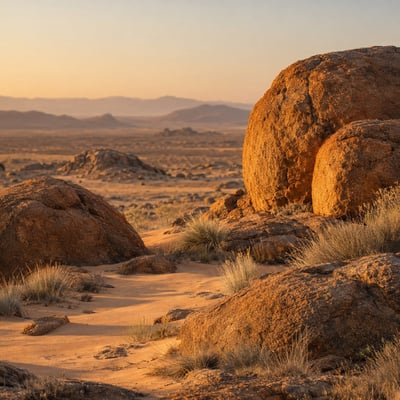 Desert
 Mountain forest
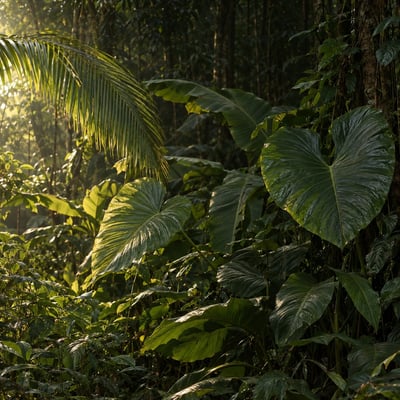 Rainforest
No other big cat is as widespread: leopards live in some 62 countries across Africa and Eurasia, in deserts, savannas, mountains and rainforests.
They prefer rocky ground with dense bush and riverine forest. The leopard climbs well, spends much of its time in trees and is mostly active at night, as a loner.
Its coat carries dark, irregular spots, the rosettes; the base colour ranges from pale yellow in warm, dry regions to reddish orange in dense forests. Instead of purring, it calls with a rough, rasping sound.

The cheetah
The only one of its genus
Its genus, Acinonyx, has no other living member today. The cheetah needs wide, open land and is mostly active by day, unlike many other cats.
Its coat carries solid, round or oval black spots from 1.9 to 3.8 centimetres; only the throat and belly stay white. The tail ends in four to six black rings.
Cheetahs do not roar; their most common call is a chirp. Females live alone, while males often join up in groups.
Why two patterns
The coat often suits where the cat lives
Rosette
For trees, forest and night.
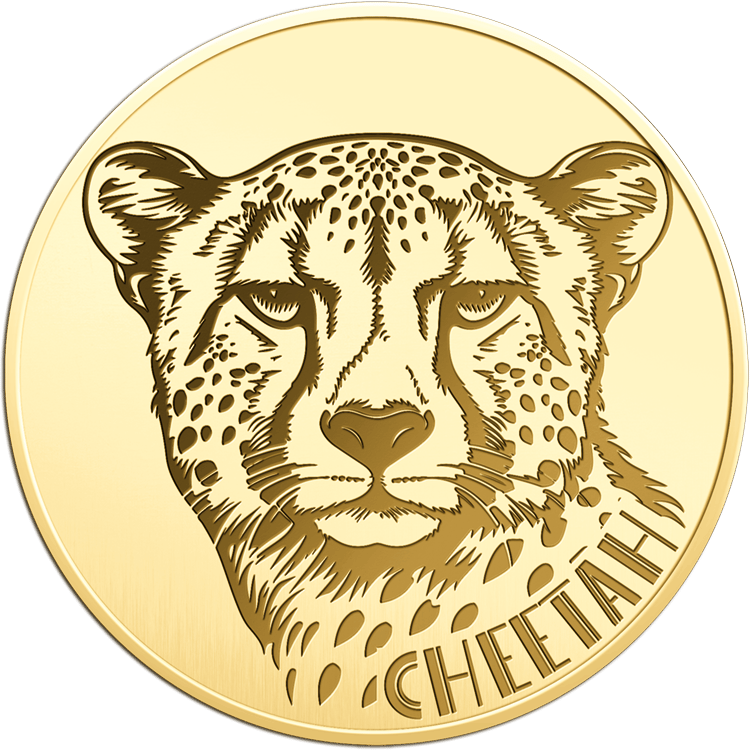
Spot
Black, without a ring.
A study of 35 cat species shows that whether a coat is patterned is linked to the habitat. How intricate and irregular the pattern is also relates to life in trees and to activity at night.
Over the course of evolution, such camouflage adapts comparatively quickly to a way of life. In the grey grass where cheetahs often live, their spots can take up the shadows of the blades and let the animals merge with their surroundings.
Allen et al. 2011, Proceedings of the Royal Society B
Rosette
For trees, forest and night.
Spot
Black, without a ring.
Allen et al. 2011, Proceedings of the Royal Society B
Rare coats
A black panther can be a leopard
Leopards with melanism, that is with almost black fur, are often called black panthers. Black cheetahs, by contrast, are not known.
In the rare king cheetah, the spots merge into blotches and stripes. It is not a species of its own but carries a rare variant of the gene Taqpep, which shapes the variations of the tabby pattern in domestic cats.
Young cheetahs wear a coat of their own as well: a thick, silvery grey mantle along the back, which they shed at about three months of age.
Big Five · South Africa
Two coins, one face
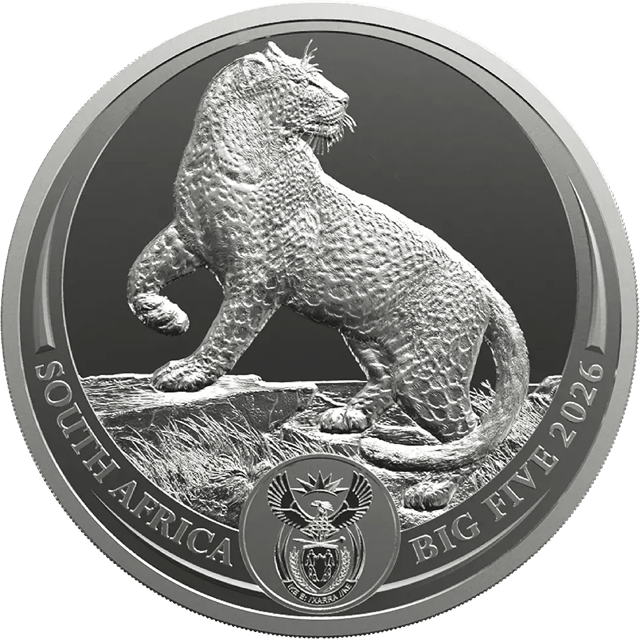
The motif side shows the leopard with the coat of arms below it, together with SOUTH AFRICA, BIG FIVE and the year. The other side divides the face: only two coins side by side make a whole portrait.
Place many coins next to each other and a whole row of faces appears. Today, Big Five means the five animals that wildlife lovers and safari guests want to see in the wild.
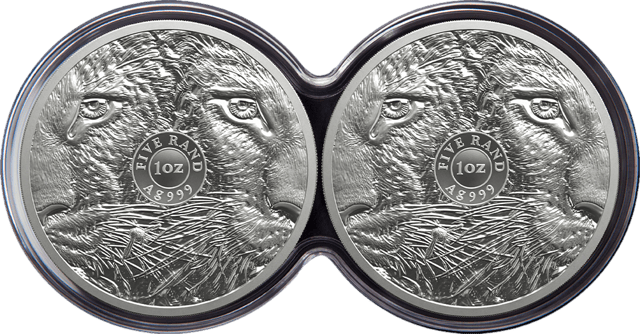
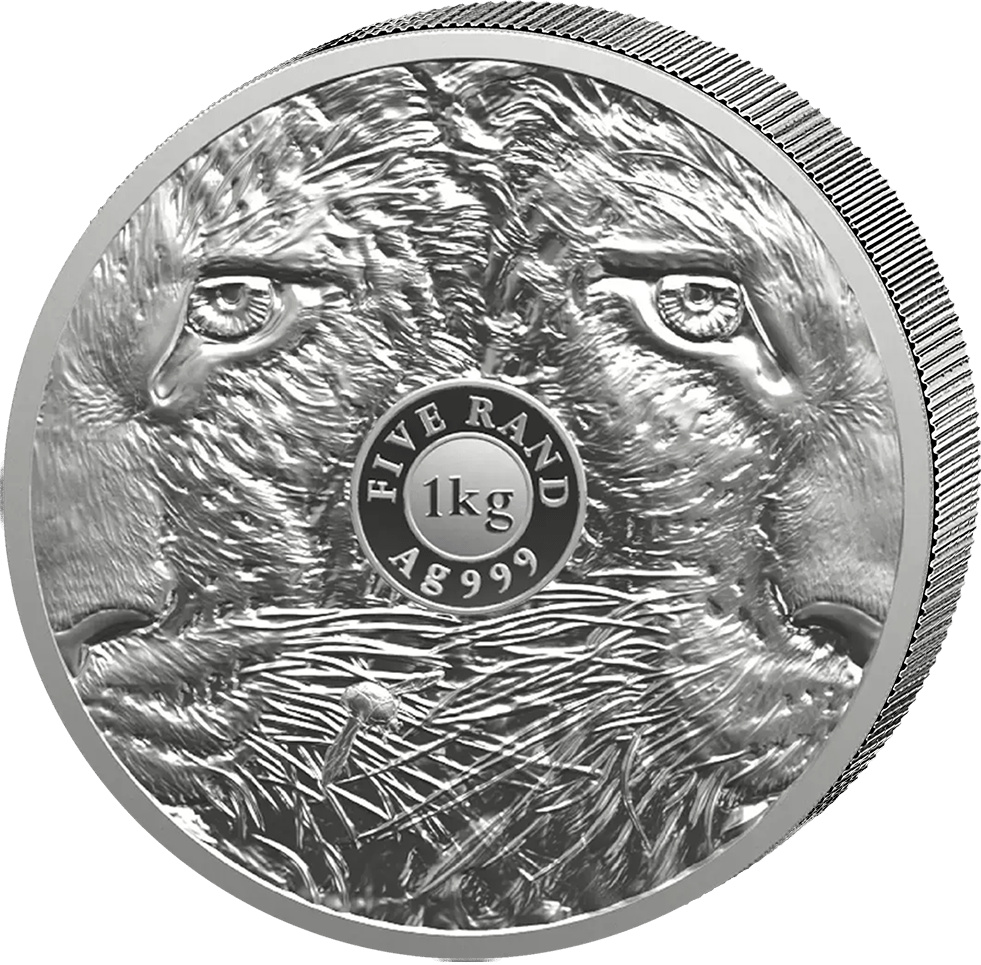
As struckFace value, weight and fineness, as struck
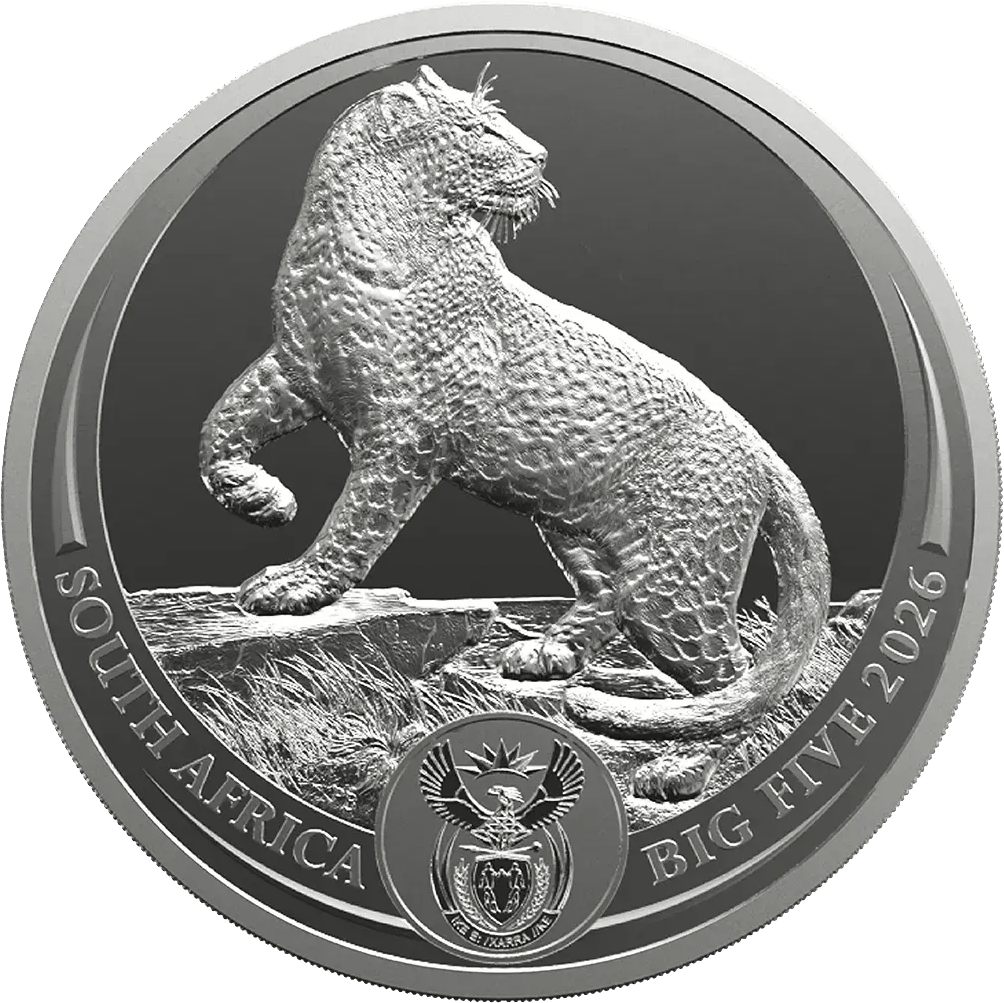
Coat of armsSouth Africa’s coat of arms below the leopard
Leopard and cheetah in more series
 SomaliaThe leopard on both sides, in the coat of arms of 1956.
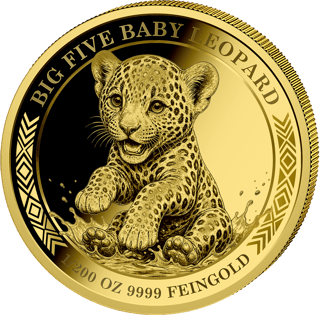 LiberiaLeopards in gold and silver, exclusively for Kettner Edelmetalle.
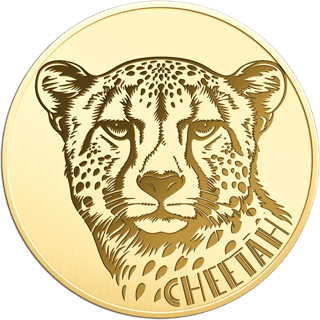 1/1,000 ounce of goldRosette and spot in the same small format.
At a glance
- Series
- Big Five, Series III
- Metal
- silver
- Weight
- 1 kg
- Fineness
- 999/1,000
- Country of issue
- South Africa
- Face value
- 5 Rand
- Year
- 2026
- Mintage
- 100 pieces
- Mint
- South African Mint
- Packaging
- presentation case
Leopard and cheetah
Both are listed as vulnerable on the IUCN Red List.
1 kg Silver Big Five III Leopard 2026 – Kilogram Rarity of Only 100 Pieces
- Strictly limited: Minimal mintage of only 100 pieces worldwide
- Growth opportunities: Very high value appreciation potential due to the sharp limitation and the continued strong demand for the series
- Rarity: An exceptionally rare collector's coin in the heavy kilogram format
- Collector's goal: Key issue for every Big Five collection – rarity trumps mass
- Design: A stalking leopard on a rocky outcrop, value side with a split big-cat portrait
- Material / fineness: 1,000 g fine silver, 999/1,000 – solid, powerful, value-retaining
- Quality: Brilliant Uncirculated in collector's quality, case with certificate of authenticity
- Manufacturer: South African Mint
- Country of origin: South Africa
A full kilogram of solid silver, 100 millimeters in diameter, plus a leopard that seems to step right out of the metal: this collector's coin is among the most spectacular issues currently released by the South African Mint. It is the fourth issue of the Big Five Series III – and it appears in a quantity that could rightly be called sold out within a single day: a mintage of just 100 pieces.
The Leopard – the Stealthiest Hunter Among the Big Five
No animal in Africa embodies elegance and restraint quite like the leopard. It hunts silently, climbs masterfully, and its coat pattern is as individual as a fingerprint. The obverse shows it in full length on a rocky outcrop, gazing into the distance, with the South African coat of arms beneath it. Around the edge you'll read "SOUTH AFRICA", the series name "BIG FIVE" and the year of issue 2026. The reverse holds a surprise: two halves of a leopard portrait come together, with the face value "FIVE RAND", the weight "1kg" and the fineness "Ag 999" positioned between them in a double circle. Below, the engraver has added a dung beetle – a fine detail that only truly comes into its own at this large format, and a reminder of the ecological balance of the bushveld.
Why the Limitation Makes the Difference
The 1-ounce issues of this year's vintage are minted in five-digit quantities. This kilo coin, by contrast, is limited to 100 pieces – worldwide, across all markets combined. Such a very low mintage means that collectors compete with interested buyers from South Africa, Asia, Europe and the USA for an extremely small number of pieces. It is precisely this scarcity that fuels the value appreciation potential of such issues. By comparison: classics like the silver Krugerrand or a Maple Leaf are excellent bullion coins with mintages in the millions and correspondingly close ties to the silver price. This kilo coin plays in a different league – it is a numismatic one-off experience where rarity, artistic design and material value come together.
A Series with Collector Tradition
The Silver Big Five issues are dedicated to Africa's five legendary large animals: elephant, lion, rhinoceros, leopard and buffalo. Series I established the reputation, Series II built upon it, and Series III continues the visual language with a more modern, more sculptural design. The leopard, as the fourth issue of the third series, is thus a building block without which a collection simply remains incomplete. Collectors know: complete series tend to attract more attention than individual pieces – and the kilo issues are traditionally the hardest-to-obtain links in this chain.
Technical Data at a Glance
- Fine weight: 1,000 g fine silver (1 kg)
- Fineness: 999/1,000
- Diameter: 100.00 mm
- Face value: 5 Rand (ZAR)
- Year of issue: 2026
- Mintage: 100 pieces worldwide
- Mint: South African Mint, South Africa
- Scope of delivery: capsuled in a case, with certificate of authenticity
Silver – Passion for Collecting Meets Substance
Silver has been a monetary and coinage metal for thousands of years, a symbol of prosperity and, in many cultures, a means of payment. Beyond its numismatic appeal, this piece represents a full kilogram block of precious metal with intrinsic value: industry demands silver for electronics, solar technology and medical technology, while extractable supply naturally remains limited. Those who hold physical silver coins own a tangible asset that can be traded worldwide, does not rust, and can be passed down through generations. A pleasant side note for private individuals in Germany: under current law, profits from the sale of physical silver are generally tax-free, provided the holding period of at least one year is observed.
Gold is humanity's oldest currency – and silver its loyal companion. Both have outlasted empires, paper currencies and economic systems.
It is well known that physical precious metals are also valued as an inflation hedge and as crisis protection. With this issue, however, something else takes center stage: its rarity. One kilogram of fine silver, artfully minted, strictly limited – and permanently unable to be increased, since minting of the 2026 vintage is now complete. Secure your piece while the quantity still allows.
Product depiction may differ from the final product.
