Only 2 left to order
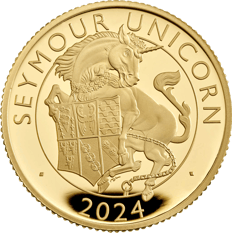
1/4 oz Gold Coin Tudor Beasts Seymour Unicorn 2024
£982.83
VAT-free and excl. shipping
Available in 2–3 business days

 More than 310,000
 Over 30 years
 Secure shipping
 Google: 4.9/5


Along the Moat Bridge of Hampton Court Palace, ten stone creatures have guarded the way to the palace of Henry VIII for centuries: real animals and mythical beings that embody the royal lineage of the Tudor king and his third wife, Jane Seymour. From these heraldic guardians, the Royal Mint has created one of the most sought-after coin series of recent times with The Royal Tudor Beasts. The 2024 year of issue marks a particularly rich phase of the series. This guide sheds light on the background of the 2024 Tudor Beasts issues, their designs, denominations, authenticity features and tax particulars.
The series The Royal Tudor Beasts is the direct successor to the successful Queen's Beasts and is issued by the British Royal Mint. In total, the collection comprises ten designs, released over several years and all created by illustrator and sculptor David Lawrence. The inspiration is the ten stone figures on the bridge over the moat at Hampton Court Palace, which Henry VIII once had erected to legitimise his own lineage and that of his wife, Jane Seymour.
The 2024 year of issue is appealing to collectors because several striking designs coincide this year, including the Seymour Dragon and the Seymour Unicorn. Anyone wishing to view the series as a whole will find the complete range in the overarching category of Tudor Beasts gold coins. The individual years of issue are, in turn, part of the collection of current years of issue.
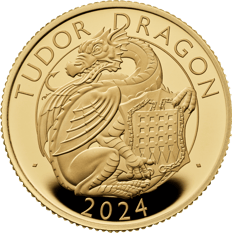
Each of the ten creatures represents a strand of Tudor ancestry. The Welsh dragon refers to the origins of the House of Tudor, while the unicorn was considered the purest and strongest of all creatures and was assigned to Jane Seymour: a symbol of purity and fertility, which the king associated with the hope of a male heir to the throne. This narrative depth sets the Tudor Beasts apart from purely decorative issues and turns every design into a small piece of history.
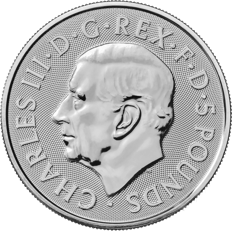
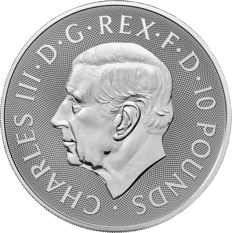
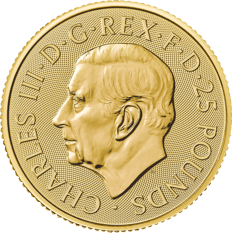
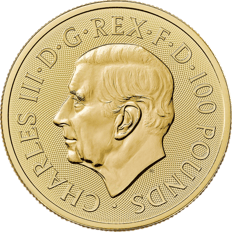
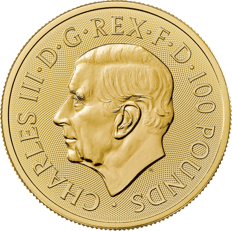
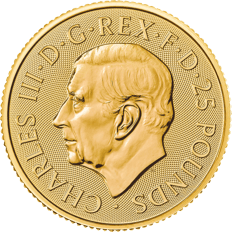
The design throughout is by David Lawrence. On the obverse, the 2024 Tudor Beasts issues show the official coin portrait of King Charles III, created by Martin Jennings, surrounded by the legend bearing the face value and the Latin motto. The reverse carries the respective heraldic animal.
Both designs are available in gold and silver, and in some cases as Proof versions with a strictly limited mintage. Thematically related mythical creatures can also be found in the category Unicorn designs as well as among the mythical creature coins.
The Tudor Beasts 2024 are available in several precious metals and weight classes, so that both newcomers and experienced collectors can find something suitable. They are struck in gold, silver and platinum, with gold and silver each at a fineness of 999.9. Some of the earlier issues in the series still bore the portrait of Queen Elizabeth II, before it was replaced by the likeness of King Charles III, making the series one of the few with a dual portrait.
The gold coins are issued, among other weights, in 1 oz and 1/4 oz. The full ounce is the classic choice for investment-oriented buyers, while the 1/4 oz offers a more affordable entry point into the design. Anyone wishing to compare gold coins more broadly will find numerous alternatives in the gold coins range, such as the equally British Britannia or the Queen's Beasts as the direct predecessor series.
The silver coins of the Tudor Beasts are typically struck in two sizes: 2 oz and 10 oz. The large-format 10 oz issue in particular showcases the wealth of detail in the relief impressively. Further British silver classics are offered in the silver Britannia category, while an overview of the entire range can be found under silver coins. Anyone looking for the rare precious metal within the series will also find what they need among the platinum coins of the Beasts range.
| Metal | Denomination | Fineness | Character |
|---|---|---|---|
| Gold | 1 oz | 999.9 | Classic choice for investment-oriented buyers |
| Gold | 1/4 oz | 999.9 | Affordable entry into the design |
| Silver | 2 oz | 999.9 | Compact collector's size |
| Silver | 10 oz | 999.9 | Large format with full detail |
Collector's Value vs. Investment Value
The Tudor Beasts combine both: the bullion issues in 999.9 fine gold are oriented towards material value, while the Proof variants with low mintage rely heavily on collector interest. Strictly limited mintages can therefore be in demand beyond their pure precious metal value, however, this does not allow any conclusions to be drawn about future performance.
As bullion coins from the Royal Mint, the Tudor Beasts are legal tender with a face value stamped in pounds and are backed by the British state. Authenticity can be established by several features:
At Kettner Edelmetalle, every coin undergoes an ISO-compliant authenticity verification before it is shipped. Anyone wishing to protect coins in the long term should store them in suitable coin capsules, as touching them with bare hands can easily leave marks on the sensitive surface.
When it comes to precious metals, German law clearly distinguishes between gold and silver. This distinction is particularly relevant for the Tudor Beasts 2024, since the series is issued in both metals.
Tax Note
In Germany, investment gold is exempt from VAT pursuant to § 25c UStG. Silver coins, on the other hand, are subject to margin scheme taxation. After the one-year holding period has elapsed, private capital gains may be tax-free. This is general information and does not replace tax advice.
Anyone wishing to benefit from the tax advantage of gold while remaining flexible will find a complementary option to the Tudor Beasts gold coins in gold bars, such as compact 1 oz gold bars.
Whether as a collector's item or as part of a more broadly diversified precious metals holding, proper storage determines the long-term preservation of lustre and relief. This applies especially to the high-quality Proof issues, as even fine scratches can reduce collector value.
At Kettner Edelmetalle, shipping is carried out 100% insured from a high-security logistics centre, ensuring that the coins arrive undamaged.
The Tudor Beasts join a great tradition of heraldic coin series. They share five of their designs with the Queen's Beasts, such as the Lion of England or the dragon, but add their own Tudor creatures, such as the Seymour Unicorn. Anyone looking to make a comparison should consider both series side by side: the Queen's Beasts gold coins as the predecessor, and the Tudor Beasts series as its continuation.
Compared to pure investment classics such as the Krugerrand or the Maple Leaf, the Tudor Beasts score points with greater collector appeal and lower mintages. In return, classic bullion coins carry lower premiums over the pure metal value: a trade-off between passion and liquidity that everyone should weigh up for themselves.
A heraldic creature tells a story: therein lies the special appeal of the Tudor Beasts compared to a purely bullion coin.
In 2024, the focus is on, among others, the Seymour Dragon and the Seymour Unicorn. Both designs are available in gold and silver, in some cases as Proof with a strictly limited mintage.
All ten designs in the series were created by the British illustrator and sculptor David Lawrence. The portrait of King Charles III on the obverse was created by sculptor Martin Jennings.
Both series are based on heraldic stone figures: the Queen's Beasts on Westminster Abbey, the Tudor Beasts on Hampton Court Palace. Five designs overlap, but the Tudor Beasts add their own creatures from the line of Jane Seymour.
In Germany, gold coins are classified as investment gold and are exempt from VAT pursuant to § 25c UStG. Silver issues, on the other hand, are subject to margin scheme taxation. This is general information, not tax advice.
The gold issues are available, among other weights, in 1 oz and 1/4 oz, while the silver issues are usually available in 2 oz and 10 oz. All issues have a fineness of 999.9.
Airtight coin capsules are ideal, complemented by a coin cassette or a coin case for multiple pieces. Especially with Proof issues, this protects against scratches and fingerprints that could reduce collector value.
 Tudor 2024
Stay informed with product launches, financial news and exclusive offers. Sign up for our free newsletter today.
By entering your email address and clicking the "Submit" button, you give the following consent: "I agree to be informed by email about new products, financial news and exclusive offers, and therefore consent to the processing of my email address for the purpose of sending the newsletter. I can revoke this consent at any time without giving reasons, with effect for the future. The lawfulness of processing carried out prior to revocation remains unaffected."