Only 7 left to order
1 oz Gold The Royal Tudor Beasts Greyhound 2025
£3,167.26
VAT-free and excl. shipping
Available in 2–3 business days

 More than 300,000
 Over 30 years
 Secure shipping
 Google: 4.9/5


The Royal Tudor Beasts bring one of the most dramatic eras of English history back to life: ten heraldic beasts that once guarded the bridge over the moat of Hampton Court Palace and immortalised the lineage of the Tudor dynasty in stone. Since 2021, the Royal Mint has struck this collection in gold and silver, combining centuries-old symbolism with modern minting artistry. This guide sheds light on the history, designs, denominations, authenticity features and the tax particularities of the Tudor Beasts gold coins.
The Tudor dynasty ruled England from 1485 to 1603 and is one of the most colourful chapters in the history of the monarchy. It is associated with names such as Henry VIII and Elizabeth I, as well as images of power, intrigue and profound religious upheaval. To make his own lineage visible, Henry VIII had a series of stone beasts erected at the approach to his favourite palace, Hampton Court, bearing the coats of arms of his ancestors and allies.
It is precisely this tradition that the British Royal Mint has taken up. It has selected ten heraldic beasts, each embodying a family, a virtue or a claim to rule from the Tudor era. Each design thus tells its own story of lineage, loyalty and royal heritage. Anyone interested in the thematically related predecessor series will find a similarly structured collection of heraldic animals in the Queen's Beasts gold coins.
The strength of the Tudor Beasts lies in their narrative depth. Each heraldic beast symbolises a specific quality and represents a particular person or line of the dynasty. An overview of the most important designs:
The series continues over several years of issue: as a rule, one new design appears each year until all ten beasts have been struck. This narrative approach makes the series particularly appealing to collectors: anyone who completes the collection across the years of issue ultimately holds an entire heraldic bestiary of the Tudor era in their hands. This collecting concept, which goes beyond pure investment gold, can also be found in the area of year-based series.
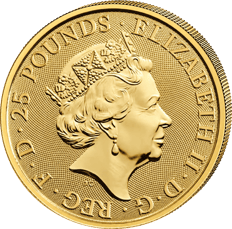
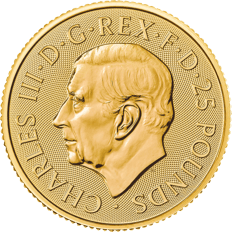
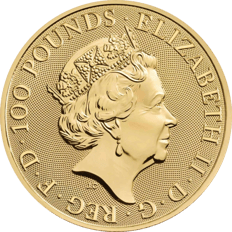
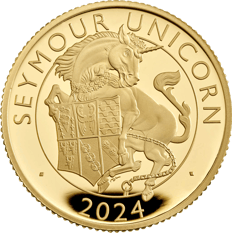
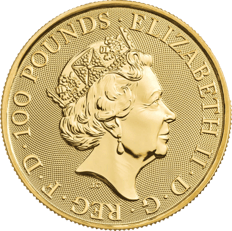
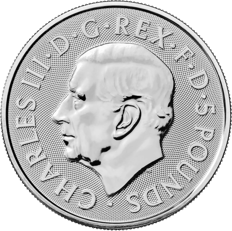
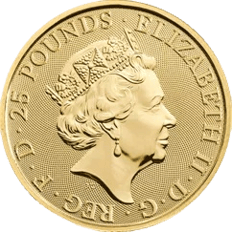
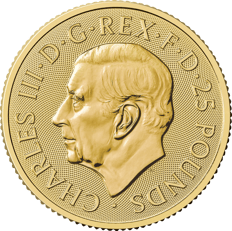
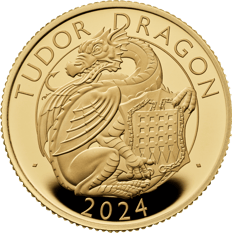
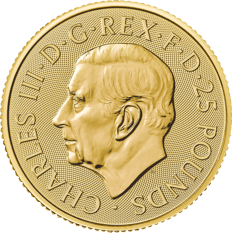
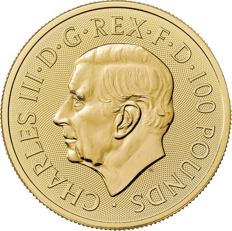
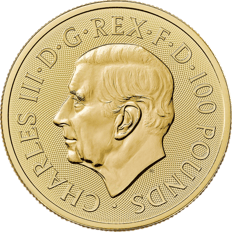
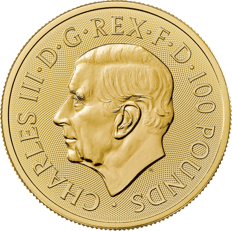
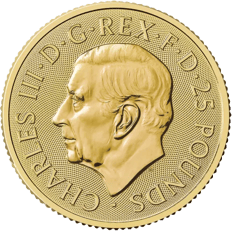
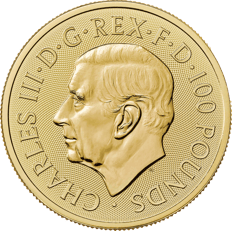
The design side of each Tudor Beasts gold coin shows the respective heraldic beast in a detailed heraldic pose, often with the shield and standard of the associated family. The value side bears the official portrait of King Charles III, while the early years of issue still feature that of Queen Elizabeth II. The series thus also documents a historic transition within the British royal house.
The gold coins are struck in 999.9 fine gold (24 carat) and, as legal tender of the United Kingdom, carry a face value. Compared to classic bullion coins such as the Britannia or the Krugerrand, the appeal of the Tudor Beasts lies more strongly in the design and collectible aspect, without losing sight of the pure material value.
The Tudor Beasts are issued in several weight classes, allowing entry at different budget levels. The common gold denominations:
In addition to the gold issues, there are silver coins in the series which, at a weight of 2 troy ounces, deliberately deviate from the usual one-ounce standard, allowing for a particularly expressive coin design. Anyone looking for an entry point via silver will find comparable design series in the range of heraldic silver coins. For storing smaller denominations, suitable coin capsules are ideal, protecting the delicate coin design permanently.
The Royal Mint is one of the most traditional mints in the world and equips the Tudor Beasts with high quality standards. Investors should pay attention to the following features when buying:
At Kettner Edelmetalle, all gold coins undergo an ISO-compliant authenticity verification before leaving the fully automated high-security logistics centre. Anyone wishing to delve deeper into the provenance will find further issues from the mint in the range of the Royal Mint.
An important tax particularity applies to gold coins in Germany: investment gold is exempt from VAT pursuant to §25c UStG, provided the coin meets the criteria for investment gold. This means the gold Tudor Beasts differ significantly from the silver issues, which may be subject to the margin scheme.
Tax note
Gold coins with recognised investment gold status are exempt from VAT when purchased in Germany. After the one-year holding period has elapsed, a sale by private individuals is generally tax-free. This does not replace individual tax advice.
For storage, a dry, secure location is recommended, ranging from a home safe to a bank safe deposit box. Delicate coin designs are best kept in coin cassettes or a case to avoid scratches and traces of oxidation. Anyone collecting an entire series of years benefits from uniform storage in a coin case.
The Tudor Beasts sit at the intersection between bullion coin and collector's coin. The high gold content ensures a solid material value closely tied to the gold price, while the limited, narratively structured series unfolds additional collector's appeal. It is precisely the combination of British history, heraldic symbolism and high-quality minting that makes them more than mere precious metal for many.
Whoever holds a Tudor Beasts gold coin owns not just gold, but a piece of the Tudor dynasty, cast in royal symbolism.
For investors who place lasting value preservation at the forefront, classic Maple Leaf gold coins or the Vienna Philharmonic remain a proven complement. Those who, on the other hand, take pleasure in designs and stories will find a rewarding collecting field in the Tudor Beasts and further gold coin series.
The series comprises a total of ten heraldic beasts, which are issued over several years. These include, among others, the Seymour Panther, the Greyhound of Richmond, the Queen's Lion and the Seymour Unicorn.
The Tudor Beasts gold coins are struck in 999.9 fine gold (24 carat) and are legal tender of the United Kingdom with a stamped face value.
The gold issues generally meet the criteria for investment gold and are therefore exempt from VAT pursuant to §25c UStG. The silver issues, on the other hand, may be subject to the margin scheme.
Both series come from the Royal Mint and depict heraldic beasts. The Queen's Beasts relate to the coronation of Queen Elizabeth II, while the Tudor Beasts take up the stone beasts of Hampton Court and the history of the Tudor dynasty.
The gold issues are mainly available in sizes of 1 troy ounce and 1/4 troy ounce. In addition, there are silver issues weighing 2 troy ounces, which allow for a particularly expressive coin design.
Both. The high gold content secures a material value oriented to the gold price, while the limited, narratively structured series offers added collector's value. This combination makes the series attractive for different interests.
 Tudor Beasts
Stay informed with product launches, financial news and exclusive offers. Sign up for our free newsletter today.
By entering your email address and clicking the "Submit" button, you give the following consent: "I agree to be informed by email about new products, financial news and exclusive offers, and therefore consent to the processing of my email address for the purpose of sending the newsletter. I can revoke this consent at any time without giving reasons, with effect for the future. The lawfulness of processing carried out prior to revocation remains unaffected."