





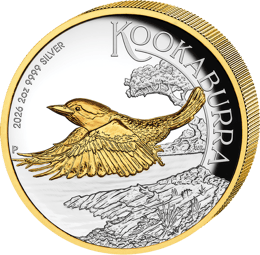


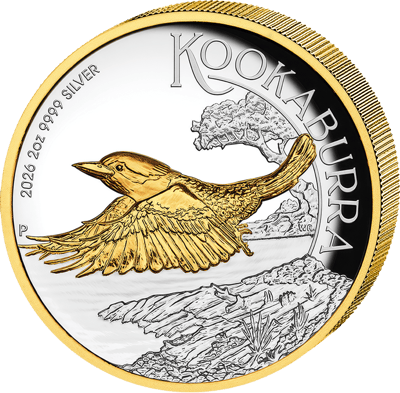


2 oz Silver Kookaburra 2026 (Mintage: 2,000 | Partially Gilded | High Relief | Proof)










- Unique Design: Jägerliest in flight
- Perth Mint: Tradition since 1899
- With Certificate: individually numbered
- Unique DesignDesigned by Wade Robinson, minted only this year
- Perth MintMinting the Kookaburra series since 1990
- With CertificateIn original case with Perth Mint certificate of authenticity
 Price alert set
 share
share
Kookaburra 2026, 2 ounces silver
It isn’t laughing, it’s calling.Its image in gold on silver.
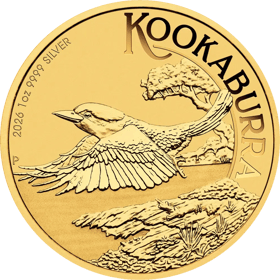
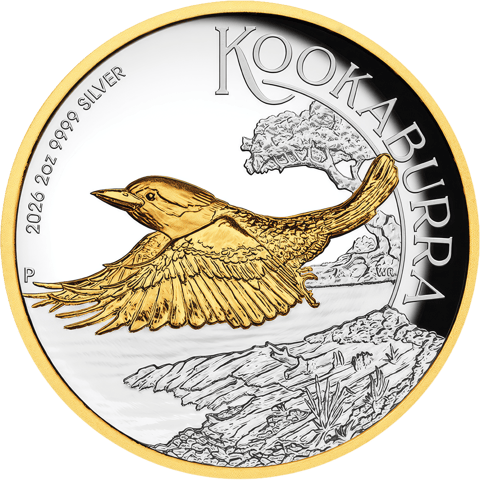
2 ounces silver in proof quality and high relief, gilded, 2026 issue. The image shows the kookaburra in flight over a river, framed by trees and rocks.
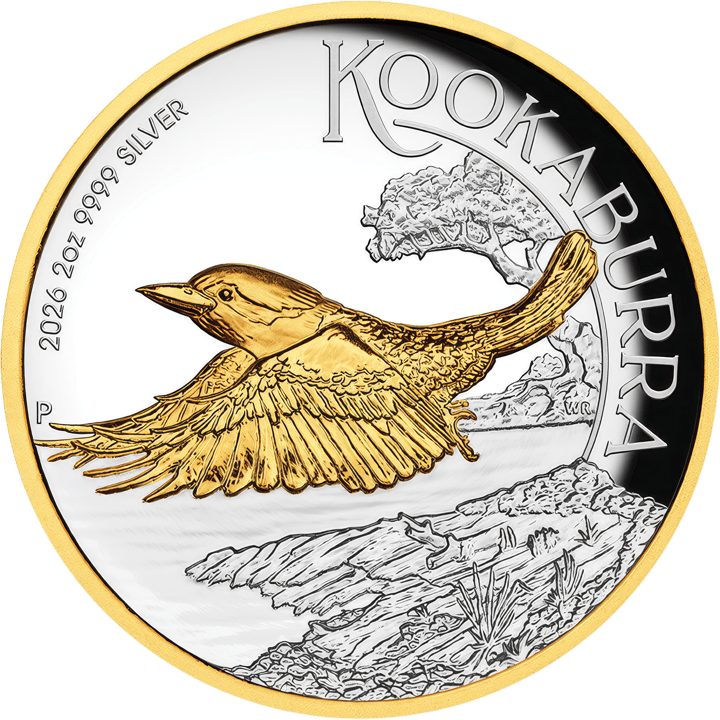
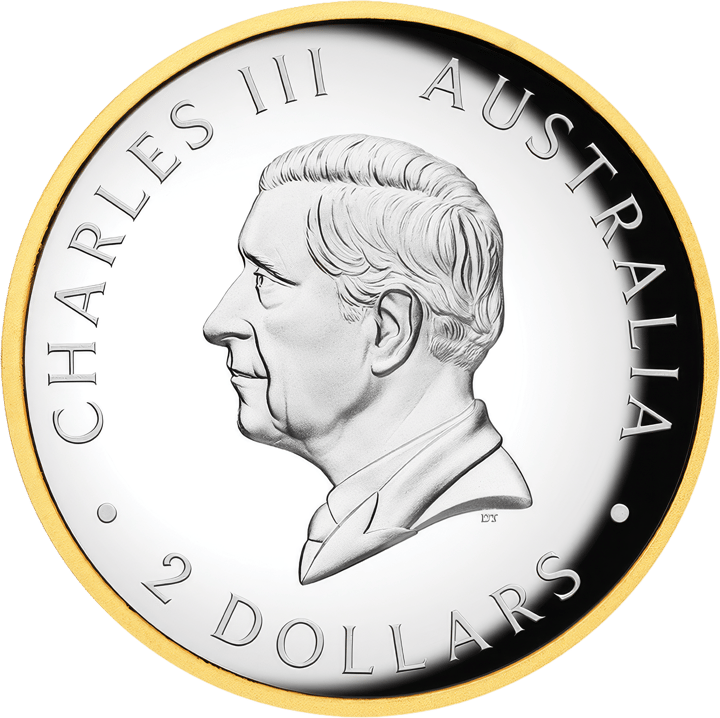
Kookaburra 2026, 2 ounces silver, side with the kookaburra, image
2 ounces silver in proof quality and high relief, gilded, 2026 issue. The image shows the kookaburra in flight over a river, framed by trees and rocks.
The call
In chorus with the family
koo-koo-koo-koo-koo-kaa-kaa-kaa
In German it is also called Lachender Hans, “laughing Hans”. But what sounds like laughter is a territorial call: it warns other birds to stay away, as the Australian Museum writes.
The family often calls in chorus, above all at dawn and dusk. This is how it tells other kookaburras that its territory is occupied.
In the breeding season other kookaburras help out, usually young birds from the previous one to two years. Everyone in the group shares the rearing, and the parents are believed to pair for life.
At around 42 centimetres and 340 grams on average, it is one of the largest kingfishers. It lives almost everywhere in eastern Australia where suitable trees grow.

The perch
It waits quietly on a perch with a good view, then drops straight down.
Under the loupe
The side with the kookaburra carries the weight, fineness and year, together with the mintmark of the Perth Mint.
On the other side: the effigy of King Charles III by Dan Thorne. The design is by Wade Robinson.
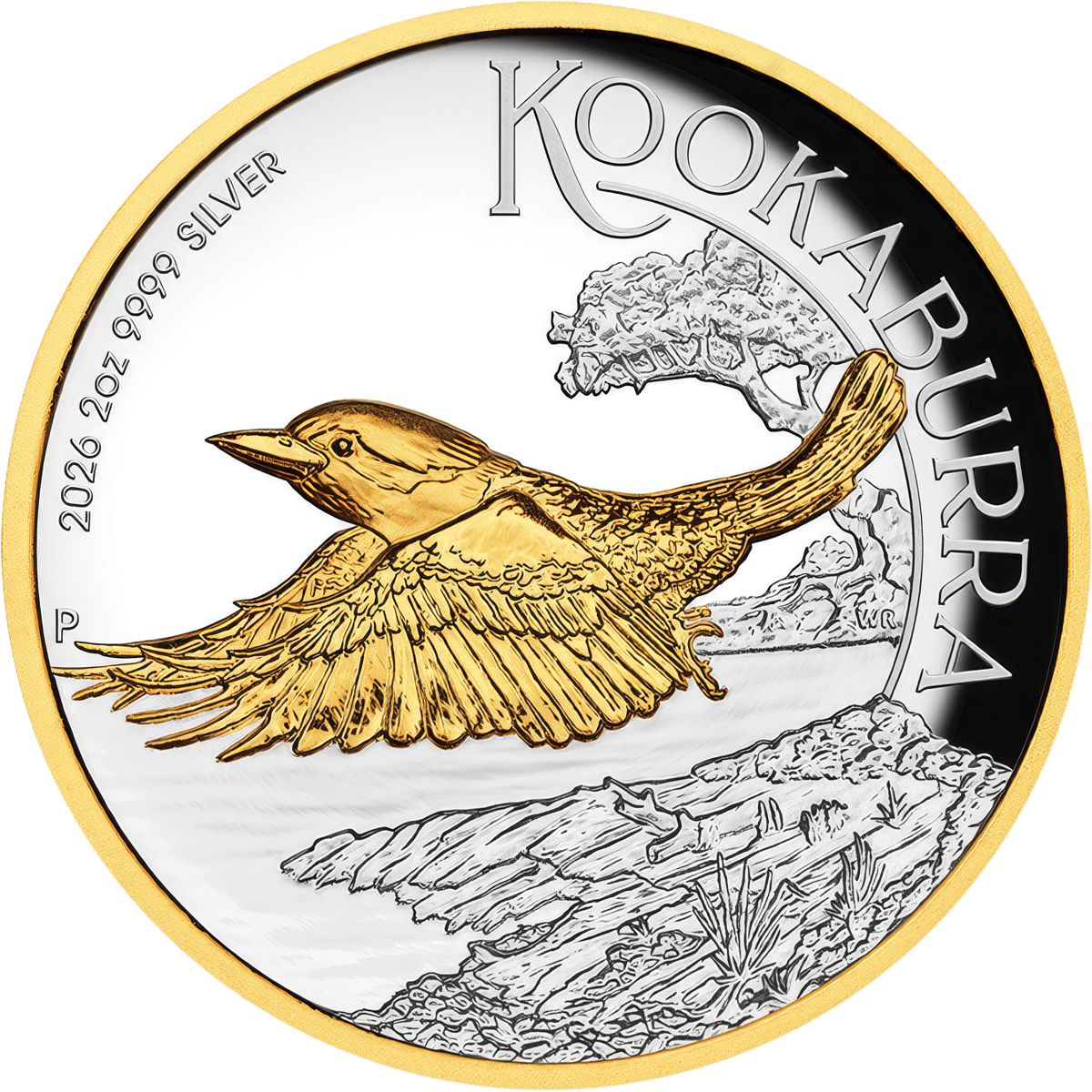
KookaburraThe kookaburra
GildingThe gilding
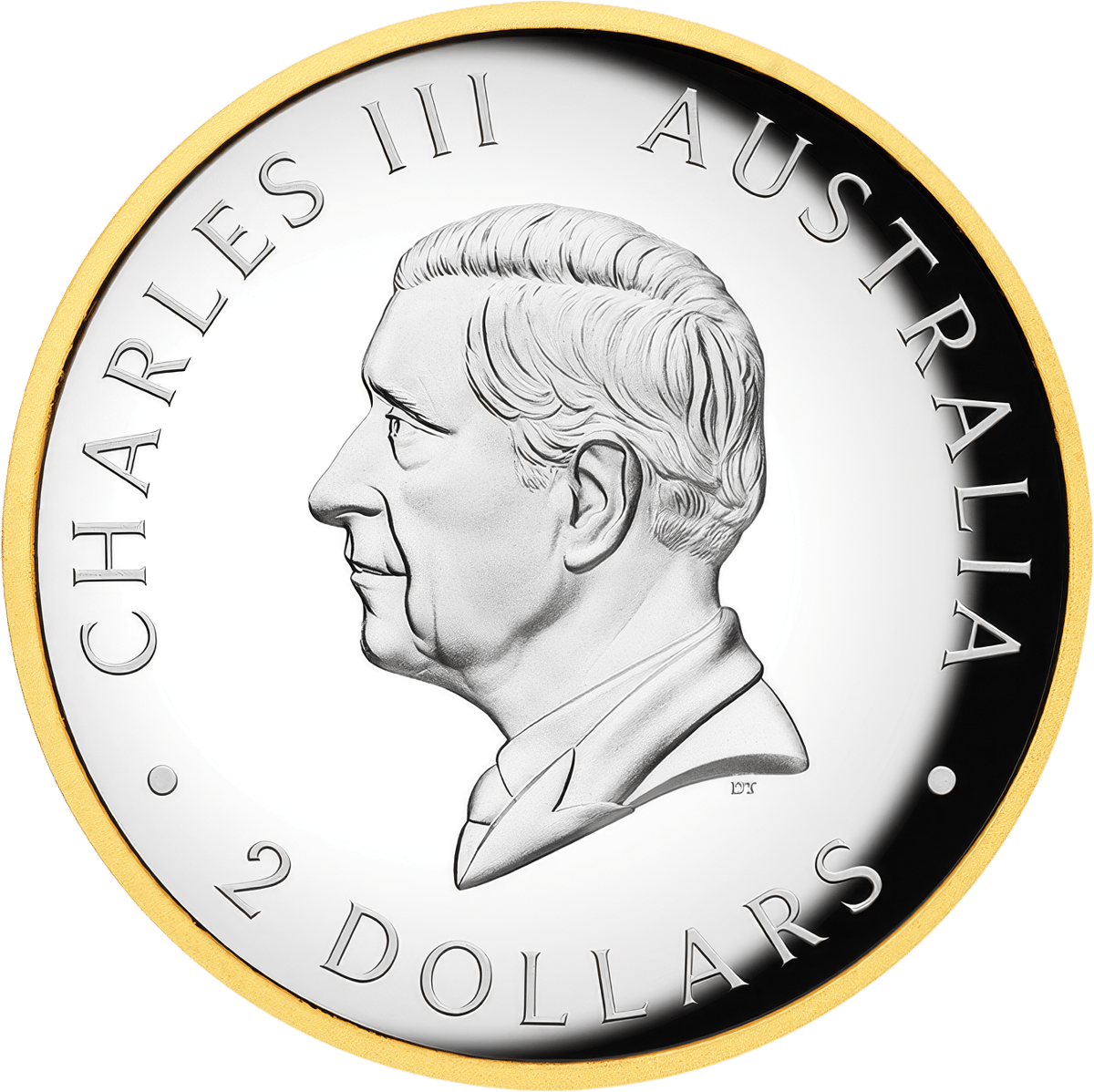
EffigyThe effigy
The image up close
The designs
How the years show it
Since 1990 the silver coin has carried the kookaburra, almost every year with a new design. The first was created by Stuart Devlin, who also designed Australia’s first decimal coins of 1966. Here are the years from our range.
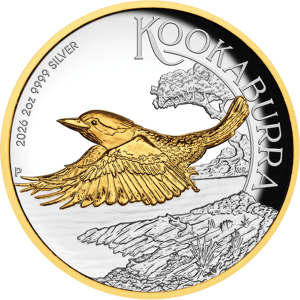 2026In flight over the river
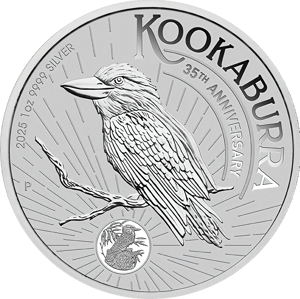 2025On the branch, 35 years
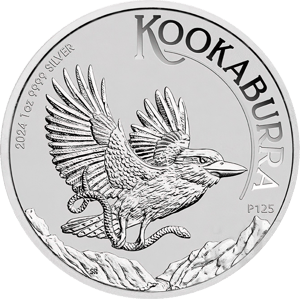 2024In flight, with a snake
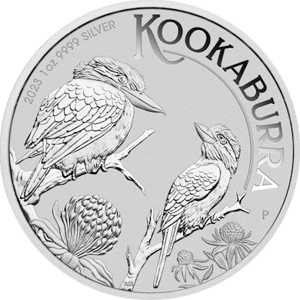 2023Two kookaburras on the waratah
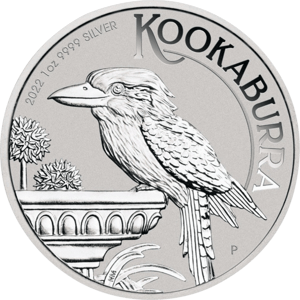 2022On the birdbath
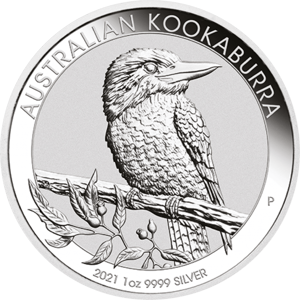 2021On a eucalyptus branch
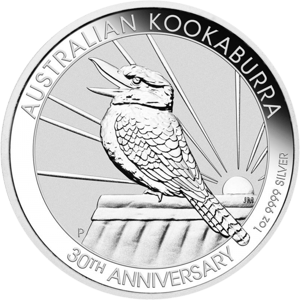 2020At dawn, 30 years
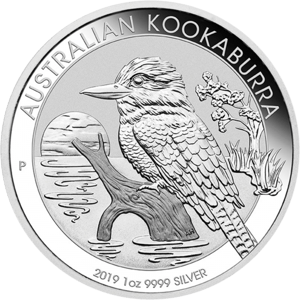 2019On a branch by the water
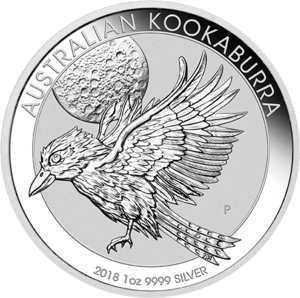 2018Flying in
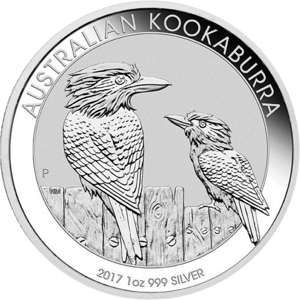 2017Two on a wooden fence
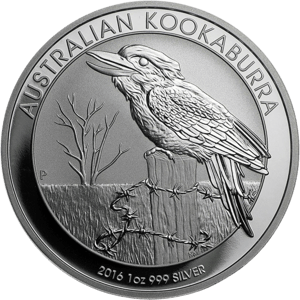 2016On a fence post
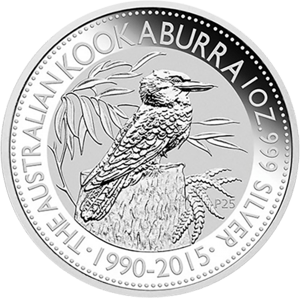 2015On a tree stump
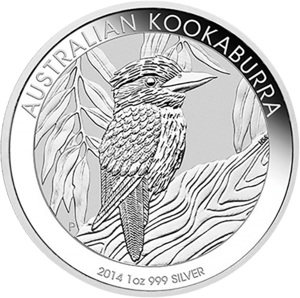 2014On a branch
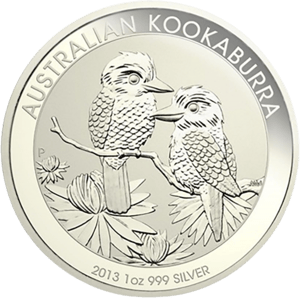 2013Two on a branch
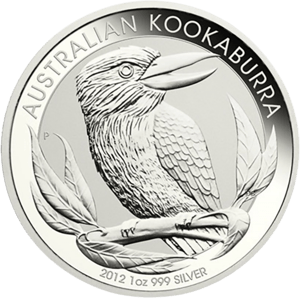 2012Among eucalyptus leaves
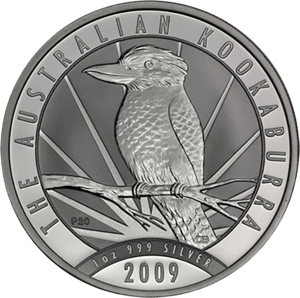 2009In front of rays
With 24-carat gold
Two ounces of silver in proof quality, the design in high relief. The Perth Mint itself gilds the outer rim and parts of the design.
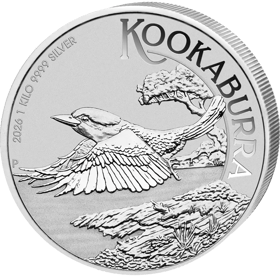 Silver
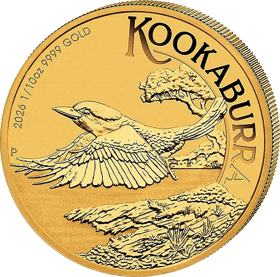 Gold
Gold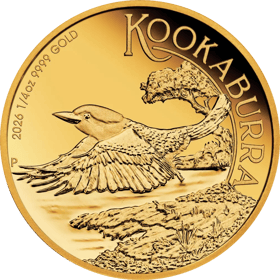 Proof
Proof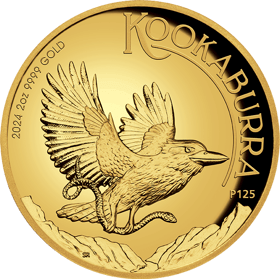 High relief
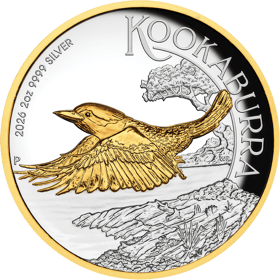 Gilded
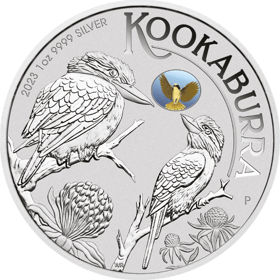 Privy mark
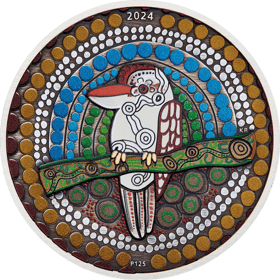
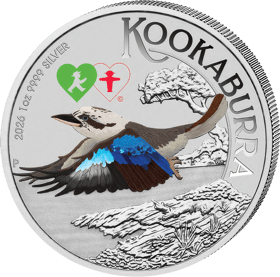 In colour
 Gold-plated
 Incused
 Antiqued
How their sizes compare
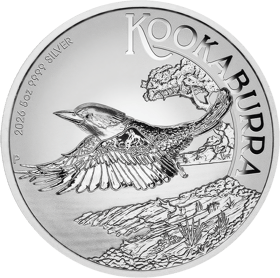
Silver, from one ounce up to one kilogram
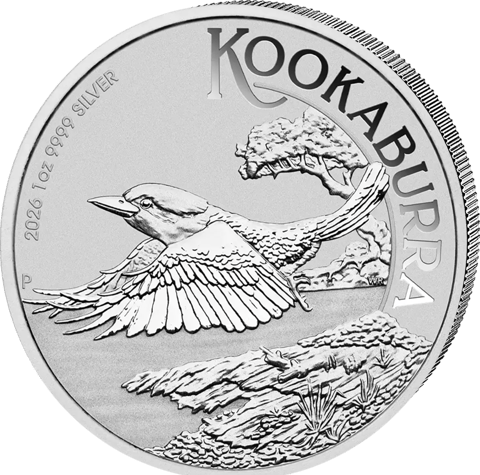 1 ounce40.9 mm
 2 ounces
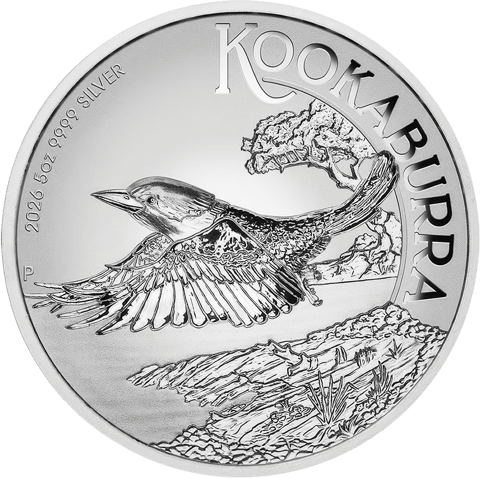 5 ounces50.9 mm
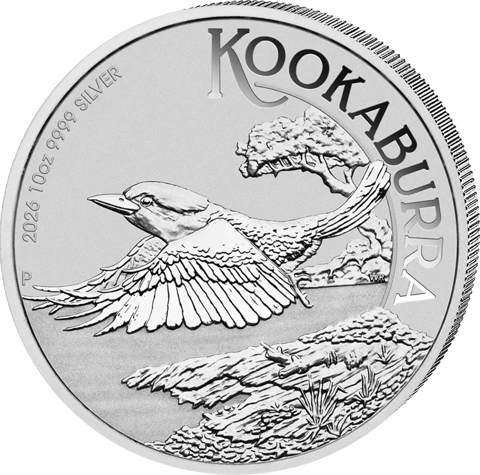 10 ounces75.9 mm
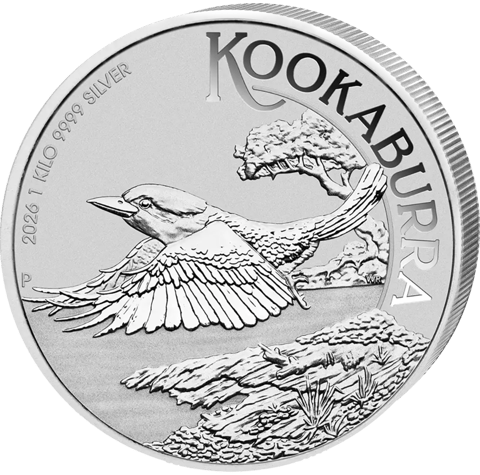 1 kg100.9 mm
Gold, from 0.5 grams up to five ounces
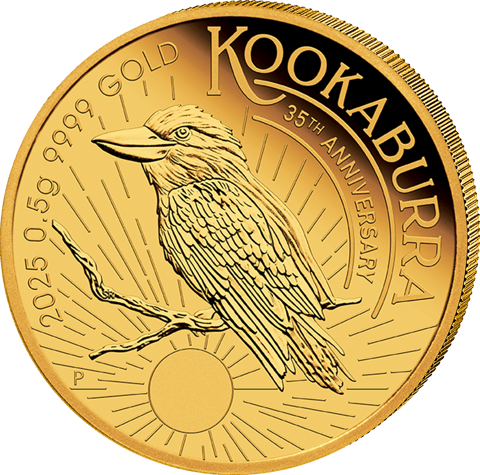 0.5 g11.6 mmDesign 2025
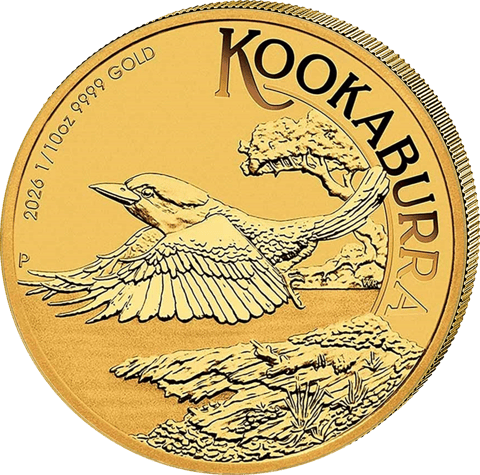 1/10 ounce16.6 mm
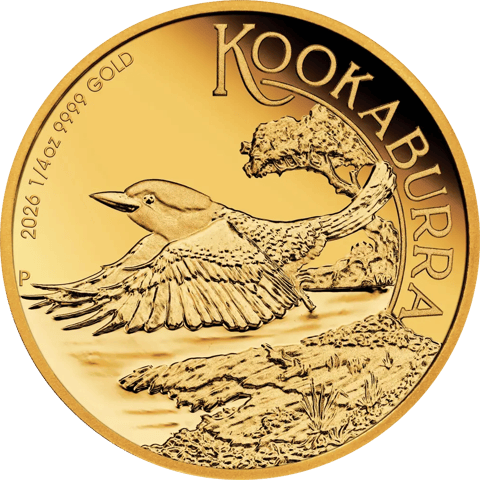 1/4 ounce20.6 mm
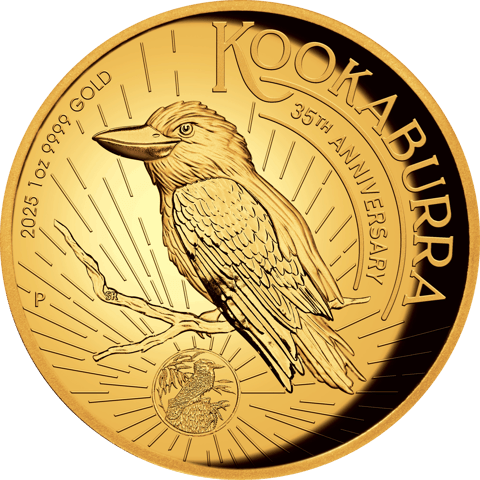 1 ounceDesign 2025
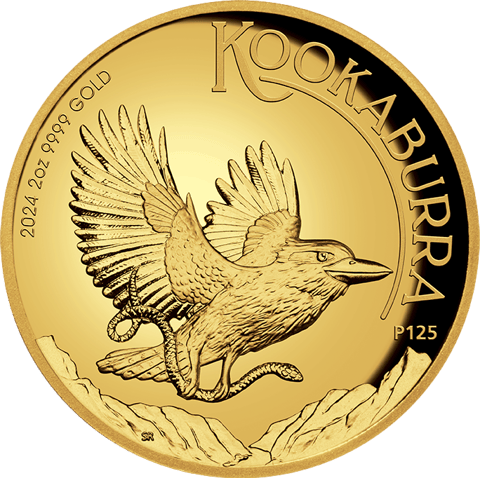 2 ounces36.6 mmDesign 2024
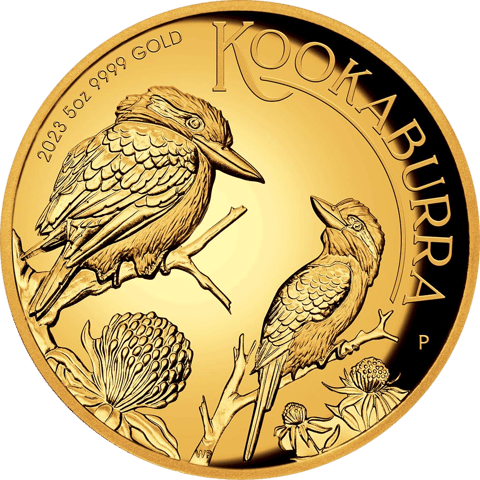 5 ouncesDesign 2023
At a glance
- Issuing country
- Australia
- Face value
- 2 AUD
- Metal
- silver
- Weight
- 2 ounces
- Fineness
- 999.9/1000
- Year
- 2026
- Effigy
- Charles III
- Mint
- Perth Mint
- Quality
- Proof
- Maximum mintage stated by the issuer
- 2,000 coins
In the evening the family often calls once more in chorus.
Kookaburra 2026 in High Relief: partially gilded rarity with just 2,000 pieces
- Strictly limited: a worldwide maximum mintage of only 2,000 pieces – no more will ever be produced in this version.
- Growth potential: high appreciation potential thanks to the strict limitation and the traditionally strong demand for special Kookaburra editions.
- Collector focus: a proven rarity and sought-after collector's coin rather than a mass-minted issue.
- Minting quality: the highest possible quality level, Proof, with mirror-like fields.
- Special feature: High Relief striking on an extra-thick blank for a three-dimensional look and a strong tactile feel.
- Finishing: the bird and outer ring are gilded in 24-carat gold.
- Design: a Kookaburra in flight over a riverbed, framed by trees and rugged rock – the exclusive 2026 annual design by Wade Robinson.
- Material / fineness: 62.2 grams of fine silver at 999.9 – the highest purity level in the series.
- Manufacturer: The Perth Mint, Australia's traditional mint founded in 1899.
- Country of origin: Australia – legal tender with a face value of 2 dollars.
- Investment goal: a rare collector's item with the intrinsic value of two ounces of precious metal.
- Scope of delivery: original case with numbered certificate of authenticity from the Perth Mint.
Some coins are made to be stacked. This one isn't. The Silver Kookaburra 2026 in its partially gilded High Relief version is a connoisseur's piece in the best sense: two ounces of fine silver, mirror-polished surfaces, a boldly domed relief – and a mintage that could be numbered off in a single afternoon. Only 2,000 pieces for the entire world market, shared among collectors in Australia, Asia, North America and Europe. Anyone who has followed this series for a while knows how quickly such issues find buyers.
2026 annual design: the laughing hunter in flight
The Kookaburra, known in German as the "Jägerliest," belongs to the kingfisher family – yet it is not a fish-catcher at all. Its laughing call across the Australian bush has made it world-famous. For 2026, the reverse shows the bird in flight over a riverbed, framed by trees, grasses and rugged rock. The bird and outer ring are finished in 24-carat gold, allowing the warm gold to stand out effectively against the bright fine silver. Also featured are the inscription "KOOKABURRA," the Perth Mint's "P" mintmark, as well as the weight, fineness and year. The obverse carries the portrait of King Charles III designed by Dan Thorne, with the inscriptions "CHARLES III AUSTRALIA" and "2 DOLLARS."
High Relief meets Proof
For this edition, the mint uses an especially thick blank: 40.90 millimetres in diameter and around 7.3 millimetres in height. Only this depth of material allows for the pronounced high relief, in which the plumage, beak and wings truly emerge from the coin's surface. The Proof quality level demands polished dies, a steady hand and careful finishing – the result is flawlessly gleaming fields that frame the matte design like a stage. This is a premium coin best appreciated when tilted into the light.
A mintage of just 2,000 pieces – the real headline
By comparison: the classic bullion coin in this series is issued as a one-ounce coin with mintages of several hundred thousand per year. Here, however, the mintage stops at 2,000 pieces worldwide. It is precisely this very low mintage that has made special Kookaburra editions sought-after pieces among connoisseurs for years – older coloured WMF editions and ANDA strikes with four-digit mintages are good examples of this. Naturally, future price development cannot be predicted. Yet scarcity remains the strongest argument in numismatics, and here it meets a design that, after 2026, will never be struck in this form again.
A series with history: in the programme since 1990
In 1990, the Perth Mint issued the first Kookaburra silver coin in a one-ounce size, with larger formats added from 1991 onwards. Since then, the design has changed every single year – a unique feature among the world's major silver coins. Until 2023, Queen Elizabeth II graced the obverse of the bullion coin; since 2024, it has been King Charles III. Alongside the Kookaburra, the mint also maintains other Australian animal series such as the Koala and the Kangaroo; however, the laughing bird is considered the classic, as it established the idea of a new annual design. Those who follow the yearly issues are, in effect, also collecting a piece of contemporary history.
Kookaburra High Relief or Wedge-Tailed Eagle?
The Perth Mint also caters to collectors with its Wedge-Tailed Eagle series, whose eagle design has been based on designs by John M. Mercanti, the twelfth Chief Engraver of the US Mint, since 2014. Both series are available in 2-ounce and high-relief formats. The eagle scores points with the signature of an exceptional engraver and very clean lines; the Kookaburra, on the other hand, offers a new design every year, a longer history, and – in this version – partial gilding, which unites two precious metals in a single coin. For many collectors, that is exactly the appeal.
Fine silver as substance beneath the gilding
Beneath the 24-carat layer lies solid material. Silver has been used as coinage metal, a store of value and a medium of exchange for smaller transactions for thousands of years. It is scarce, used in electronics, solar and medical technology, is readily tradable at all times, and retains its physical properties across generations – reasons why many collectors view and pass on their holdings as family wealth. Profits from a later sale are generally tax-free, provided at least one year has passed between purchase and sale. The fact that physical precious metal is also valued as an inflation hedge and crisis protection is a welcome side effect here – the collector's item itself remains the main focus.
Technical data at a glance
- Precious metal: fine silver 999.9
- Denomination: 2 oz, fine weight 62.21 grams
- Diameter: 40.90 mm
- Face value: 2 dollars, Australia
- Year of issue: 2026, Kookaburra series
- Finish: Proof, High Relief, partially gilded
- Mintage: 2,000 pieces
- Manufacturer: The Perth Mint
- Packaging: original case with numbered certificate of authenticity
An exclusive annual design, 24-carat gold on 999.9 fine silver, high relief in Proof quality – and only 2,000 opportunities worldwide to be part of it.
Who this edition is suited for
For Kookaburra collectors looking to add a top-tier piece to their year-set collection. For lovers of Australian animal designs and powerful high-relief strikes. And for anyone who enjoys holding a piece of Australia in their hand that, in this form, will never again leave the minting press.
Product depiction may differ from the final product.
