





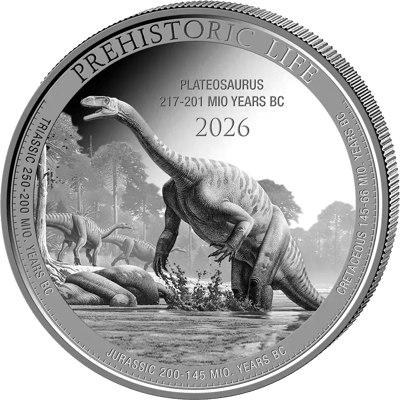


1 oz Silver Prehistoric Life II Plateosaurus 2026 (Mintage: 10,000)










- First Dinosaur Find: 1834 near Nuremberg
- Main Mint: minted in Bavaria
- Highest Fineness: 999.9 fine silver
- First Dinosaur FindThe first dinosaur ever discovered in Germany
- Main MintMinted in Germany by the Bavarian Main Mint
- Highest FinenessFine silver in Mint State quality with reeded edge
 Price alert set
 share
share
Plateosaurus
From the rock into the light.A Plateosaurus in silver.
1 ounce of silver, in brilliant uncirculated quality, issuing country Democratic Republic of the Congo. It has been found in France, Germany and Switzerland.


Plateosaurus on 1 ounce of silver, reverse, image
1 ounce of silver, in brilliant uncirculated quality, issuing country Democratic Republic of the Congo. It has been found in France, Germany and Switzerland.
From the rock
Finds in Germany suggest that it lived in herds.
It lived about 210 million years ago and walked on two legs.
No human has ever seen this animal alive: the age of the dinosaurs ended 66 million years ago, and the human genus has existed for about 2.8 million years.
Source: Natural History Museum, London
The timeline
From the Devonian to the last Ice Age
Each animal stands in its geological period. The sections show the order, not the duration.
Devonian
about 420 to 359 million years ago
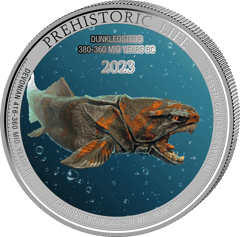 DunkleosteusArmoured fish
Carboniferous
about 359 to 299 million years ago
Permian
about 299 to 252 million years ago
Triassic
about 252 to 201 million years ago
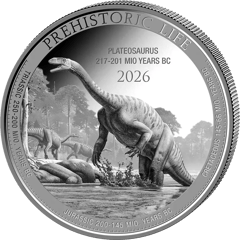 PlateosaurusDinosaur
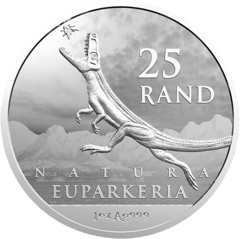 ArchosaursAnimal group
Jurassic
about 201 to 143 million years ago
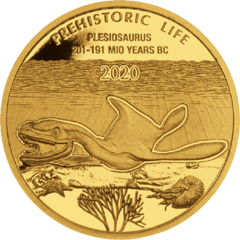 PlesiosaurusMarine reptile
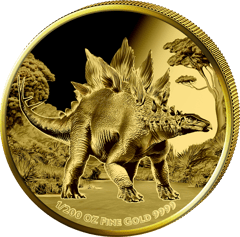 StegosaurusDinosaur
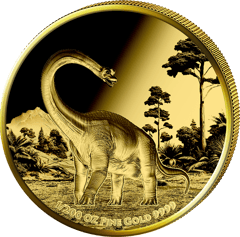 BrachiosaurusDinosaur
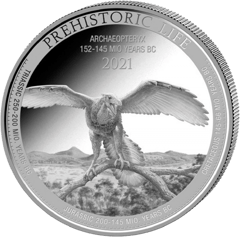 ArchaeopteryxEarly bird
Cretaceous
about 143 to 66 million years ago
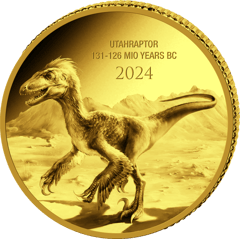 UtahraptorDinosaur
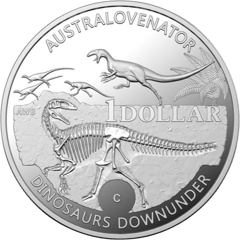 AustralovenatorDinosaur
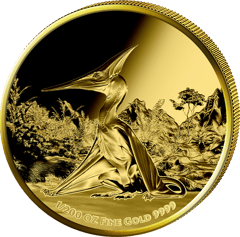 PteranodonPterosaur
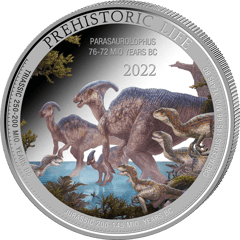 ParasaurolophusDinosaur
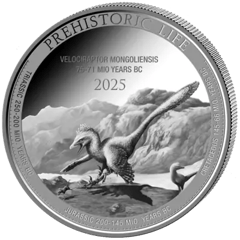 VelociraptorDinosaur
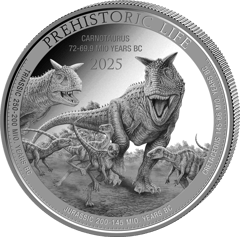 CarnotaurusDinosaur
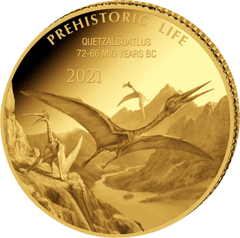 QuetzalcoatlusPterosaur
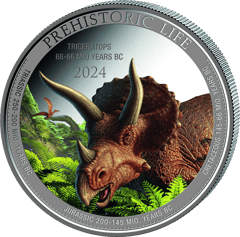 TriceratopsDinosaur
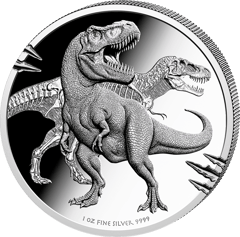 T. rexDinosaur
- The age of the dinosaurs ends 66 million years ago.
Palaeogene
66 to about 23 million years ago
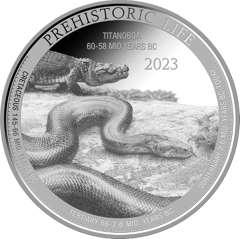 TitanoboaSnake
Neogene
about 23 to 2.6 million years ago
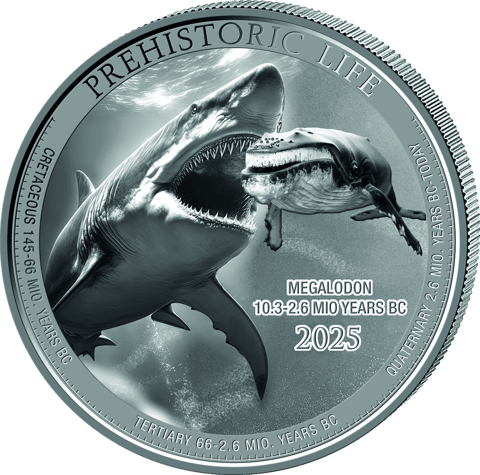 MegalodonShark
- The human genus begins about 2.8 million years ago.
Pleistocene
about 2.6 million to 11,700 years ago
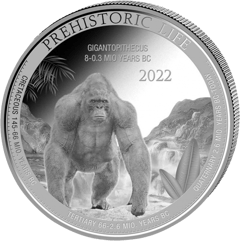 GigantopithecusGreat ape
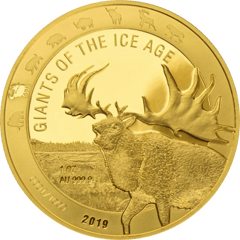 Giant deerMammal
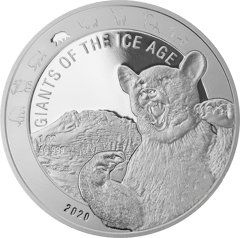 Cave bearMammal
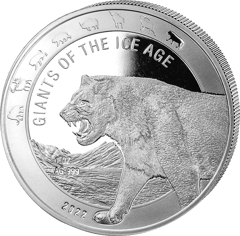 Cave lionMammal
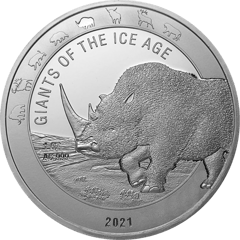 Woolly rhinocerosMammal
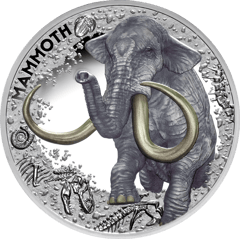 MammothMammal
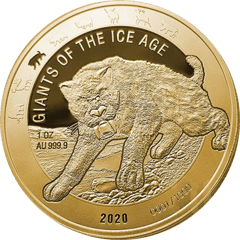 Sabre-toothed catMammal
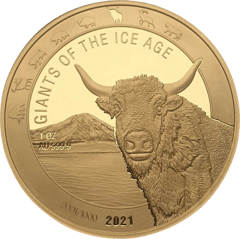 AurochsMammal
- Homo sapiens has existed for about 300,000 years.
- People enter the Chauvet Cave about 36,500 years ago.
Not to scale. Dates according to the International Commission on Stratigraphy, rounded.

The coin
Each animal in its landscape
Since 2024 Prehistoric Life II has continued the series of the Democratic Republic of the Congo, each animal in its landscape.
On the silver coins a timeline of the geological periods runs around the rim, and the obverse bears the coat of arms of the Democratic Republic of the Congo.
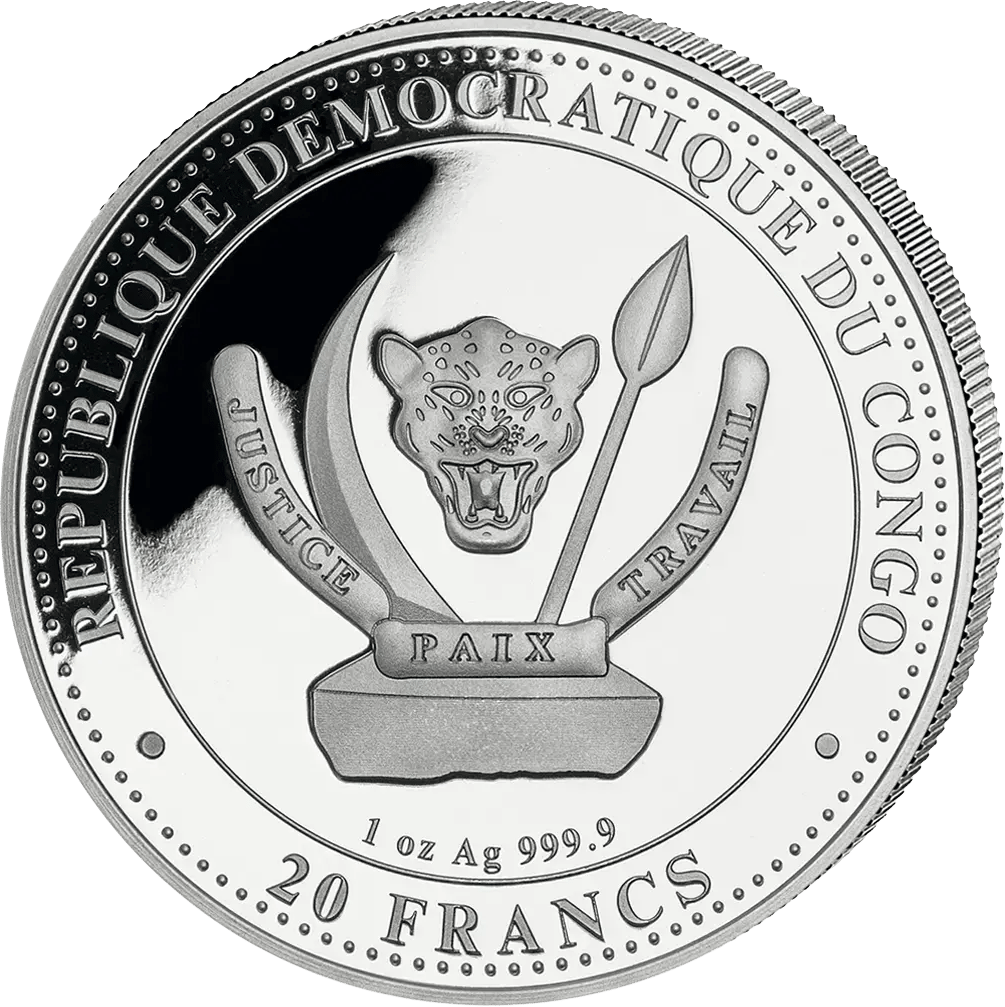
Coat of armsCoat of arms of the DR Congo
Face valueThe face value
The image up close

At a glance
- Issuing country
- Democratic Republic of the Congo
- Face value
- 20 francs
- Metal
- silver
- Weight
- 1 ounce
- Diameter
- 38.6 mm
- Quality
- Brilliant uncirculated
- Fineness
- 999.9/1,000
- Mintage
- 10,000 pieces
- Year
- 2026

The dinosaurs live on in the birds.
1 oz Silver Plateosaurus 2026 – the “Swabian Lindwurm” on a troy ounce
- Strictly limited: worldwide mintage of only 10,000 pieces per design
- Growth opportunities: high appreciation potential thanks to the tight limitation
- True rarity: sought-after collector's issue from the successful Prehistoric Life II series
- Investment quality: one troy ounce of 999.9 fine silver in Brilliant Uncirculated (BU) quality
- Striking design: seventh issue of the series, dedicated to Germany's first dinosaur discovery
- Well protected: delivered in a sturdy coin capsule, reeded edge
Around 217 million years ago, it roamed the swamp landscapes of the late Triassic – today it stands on one ounce of silver. The Plateosaurus is far more than a pretty design: it was the first dinosaur ever discovered on German soil. This is exactly what makes this collector's coin so appealing for numismatists and newcomers alike. And since only 10,000 pieces will be minted worldwide, this issue is scarce from the very start.
A design with depth: prehistoric landscape in the finest minting craftsmanship
The obverse shows a Plateosaurus wading through shallow water, while further animals of its kind move in the background between tall conifers. The inscription reads “PREHISTORIC LIFE,” the name “PLATEOSAURUS,” the lifespan “217 – 201 MIO YEARS BC,” as well as the year of issue 2026. Running around the edge of the coin are the three geological eras of the Triassic, Jurassic, and Cretaceous with their respective dates – a design element typical of the series that ties the entire collection together. The reverse bears the coat of arms of the Democratic Republic of the Congo with the leopard head and the mottos JUSTICE, PAIX, TRAVAIL, below which are the details “1 oz Ag 999.9” and the face value “20 FRANCS.”
The Prehistoric Life II series – prehistory in precious metal
Prehistoric Life launched in 2020 and quickly became a collector's favorite. Since 2024, the second season has been running, opened by the Triceratops. The Plateosaurus forms the seventh issue of this second series. Every coin is struck in Brilliant Uncirculated quality, and every issue remains strictly limited. There are also colorized versions and small gold issues in Proof quality – anyone completing the series builds a cohesive collection over the years. The country of issue is the Congo, and according to the manufacturer, minting takes place in Germany at the Bavarian State Mint. By the way: the Plateosaurus was first discovered in 1834 near Nuremberg; due to the many finds in southern Germany, it bears the nicknames “Swabian Lindwurm” and “German Lindwurm.”
Technical details at a glance
- Precious metal: fine silver, fineness 999.9
- Fine weight / gross weight: 31.1 g (1 oz) each
- Diameter: 38.60 mm
- Face value: 20 FRS. (Democratic Republic of the Congo)
- Year of minting: 2026 | Mintage: 10,000 pieces
- Condition: Brilliant Uncirculated (BU) | Edge: reeded
- Packaging: coin capsule
Why silver is convincing – for thousands of years
Silver is both a monetary metal and an industrial metal. In electronics, solar technology, and medical technology it is barely replaceable, and supply remains limited. In addition, there is the classic benefit of physical precious metals: inflation hedge, preservation of value across generations, and solid crisis protection when paper currencies start to falter. Unlike fiat money, silver does not depend on trust in governments but on its intrinsic value. Small units such as the ounce are also highly liquid and well suited as a means of exchange. From a tax perspective: profits from the sale of physical precious metals are generally tax-free after a holding period of at least one year.
Gold is humanity's oldest currency and has outlived every paper currency. Silver has accompanied it since time immemorial as the money of the people – tangible, divisible, recognized worldwide.
Rarity with collector appeal: 10,000 pieces and not one more
Standard bullion coins such as the Maple Leaf or Vienna Philharmonic are minted in the millions. Their advantage: tight trading margins. Their disadvantage: no rarity premium. This is exactly where the Plateosaurus comes in. The very low mintage of only 10,000 pieces makes it a genuine rarity – comparable to themed series such as “Giants of the Ice Age,” yet with a design world that instantly captivates even non-collectors. Earlier years of the series are already traded on the secondary market well above their pure material value, underlining the appreciation potential of such limited editions.
Whether as an entry into the world of silver coins, as a building block for your investment silver, or as an extraordinary gift for dinosaur enthusiasts: this one-ounce silver coin combines the joy of collecting with the reassuring feeling of holding genuine precious metal in your hand. The combination of premium bullion coin, earth history, and strict limitation is rarely found in such a fitting way on 38.60 millimeters.
Product depiction may differ from the final product.
