





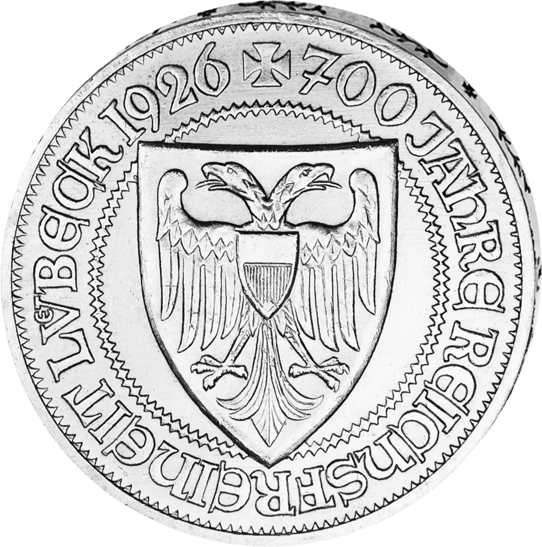


3 Reichsmark 700 Years of Imperial Freedom Lübeck (1926 | Weimar Republic)












- Queen of the Hanseatic League: privilege of 1226
- Limited mintage: only 200,000 pieces
- Lübeck's double eagle: finely feathered
- Queen of the Hanseatic LeagueEmperor Frederick II elevated Lübeck to a free imperial city
- Limited mintageFar scarcer than the millions of ordinary 3-mark coins
- Lübeck's double eagleCity coat of arms in Gothic shield with finely engraved feathers
 Price alert
  Share
Share
Original from the Weimar Republic · 1926
What a Reichsmark bears
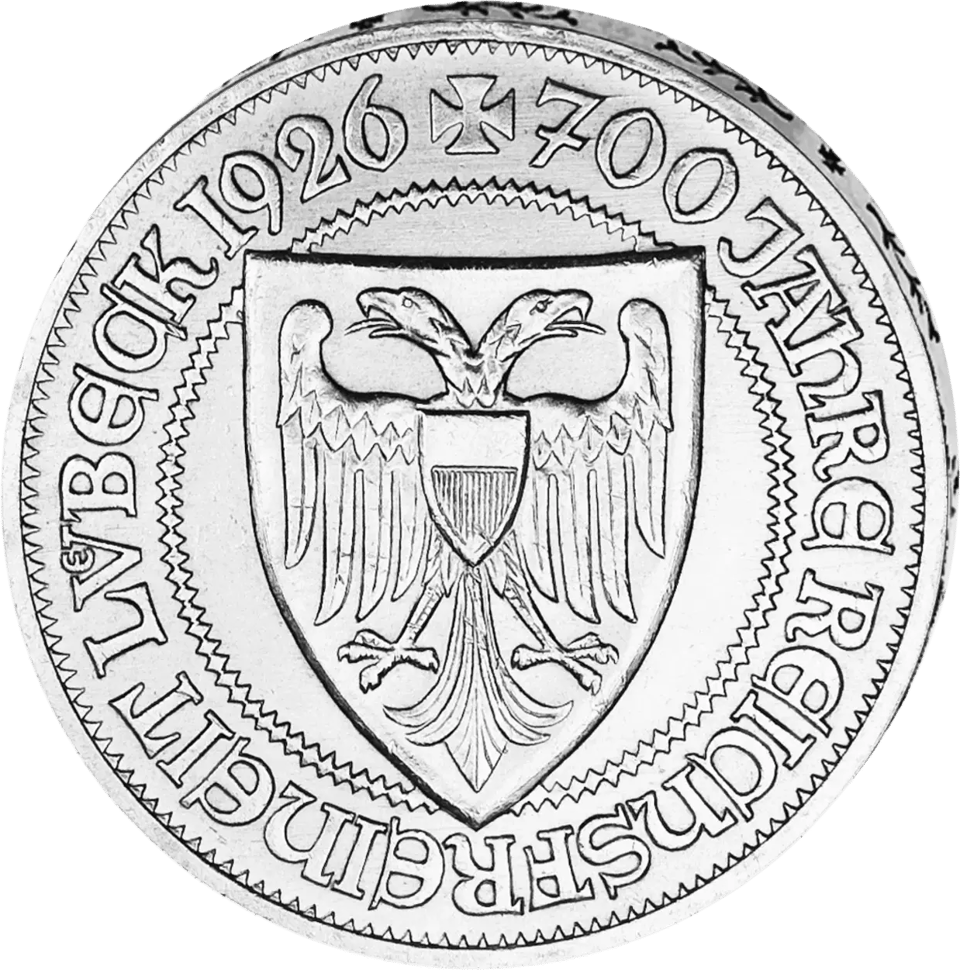
3 Reichsmark Lübeck 1926, picture side
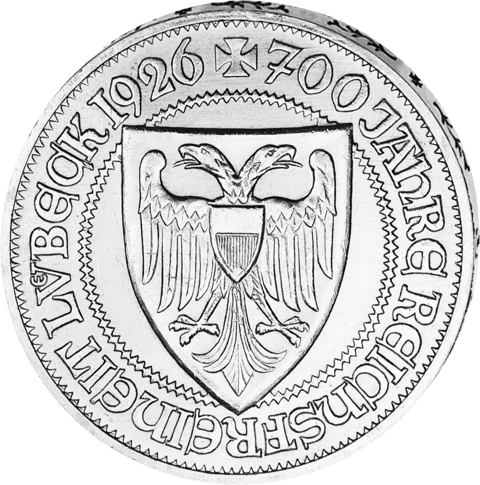
The Reichsmark existed from October 1924. Its commemorative coins of three Reichsmark bear a picture of their own on one side and the value on the other. It bears 700 JAHRE REICHSFREIHEIT LVBECK 1926: in 1226 Lübeck became a free imperial city.
On the piece
A value side and a picture of its own
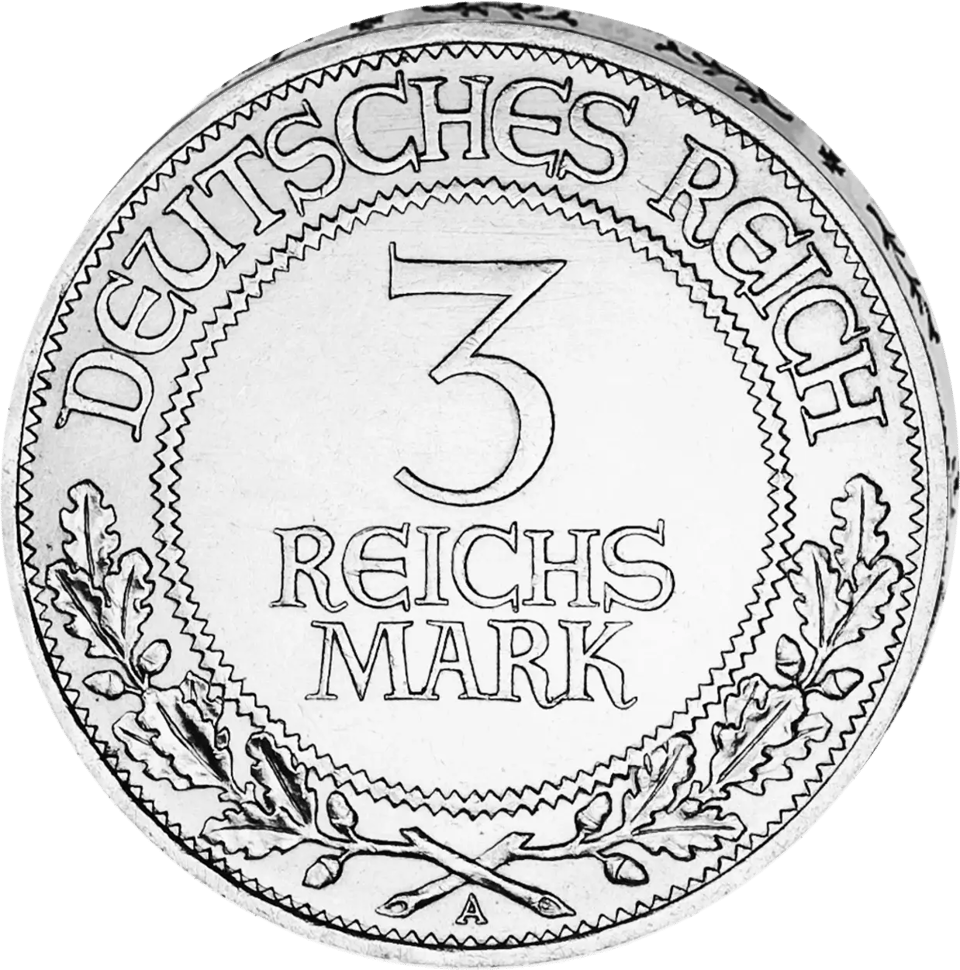
Each of these coins bears Deutsches Reich and the value, 3 Reichsmark. One side bears a picture of its own.
Here stands a shield with a double eagle, around it 700 JAHRE REICHSFREIHEIT LVBECK 1926.
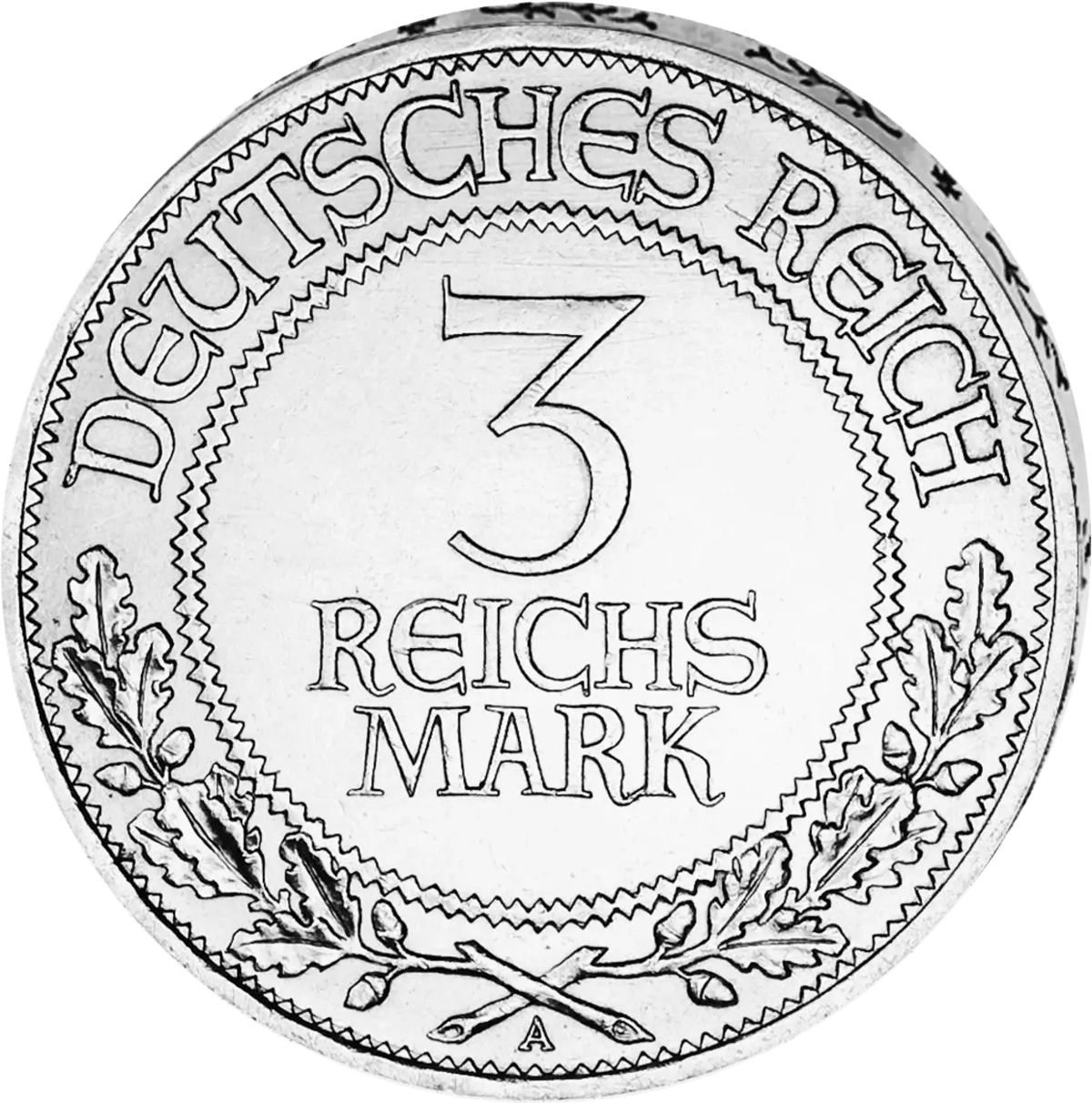
ValueThe value, 3 Reichsmark

Rentenmark and Reichsmark
From the Rentenmark to the Reichsmark
In the autumn of 1923 the Rentenbank was founded. Its Rentenbank notes were issued in a new money:
“The unit of value of these Rentenbank notes is the Rentenmark, which is divided into 100 Rentenpfennig.”
15 October 1923
Decree on the founding of the Rentenbank.
8 November 1923
A decree allows coins of 1, 2, 5, 10 and 50 Rentenpfennig.
30 August 1924
The coinage act introduces the Reichsmark.
October 1924
The Reichsbank issues the Reichsmark alongside the Rentenmark, one to one.
June 1948
The Deutsche Mark replaces the Reichsmark.

Weimar commemorative coins
Three Reichsmark for an occasion
The commemorative coins of 3 Reichsmark are made of silver, 500/1,000, weigh about 15 grams and measure 30 millimetres.
In 1226 Lübeck received the privilege of imperial freedom from Emperor Friedrich II and became a free imperial city. In 1926 it was 700 years, as this coin states.
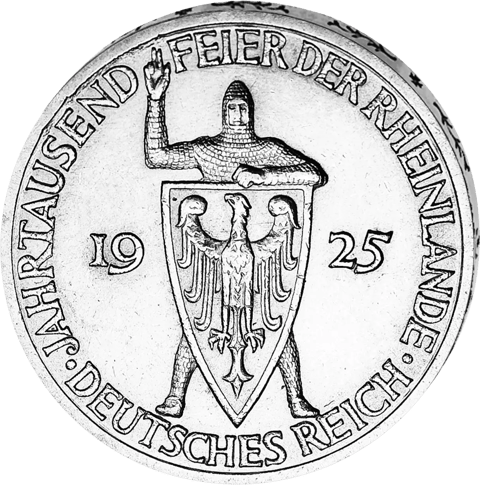
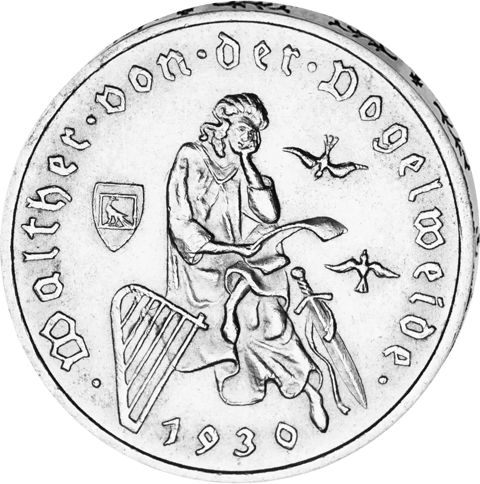
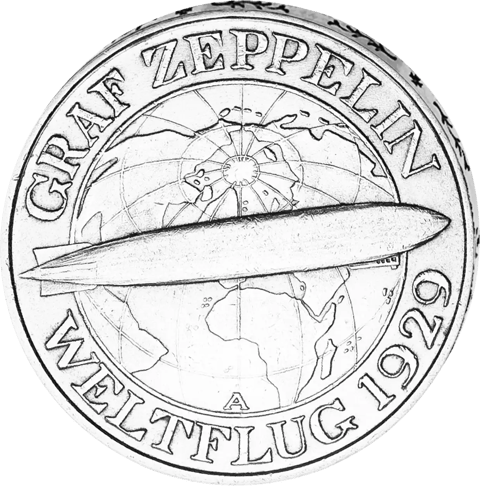
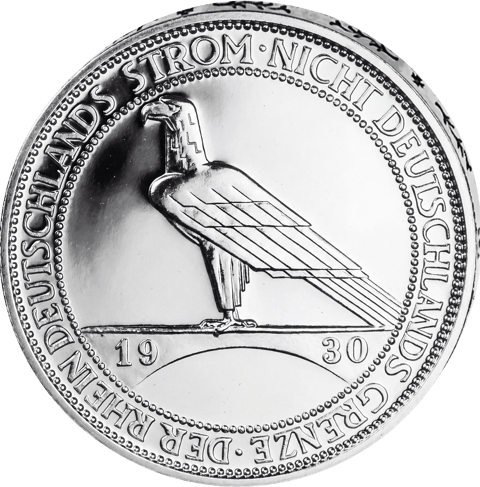
The mint mark
A letter for the mint
On the coins of the Reich a letter names the mint, A for example Berlin, J Hamburg, F Stuttgart. The photo of this piece shows a A.
The gold of the mark
The gold of the German Empire
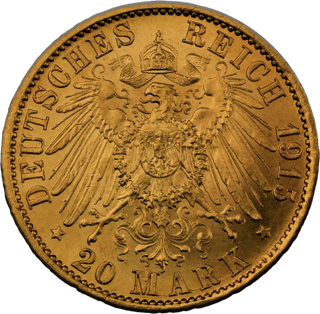
Twenty and ten marks in gold, 900/1,000: a twenty-mark piece weighs 7.96 grams, of which 7.17 grams is fine gold.
The mark in silver
The silver mark in the hand
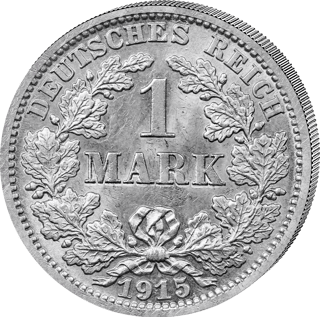
A mark holds 5 grams of fine silver, 900/1,000, and measures 24 millimetres. No one had to accept silver coins for amounts over 20 marks.
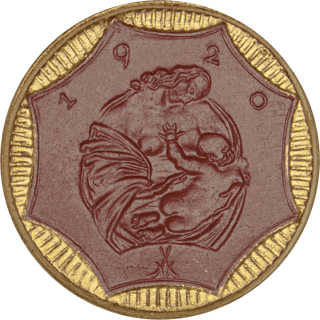
Emergency money
Emergency money in stoneware and from Hamburg
In 1921 Saxony issued emergency money of Meissen Böttger stoneware, and in August 1923 Hamburg issued its own emergency money.
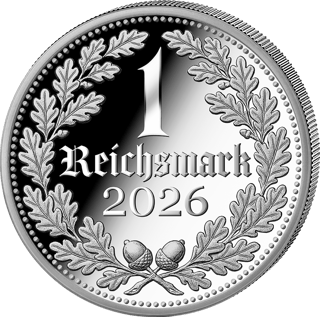
Our strikes
What our strikes take up
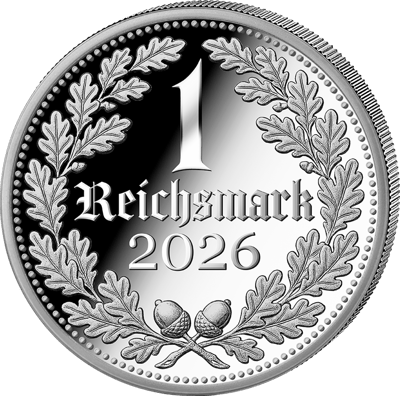
Our strikes bear the lettering 1 Reichsmark or 1 Mark in an oak wreath. They are newly struck, no Reichsmark of the past and no legal tender of the Reich.
At a glance
- Type
- Original
- Era
- Weimar Republic
- Occasion
- 700 years of Lübeck’s imperial freedom
- Face value
- 3 Reichsmark
- Metal
- Silver
- Fineness
- 500/1,000
- Gross weight
- 15 g
- Fine weight
- 7.5 g
- Diameter
- 30 mm
- Year of striking
- 1926
Gross weight: the weight of the whole coin. Fine weight: the pure metal in it. Fineness: its share in thousandths.
Details from our product data and the strike.

Original and new strike
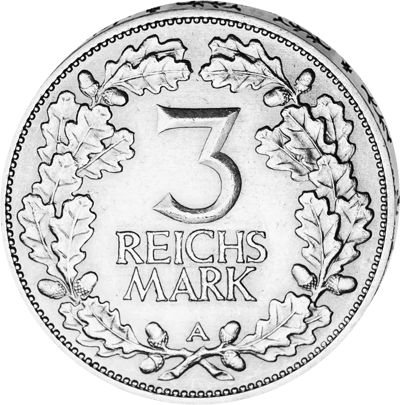
On the left 3 Reichsmark of 1925 with the value in an oak wreath, on the right our ounce, which bears the lettering 1 Reichsmark in an oak wreath.
3 Reichsmark 1926 “700 Years of Imperial Immediacy of Lübeck” – Hanseatic History in 500 Silver
Some coins tell history better than any textbook. This one belongs to that category. In 1926, the German Reich issued a commemorative coin marking an imperial privilege granted in 1226: the imperial immediacy (Reichsfreiheit) of the city of Lübeck. Seven centuries later, the young Weimar Republic captured this date in precious metal – with a mintage of just 200,000 pieces, struck in Berlin under the mint mark “A”. Anyone collecting historical silver coins from Germany can hardly overlook this piece.
Emperor Frederick II and the Queen of the Hanseatic League
In 1226, Emperor Frederick II elevated Lübeck to a free imperial city through the Charter of Imperial Immediacy. From then on, the city answered to no authority but the emperor himself – no count, no duke, no bishop had a say. This imperial immediacy was the starting point for an unparalleled rise: Lübeck developed its own legal code, the so-called Lübeck Law, which later became the standard in numerous Baltic Sea cities, and rose to become the head of the Hanseatic League. The city of the seven towers was called the “Queen of the Hanseatic League”. Long-distance trade, seafaring, brick Gothic architecture – all of this lies behind the double-headed eagle on this coin.
Design, edge inscription and technical data
The obverse shows the coat of arms of Lübeck: the double-headed eagle within a shield, surrounded by the legend “700 JAHRE REICHSFREIHEIT LVBECK”, the year 1926, and a cross pattée. The reverse simply states “DEUTSCHES REICH” and “3 REICHS MARK”, framed by crossed oak branches with acorns, with the mint mark below. And the edge bears what ultimately turns this issue into a document of its time: EINIGKEIT UND RECHT UND FREIHEIT (Unity and Justice and Freedom).
- Face value: 3 Reichsmark, German Reich (Weimar Republic)
- Material: Silver, fineness 500/1,000
- Gross weight: 15.00 g – Fine weight: 7.50 g silver
- Diameter: 30.00 mm
- Year of issue: 1926 – Mint of Berlin (“A”)
- Mintage: 200,000 pieces (circulation issue)
- Catalogue: Jaeger 323, KM 48, AKS 74
- Edge inscription: EINIGKEIT UND RECHT UND FREIHEIT
- Condition: circulated, bank-standard quality
The Reichsmark – a currency after the storm
Barely three years before this coin was struck, hyperinflation had wiped out the savings of millions of people. It was only the currency reform that restored order to payment transactions with the introduction of the Reichsmark, divided into 100 Reichspfennig. Silver coins in denominations of 1, 2, 3 and 5 Mark gave the new currency substance – literally, since here the value was contained in the metal itself. This is precisely why these pieces still feel so credible today: they are tangible proof that precious metal creates trust where paper loses it.
Circulated coinage with character – every specimen an original
These coins were genuine legal tender. They passed through hands, cash registers and wallets, and bear corresponding traces: darker patina, individual centering, small nicks, wear, and in places weaker legend details. This is exactly what makes them appealing. Not a glossy mass-produced product, but a witness to history that has actually circulated. Since condition, toning and die variety differ from piece to piece, the specimen delivered may differ from the illustration – you receive an original, not a mass-produced item. We therefore ask for your understanding that the image shown in the shop is an example, and the item delivered may vary individually in appearance and condition due to historical circumstances.
Why silver – and why in this form?
Silver has been a monetary metal, a store of value, and a symbol of wealth and prestige for thousands of years. It does not spoil; it retains its physical properties across generations. Add to this the industrial demand: electronics, solar technology and medical technology all require the white metal, while supply naturally remains limited. A tangible asset with intrinsic value, then – unlike fiat money, which relies solely on trust in governments.
- Dual character: a collector's item with historical substance and, at the same time, 7.5 g of fine silver in hand.
- Small unit: a convenient denomination, globally traded metal, high liquidity – also conceivable as a medium of exchange in times of currency instability.
- Tax-attractive: profits from the sale of silver are generally tax-free after a minimum holding period of one year.
- Generational value: suitable for preserving and passing on wealth over the long term.
- Tangible asset: physical precious metal traditionally serves as inflation hedge and as crisis protection.
Compared to other Weimar commemorative coins
The 3-Reichsmark commemorative coins of the Weimar Republic are among the most popular collecting areas of German numismatics – from Bremerhaven 1927 to Naumburg 1928 and the Zeppelin World Flight in 1930. Compared to the 3-Mark circulation coins bearing the imperial eagle, which were produced in the millions, Lübeck with 200,000 specimens is remarkably scarce. Compared to top conditions in Mint State or Proof, the circulated coinage has a clear advantage: it is the more accessible entry point into a demanding series. The downside is plain to see – flawless surfaces cannot be expected. Anyone seeking perfect grades should turn to certified top qualities; anyone wanting history you can touch will find it exactly right here.
Gold and silver have outlasted empires, republics and currency reforms. This coin has outlived the Reichsmark itself – and can now live on in your collection.
Who this piece is made for
For collectors of the Weimar Republic wishing to complete their series. For lovers of the Hanseatic city and everyone who holds Lübeck dear. For beginners who want to combine historical coins with real metal value. And for anyone who wants to add a piece of genuine German history to their precious metals holdings.
Product depiction may differ from the final product.
