





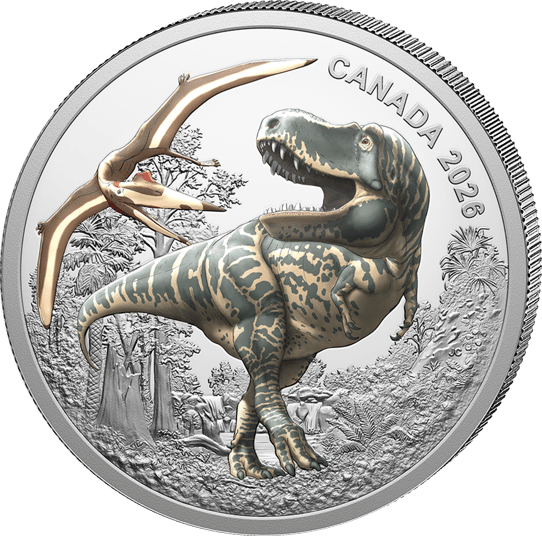


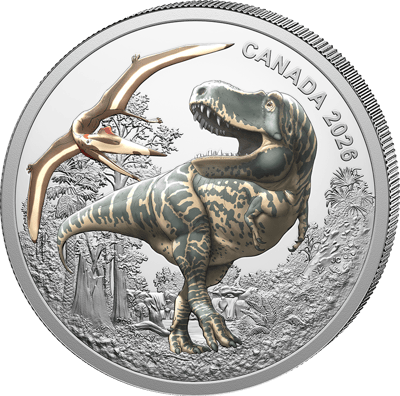
1 oz Silver Canada T-Rex 2026 (Mintage: 8,500 | Blacklight Effect | Proof)












- Glowing Skeletons: with UV lamp
- Artist Design: by Julius Csotonyi
- Certificate of Authenticity: in elegant case
- Glowing SkeletonsUnder UV light both prehistoric giants turn into fossils
- Artist DesignFact-checked by the curator of the Royal Tyrrell Museum
- Certificate of AuthenticityIssued by the Royal Canadian Mint, securely encapsulated
 Price alert
  Share
Share
Tyrannosaurus rex
From the rock into the light.A T. rex in silver.
1 ounce of silver, in colour and with a black light effect, issuing country Canada. Tyrannosaurus rex lived 68 to 66 million years ago.
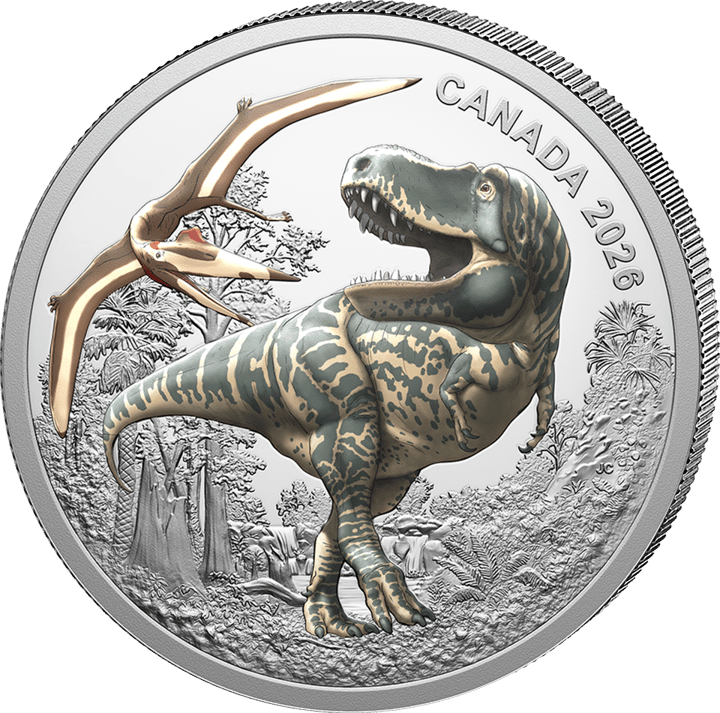
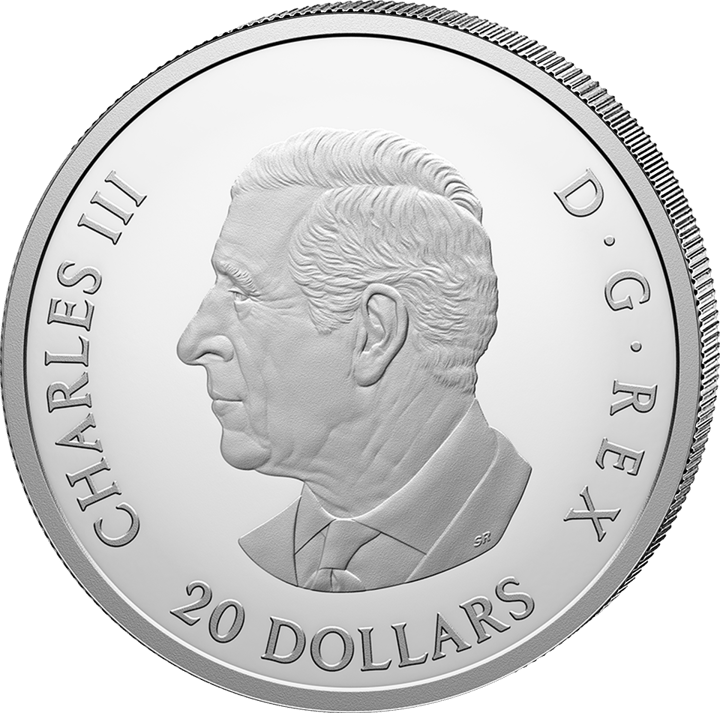
Tyrannosaurus rex on 1 ounce of silver, reverse, image
1 ounce of silver, in colour and with a black light effect, issuing country Canada. Tyrannosaurus rex lived 68 to 66 million years ago.

From the rock
By bone volume, SUE is the most complete skeleton of a T. rex.
SUE was found in 1990 in South Dakota, and 90 per cent of her survives. At 28 years she was the oldest T. rex known.
No human has ever seen this animal alive: the age of the dinosaurs ended 66 million years ago, and the human genus has existed for about 2.8 million years.
Source: Field Museum, Chicago
The timeline
From the Devonian to the last Ice Age
Each animal stands in its geological period. The sections show the order, not the duration.
Devonian
about 420 to 359 million years ago
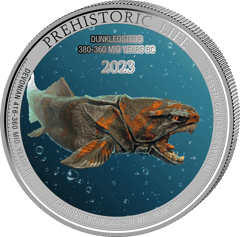 DunkleosteusArmoured fish
Carboniferous
about 359 to 299 million years ago
Permian
about 299 to 252 million years ago
Triassic
about 252 to 201 million years ago
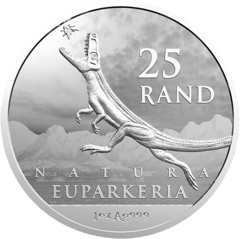 ArchosaursAnimal group
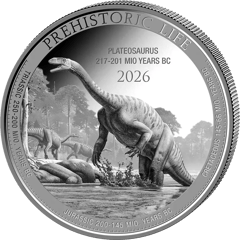 PlateosaurusDinosaur
Jurassic
about 201 to 143 million years ago
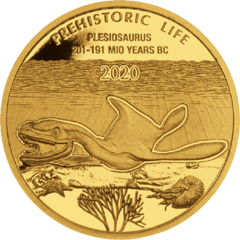 PlesiosaurusMarine reptile
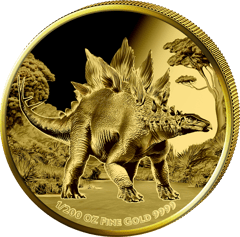 StegosaurusDinosaur
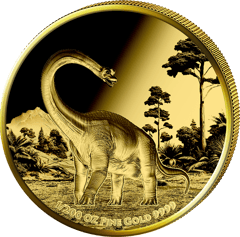 BrachiosaurusDinosaur
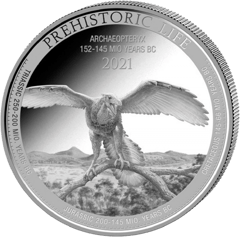 ArchaeopteryxEarly bird
Cretaceous
about 143 to 66 million years ago
 T. rexDinosaur
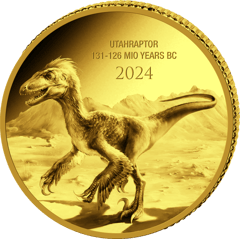 UtahraptorDinosaur
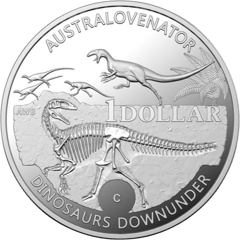 AustralovenatorDinosaur
 PteranodonPterosaur
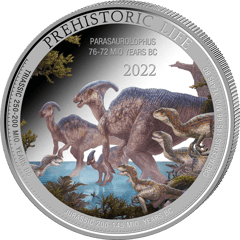 ParasaurolophusDinosaur
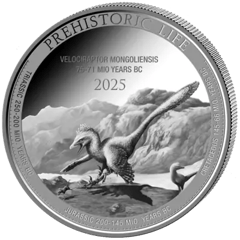 VelociraptorDinosaur
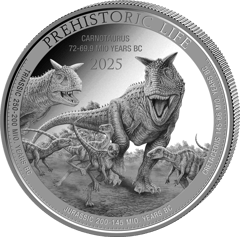 CarnotaurusDinosaur
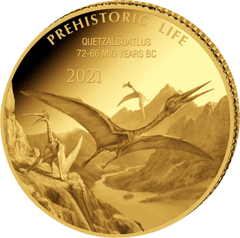 QuetzalcoatlusPterosaur
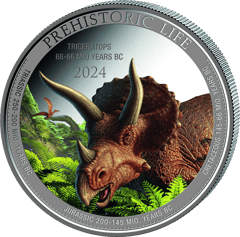 TriceratopsDinosaur
- The age of the dinosaurs ends 66 million years ago.
Palaeogene
66 to about 23 million years ago
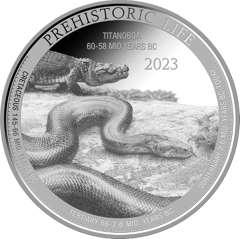 TitanoboaSnake
Neogene
about 23 to 2.6 million years ago
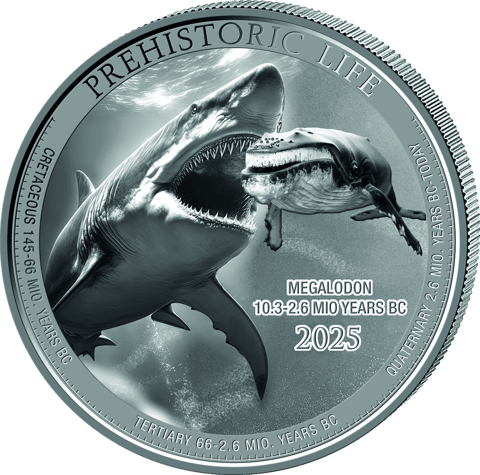 MegalodonShark
- The human genus begins about 2.8 million years ago.
Pleistocene
about 2.6 million to 11,700 years ago
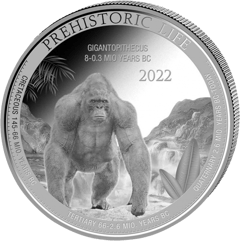 GigantopithecusGreat ape
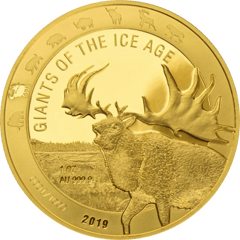 Giant deerMammal
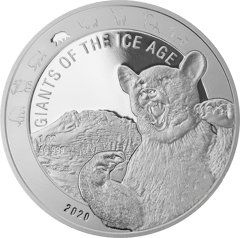 Cave bearMammal
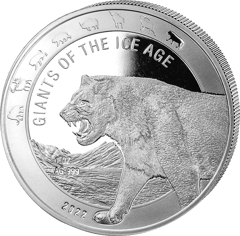 Cave lionMammal
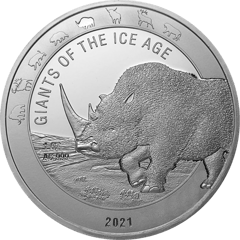 Woolly rhinocerosMammal
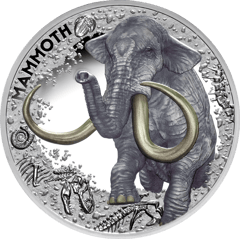 MammothMammal
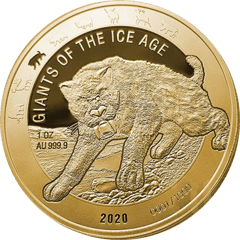 Sabre-toothed catMammal
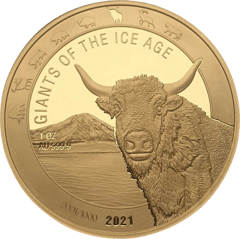 AurochsMammal
- Homo sapiens has existed for about 300,000 years.
- People enter the Chauvet Cave about 36,500 years ago.
Not to scale. Dates according to the International Commission on Stratigraphy, rounded.
The coin
What appears under black light
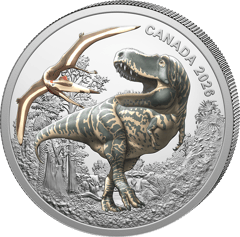
Julius Csotonyi shows a T. rex striding through a swampy forest, above it a young Quetzalcoatlus.
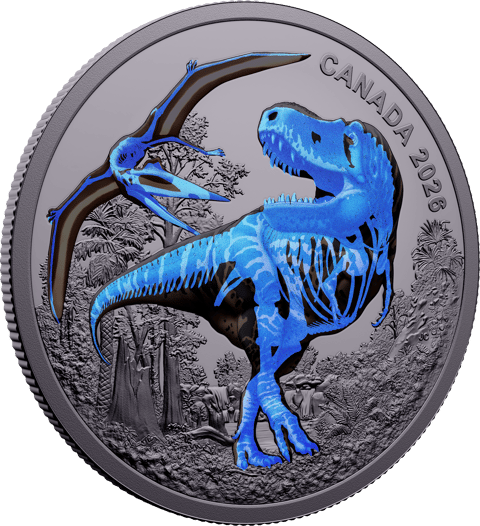
Under black light a hidden layer becomes visible: the bones of both animals.
The issuer is the Royal Canadian Mint, and the face value is 20 dollars.
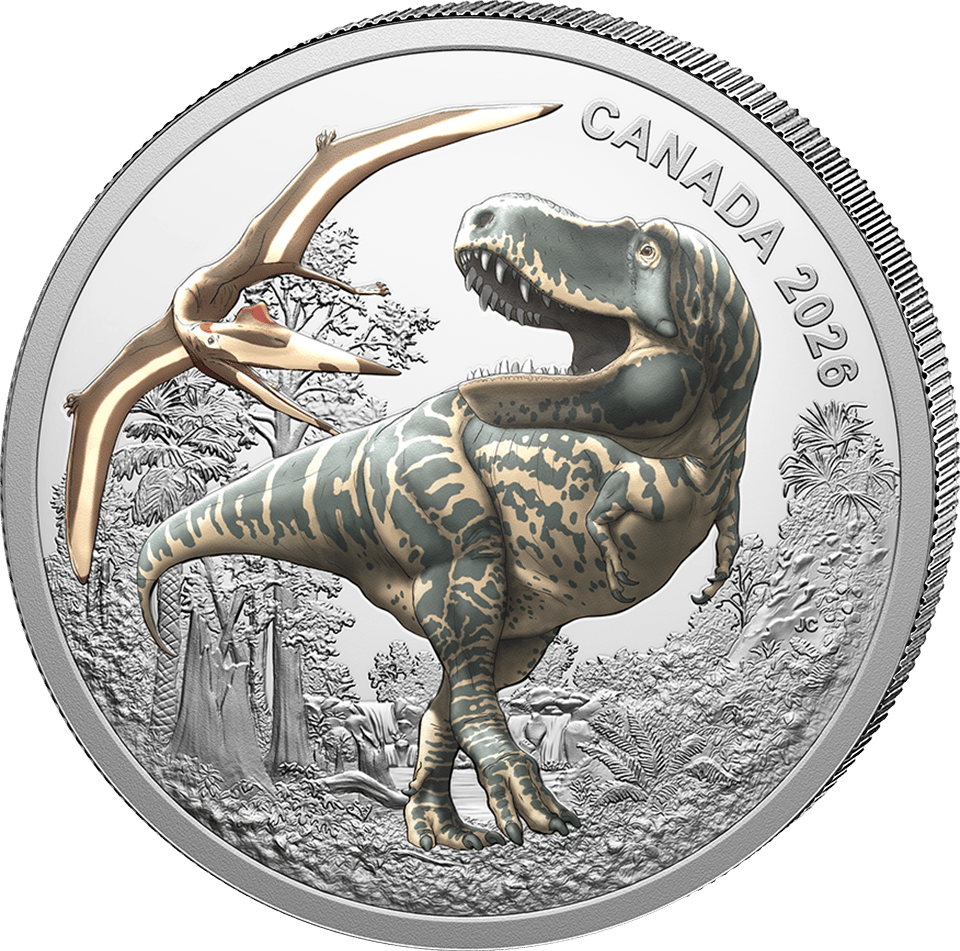
QuetzalcoatlusThe young Quetzalcoatlus
InscriptionCANADA 2026
The image up close
At a glance
- Issuing country
- Canada
- Face value
- 20 dollars
- Metal
- silver
- Weight
- 1 ounce
- Diameter
- 38 mm
- Year
- 2026
- Finish
- coloured and black light effect
The dinosaurs live on in the birds.
T. rex 2026 from Canada: Prehistoric Giant on One Troy Ounce of Fine Silver
- Minting quality: The highest possible finish, Proof, with a mirrored field and frosted relief details
- Strict mintage limit: Only 8,500 pieces worldwide – one of the smaller mintages among Canada's 2026 one-ounce issues
- Black-light effect: Under UV light, both prehistoric giants transform into glowing fossil skeletons
- Material quality: 999.9/1,000 fine silver, struck by the Royal Canadian Mint
- Color finishing: Partial color printing on the Tyrannosaurus rex and Quetzalcoatlus northropi, while the background remains deliberately engraved only
- Artist's signature: Design by paleoartist Julius Csotonyi, signed "JC" within the image field
- Presentation: Encapsulated in a premium case, issued with a legal face value of 20 CAD
Few creatures in Earth's history fascinate as reliably as the "tyrant lizard king." In 2026, the Royal Canadian Mint dedicated one troy ounce of silver to this fascination – reaching deep into the toolbox of modern minting technology in the process. This coin reveals two faces: one in daylight, another under black light.
Two Giants of the Late Cretaceous Collide
The design side places the viewer eye-to-eye in a swampy forest of the late Cretaceous period. A massive Tyrannosaurus rex strides forward, head raised, jaws thrown wide open, its dagger-like teeth clearly visible. Its body is colored in green, grayish-green, and cream tones with a camouflaging striped pattern; its eye glows amber. High above, a young Quetzalcoatlus northropi glides into view – a pterosaur whose fully grown counterparts rank among the largest flying creatures ever to have lived. Ferns, conifers, palm fronds, and a small stream with rapids are finely engraved into the relief. The inscription "CANADA 2026" follows the upper curve of the design.
The scene was designed by Canadian paleoartist Julius Csotonyi. It was reviewed for scientific accuracy by Dr. François Therrien, Curator of Dinosaur Palaeoecology at the Royal Tyrrell Museum of Palaeontology – art and science go hand in hand here. The obverse bears the portrait of King Charles III, designed by artist Steven Rosati, flanked by the inscription "D · G · REX" and the denomination "20 DOLLARS".
The Highlight: From Predator to Fossil
The true masterstroke lies in the Royal Canadian Mint's black-light paint technology. In normal light, you see two living creatures in warm color tones. Under black light, the image flips completely: instead of skin, muscle, and wing membranes, the skeletons of both animals suddenly glow in vivid blue against the dark background – rib cages, spine, skull, claws. A charming nod to Canada's fossil-rich badlands, where spectacular discoveries continue to be made to this day. The mint includes a small UV light with the issue, allowing this effect to be triggered at any time.
Technical Specifications of the Silver Coin at a Glance
- Mint: Royal Canadian Mint (Canada)
- Year of issue: 2026 | Face value: 20 CAD
- Material: 999.9/1,000 fine silver
- Fine weight: 31.1 g (1 troy ounce); gross weight per the mint 31.39 g
- Diameter: 38.00 mm | Edge: reeded
- Condition: Proof with partial coloring
- Mintage: 8,500 pieces worldwide
- Packaging: Capsule in a case, with certificate of authenticity from the mint
Collector's Delight Meets Genuine Tangible Asset
This issue is primarily a collector's item – yet beneath the color print lies a full troy ounce of physical precious metal. Silver has accompanied humanity for millennia as coinage metal, means of payment, and symbol of prosperity. Unlike paper money, which relies solely on trust in institutions, it possesses intrinsic value: electronics, photovoltaics, and medical technology continuously consume it, while globally extractable reserves remain limited. Anyone holding silver coins holds an internationally tradable, always liquid raw material in their hands – divisible, durable, and passable down through generations.
This is precisely why many investors value physical precious metal as an inflation hedge and as crisis protection. A pleasant side effect for private individuals in Germany: after a holding period of at least twelve months, any capital gain from the sale of physical silver is generally tax-free.
How Does the T. rex Compare?
Anyone thinking of a one-ounce silver coin from Canada first thinks of the Maple Leaf with its maple leaf design. Both coins consist of 999.9 fine silver and measure 38 mm. The difference lies in character: the Maple Leaf is an unlimited bullion coin, with its price closely tracking the material value. The T. rex, on the other hand, is an elaborately finished collector's piece in Proof quality with a strictly limited mintage. Compared to Canada's earlier dinosaur issues – such as the glow-in-the-dark quarters of previous years – the 2026 issue scores points through its one-ounce weight, color printing, and the significantly more spectacular fossil effect.
A design that amazes children and convinces collectors alike – crafted from a metal that has held its value for millennia.
For themed collectors, dinosaur enthusiasts, and anyone wanting to add a true conversation piece to their collection, this coin is an obvious choice. With only 8,500 pieces distributed worldwide, supply will move quickly – anyone wanting to see this issue in their own collection should not wait too long.
Product depiction may differ from the final product.
