





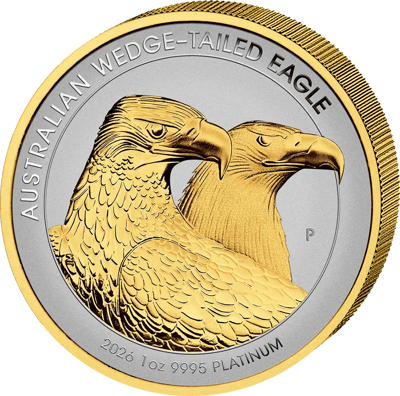

1 oz Platinum Wedge Tailed Eagle 2026 (Mintage: 150 | High Relief | Partially Gilded | Reverse Proof)
- Master Design: by John M. Mercanti
- Gold Shine: eagle in 24 karat gold
- Certificate: in an elegant wooden case
- Master DesignThe former US Mint chief engraver shows two eagles
- Gold ShineThe gold stands out brightly against the matte background
- CertificateA numbered certificate of authenticity comes with every piece







- Master Design: by John M. Mercanti
- Gold Shine: eagle in 24 karat gold
- Certificate: in an elegant wooden case
 Price alert
 Share

Perth Mint · 2026
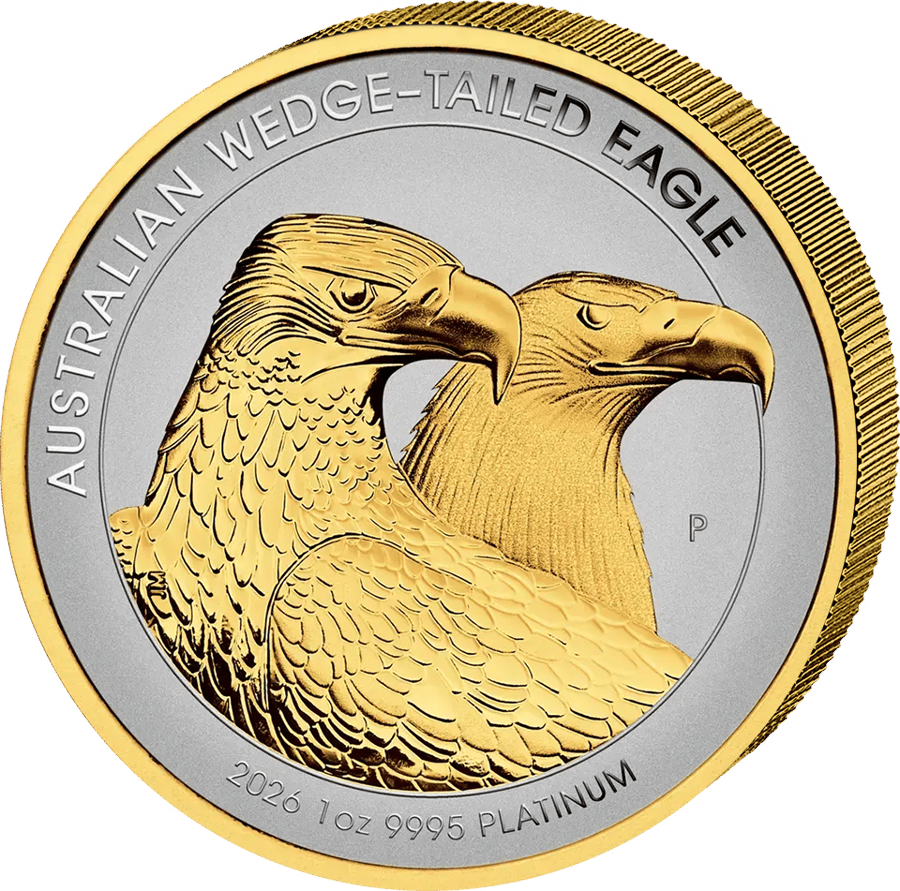
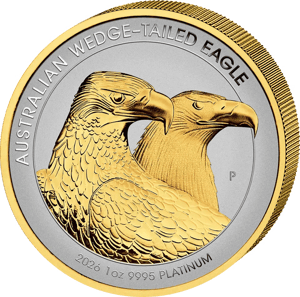
Gold on platinum.The 2026 Wedge-tailed Eagle in 1 ounce of platinum.
The two heads are partly gilded and stand in High Relief, struck as reverse proof on 1 ounce of platinum.
- Weight
- 1 ounce of platinum
- Fineness
- 999.5/1,000
- Year
- 2026
- Investment purpose
- Collector product
The two heads are partly gilded and stand in High Relief, struck as reverse proof on 1 ounce of platinum.
- platinum
- 1 ounce
- Fineness
- 999.5/1,000
- Year
- 2026
- Investment purpose
- Collector product
Gilded plumage
The mint mark P
The year of striking
Weight and fineness
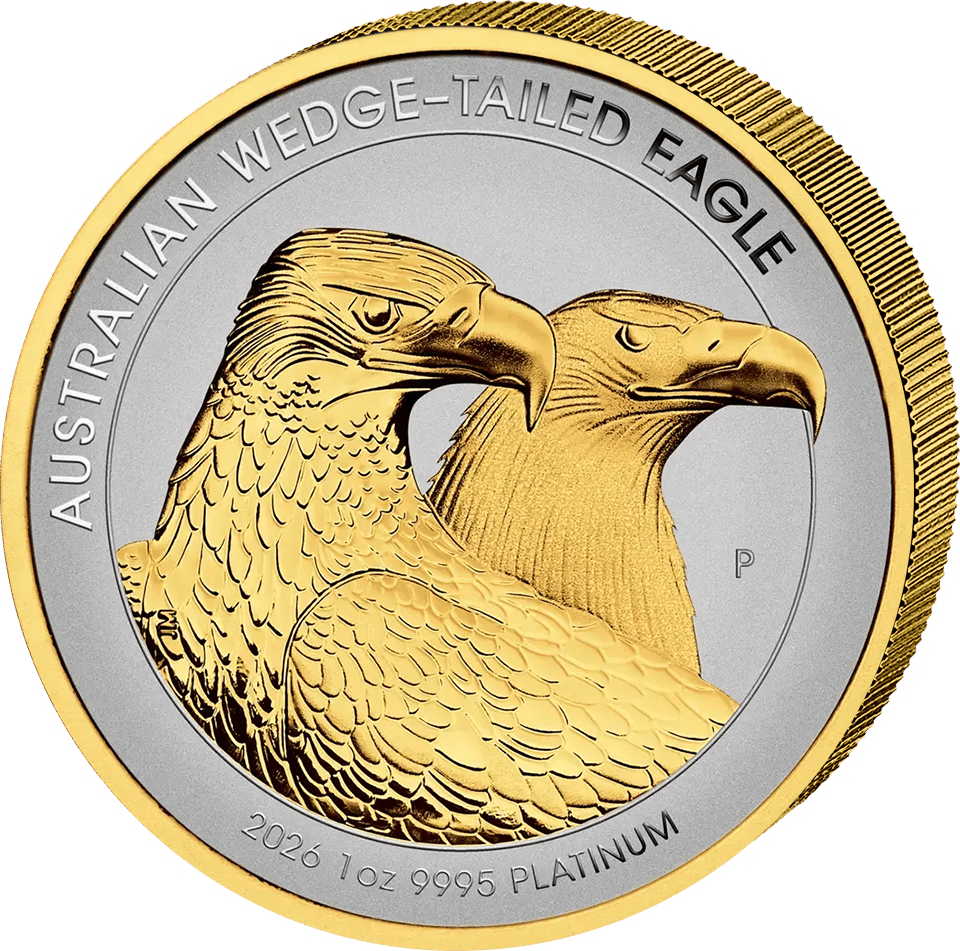
Reverse
Under the loupe
The plumage of the 2026 Wedge-tailed Eagle.
Year, weight and fineness are joined by the P, the mint mark of the Perth Mint.
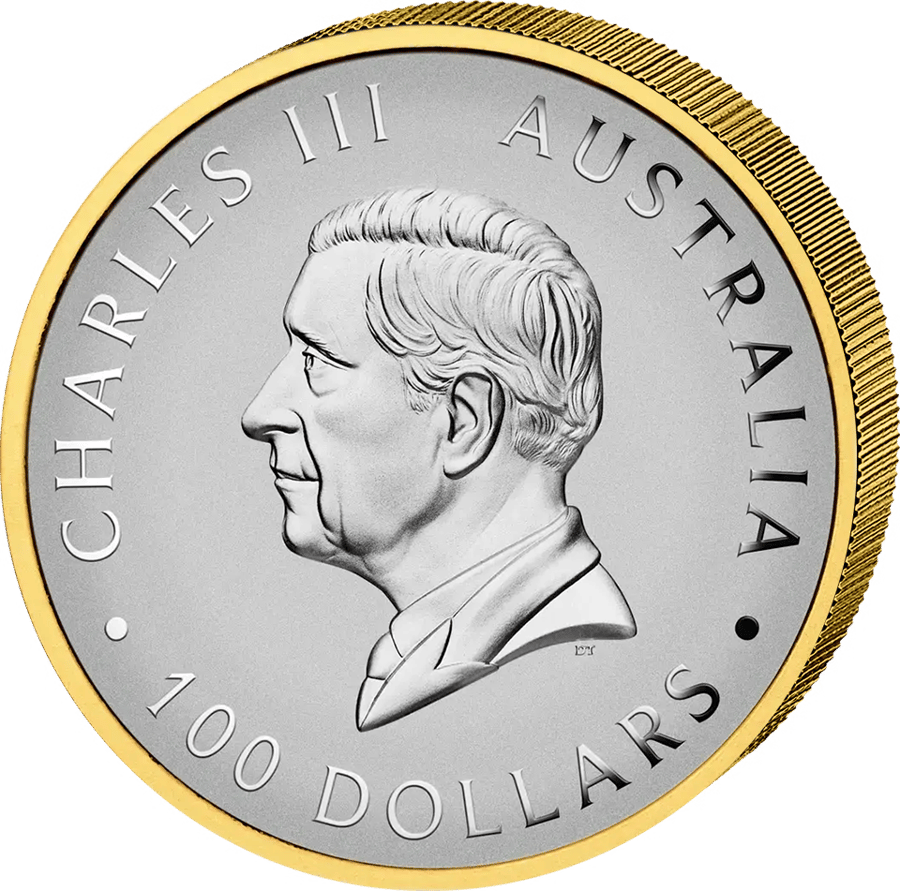
Turned over
The obverse: 100 Dollars from Australia.
It carries the portrait of Charles III.
The birds of the coins
6 species, 4 continents
The coins of this world are ordered by the bird, not by the country that issues them.
- EuropeIn the 1960s only 30 pairs of the Spanish Imperial Eagle were left; in 2020 there were 530 to 540.
- AfricaThe Martial Eagle is a master of soaring flight and spends much of its time at a great height.
On this coin
Wedge-tailed Eagle Aquila audax
Red List: least concern
On this coin
Bald Eagle Haliaeetus leucocephalus
- Size
- 71 to 96 cm, 3 to 6.3 kg
- Population
- about 200,000 mature individuals
Red List: least concern
Martial Eagle Polemaetus bellicosus
- Habitat
- open grassland with scattered large trees
- Weight
- 3 to 6.2 kg
Red List: endangered
Bateleur Terathopius ecaudatus
- Range
- much of Africa south of the Sahara, southwestern Arabia
- Area
- about 23.5 million km²
Red List: endangered
Spanish Imperial Eagle Aquila adalberti
- Breeding range
- only the Iberian Peninsula
Red List: vulnerable
Golden Eagle Aquila chrysaetos
- In this world
- on coins from Malta and Samoa
Red List categories according to BirdLife International.

The bird
Australia’s largest bird of prey.
It lives across the whole Australian mainland, on Tasmania and in southern New Guinea, from the coast to the mountains. Of the world’s large eagles it is the most common.
Australia
The eagle with the wedge-shaped tail
Its tail is long and wedge-shaped, its legs are feathered down to the toes.
Its nest of dead branches is used for years; nests 1.8 metres wide, 3 metres deep and weighing about 400 kilograms are known.
Perth Mint · since 2014
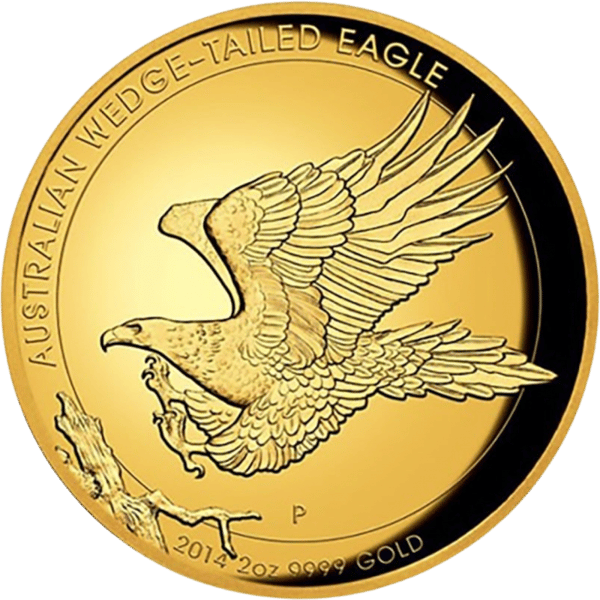
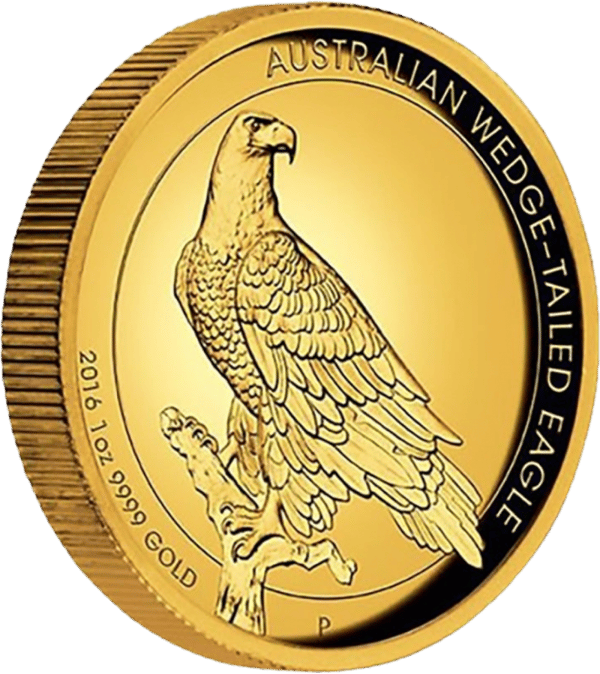
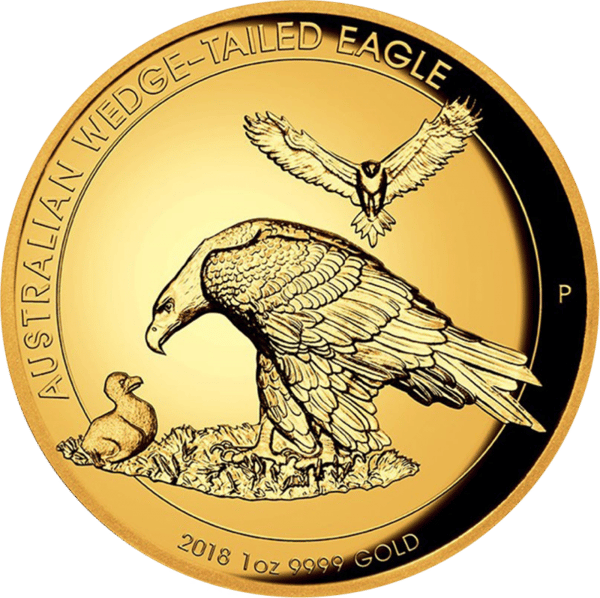
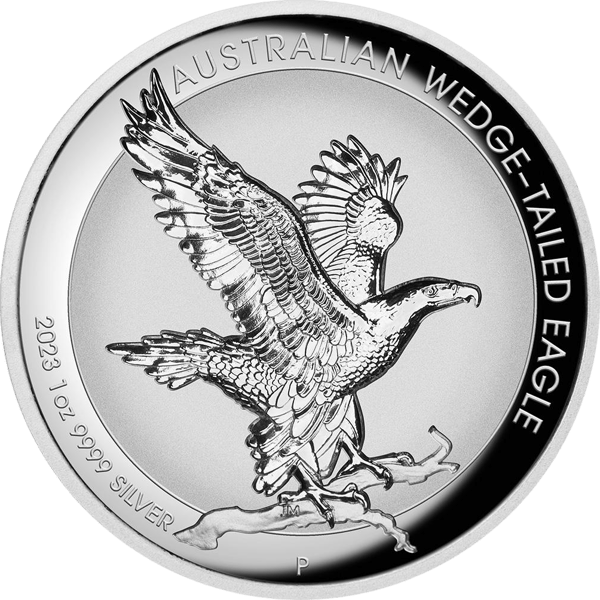
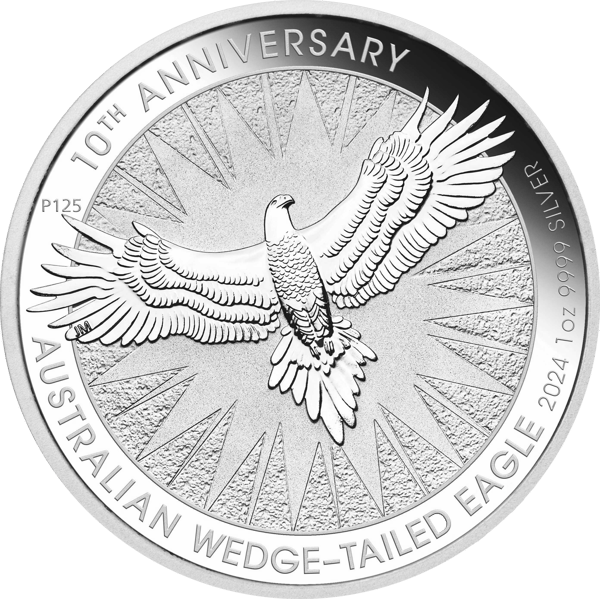
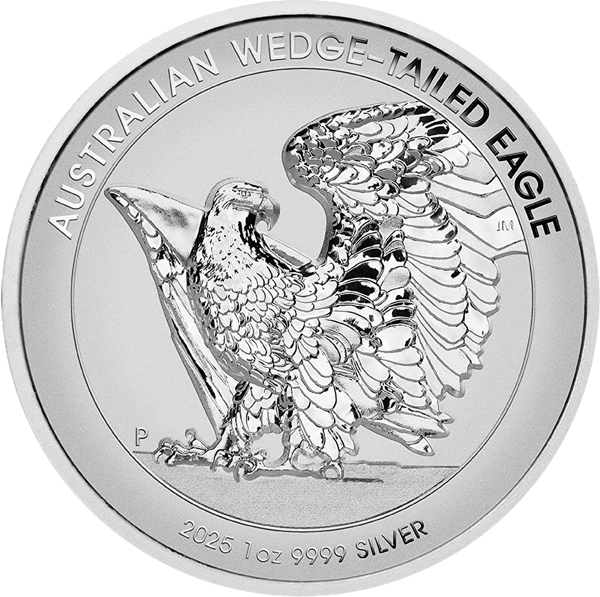
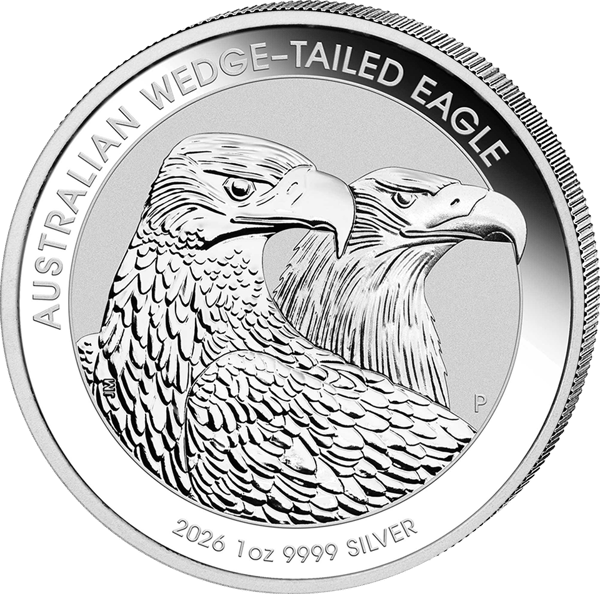
11 designs in 13 years
The series began in January 2014; the designs are by John M. Mercanti.
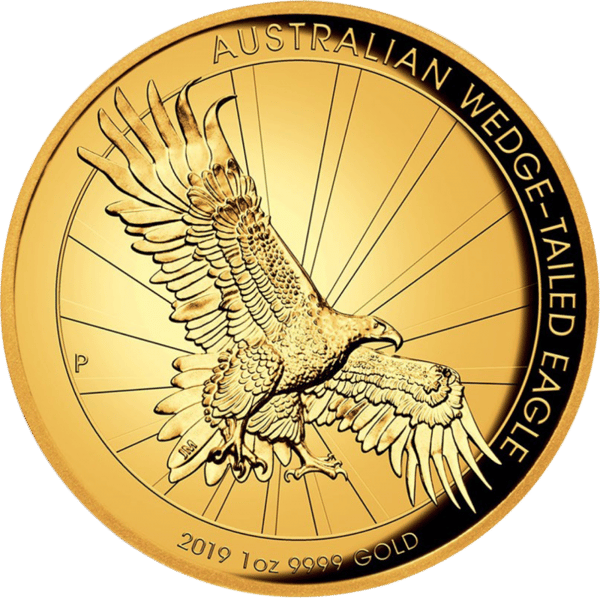
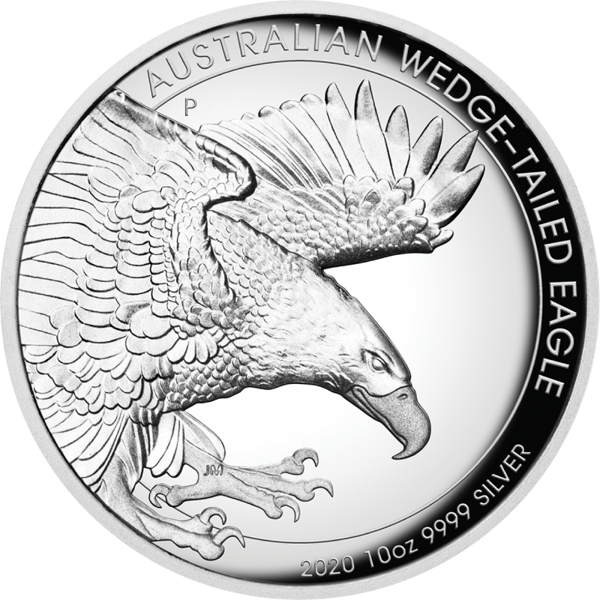
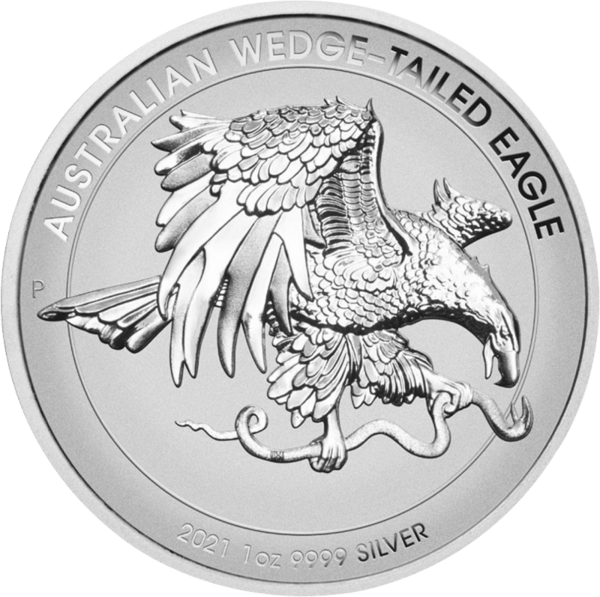
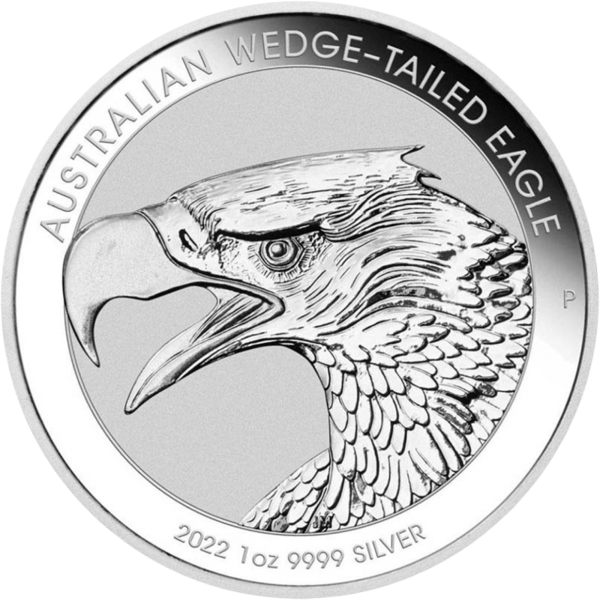
The issues of 2026
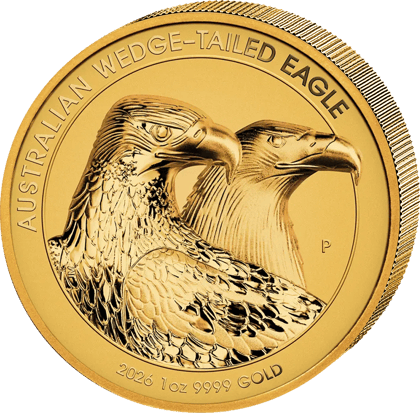
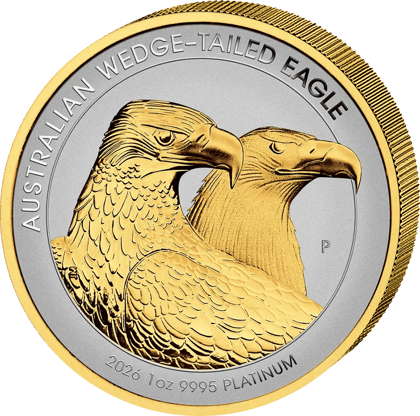
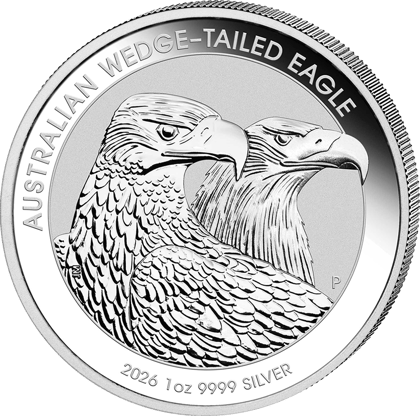
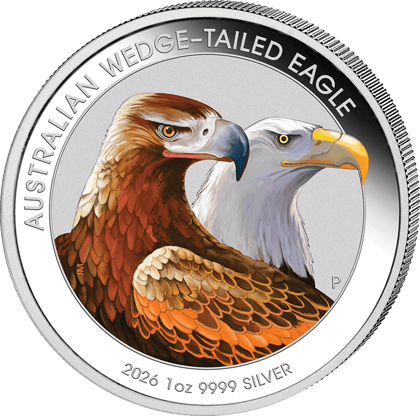
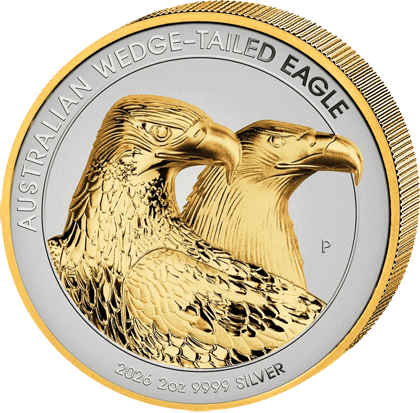
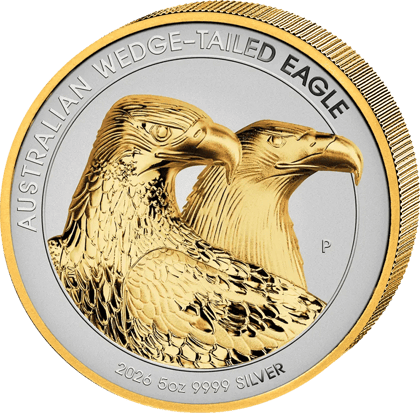
Every finish of the Wedge-tailed EagleEvery finish
Bullion and colour
Silver in 1 ounce, plus 2 coloured issues.
High Relief
Mostly in proof: silver from 1 to 10 ounces, gold from 1 to 5 ounces, platinum in 1 ounce.
Special finishes
Partly gilded on silver and platinum, Ultra High Relief and rose gold.
At a glance
The numbers of this piece.
- Mint
- Perth Mint
- Series
- Australian Wedge-Tailed Eagle
- Country of issue
- Australia
- Face value
- 100 Dollars
- Year
- 2026
- Quality
- reverse proof
- Finish
- partly gilded, High Relief
- Investment purpose
- Collector product
From Niue: John Gould’s Wedge-tailed Eagle
Issued by Niue, struck by B.H. Mayer, with the privy JG.

Eagles of the Continents
The sky belongs to the eagles.
From Africa to North America, captured in gold, silver, platinum and copper.
Wedge-tailed Eagle 2026: Eagle Rarity with 24-Karat Shine in High Relief
- Strictly limited: The Perth Mint is striking a mintage of just 150 pieces worldwide, with no further examples to follow
- Material / Fineness: A full ounce (31.1 g) of platinum with a fineness of 999.5/1,000, combined with a partial gilding of 24-karat gold
- Rarity: An extremely rare collector's coin from one of Australia's most popular eagle series
- Growth potential: Very high appreciation potential thanks to the limited number of pieces and strong demand from collectors worldwide
- Investment goal: A rare collector's item that combines numismatic exclusivity with genuine precious metal content
- Design: Wedge-tailed eagle and bald eagle side by side, the eleventh Wedge-tailed Eagle design by John M. Mercanti, the former Chief Engraver of the US Mint
- Special feature: High Relief striking on concave curved surfaces, creating a sculptural look and a tactile feel you can sense in your fingers
- Manufacturer: Struck by the renowned Perth Mint in Western Australia
- Country of origin: Australia, official legal tender with a face value of 100 AUD
Some coins you simply buy. Others you search for over years. The 1 oz Platinum Wedge-tailed Eagle 2026 clearly belongs to the second category: with just 150 pieces worldwide, this partially gilded Reverse Proof edition ranks among the rarest platinum coins of the Perth Mint's current year of issue. Anyone who hesitates here will often miss out later.
Two Eagles, Two Continents: The Design
In the foreground, an Australian wedge-tailed eagle gazes watchfully to the right. Behind it appears a bald eagle looking in the same direction. John M. Mercanti, who as the 12th Chief Engraver of the United States Mint created more coin and medal designs than any other employee in the institution's history, elegantly combines his American roots with Australia's heraldic animal. The plumage is worked out down to the finest feather structures. The eagle design and outer rim have been embellished with 24-karat gold, which stands out beautifully against the cool white of the platinum.
The design side features the inscription "AUSTRALIAN WEDGE-TAILED EAGLE", the "P" mint mark of the Perth Mint, as well as the weight, fineness and year of issue: "2026 1oz 9995 PLATINUM". The opposite side shows the portrait of King Charles III based on a design by Dan Thorne, framed by "CHARLES III AUSTRALIA" and the face value "100 DOLLARS".
The wedge-tailed eagle is Australia's largest bird of prey. It reaches a wingspan of up to 2.8 meters and often glides on thermals at altitudes of over 2,000 meters.
High Relief Meets Reverse Proof
A normal relief lies flat on the coin. A High Relief, on the other hand, stands out clearly from the surface. To ensure the metal flows optimally during striking, the Perth Mint strikes both sides on concave curved surfaces. This results in a coin with a thickness of up to 7.00 mm and a diameter of 27.60 mm. Added to this is the Reverse Proof quality, which the Perth Mint refers to as "Enhanced Reverse Proof". Here, the principle of the classic Proof finish is reversed: mirror-like sheen and matte areas swap roles. Combined with the gilding, this creates an image that looks different depending on the angle of light.
Why the Limited Mintage Makes the Difference
The Wedge-tailed Eagle series has been issued since 2014 and has long since secured a firm place in international collections. Every year brings a new design, along with editions in silver, gold and platinum. The 2026 year of issue shows just how varied the scarcity of the individual variants can be:
- 2 oz silver coin, Ultra High Relief, partially gilded: 1,000 pieces
- 5 oz silver coin, Ultra High Relief, partially gilded: 500 pieces
- 1 oz gold, Ultra High Relief: 350 pieces
- 1 oz platinum, High Relief, partially gilded: only 150 pieces
- 5 oz gold, Ultra High Relief: 40 pieces
The silver editions are a good entry point. However, their mintage is many times higher, and several of them sold out at the Perth Mint after only a short time. The 5-ounce gold coin is even rarer, but requires a significantly larger budget. The platinum version is a very successful middle ground: a very low mintage, a one-ounce denomination, and a precious metal that is already considered exclusive among collectors. This strict limitation is precisely what makes the coin a true rarity within the series.
Platinum: Rare, Noble, and a Store of Value
Platinum has been known for over 2,000 years and is valued as a store of wealth. While it is less common as a currency than gold, it possesses an intrinsic value that is recognized worldwide and also plays a major role in industry. Platinum has never had a value of zero. For a collector's coin, this is a solid foundation: in addition to its rarity, each piece contains a full ounce of one of the world's most precious metals.
Technical Specifications at a Glance
- Precious metal: Platinum, partially gilded (24 karat)
- Fineness: 999.5/1,000
- Fine weight / Weight: 1 ounce (31.1 grams)
- Diameter: 27.60 mm
- Face value: 100 Australian Dollars
- Year of issue: 2026
- Finish: Reverse Proof, High Relief
- Mintage: maximum 150 pieces
- Manufacturer: Perth Mint, Australia
- Scope of delivery: Wooden case with illustrated outer box and numbered certificate of authenticity
Anyone collecting the Wedge-tailed Eagle series or looking for a particularly rare platinum coin will find here a piece that isn't seen every day. Beautifully presented in its wooden case, this strictly limited edition becomes a highlight in any collection.
Product image may differ from the actual product.
 ManufacturerThe Perth MintState mint · AustraliaAll products
