





Silver Drachm Roman Consul with Lictors (ca. 1st Century BC | City of Olbia on the Black Sea)
- Antique Original: not a series product
- King Koson: an unsolved mystery
- In a Case: with certificate
- Antique OriginalOnce real currency, today with individual patina
- King KosonThe inscription has puzzled coin scholars for generations
- In a CaseBeautifully kept and ready as a talking piece for display




- Antique Original: not a series product
- King Koson: an unsolved mystery
- In a Case: with certificate
 Price alert
 Share

Ancient original · The late Roman Republic
Drachm with a Roman consul and lictorsAbout 2,100 years old.
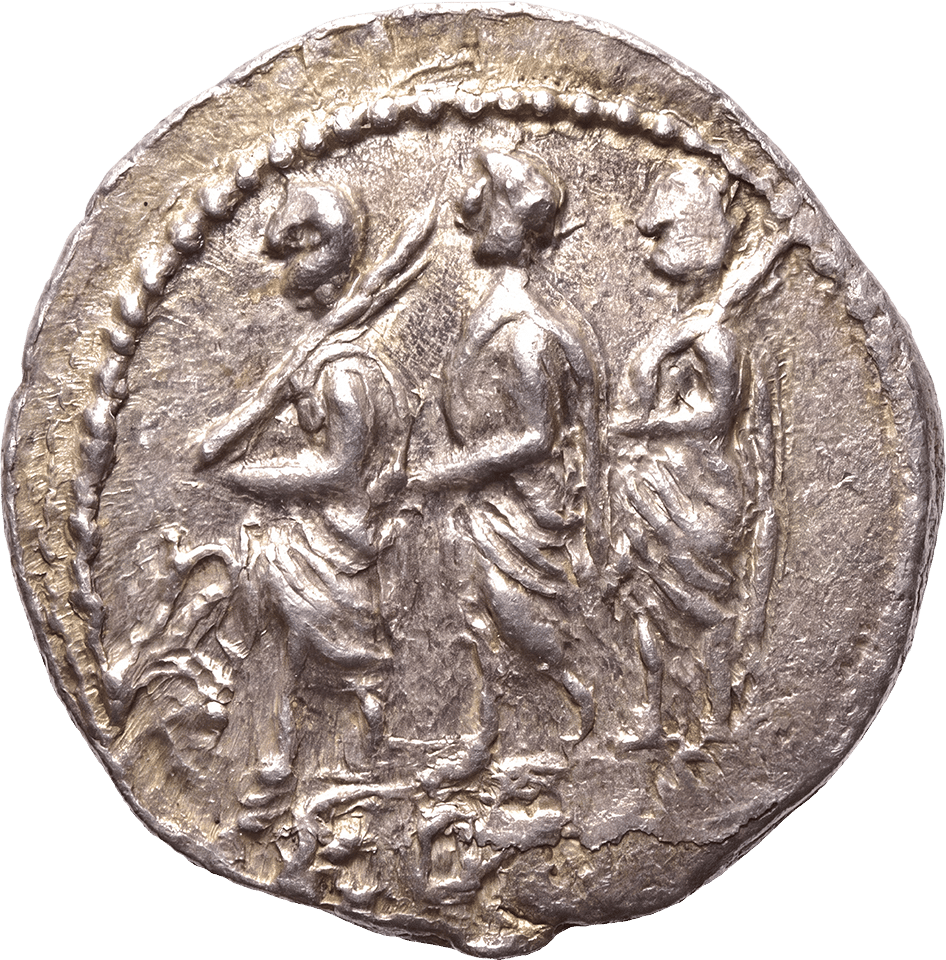
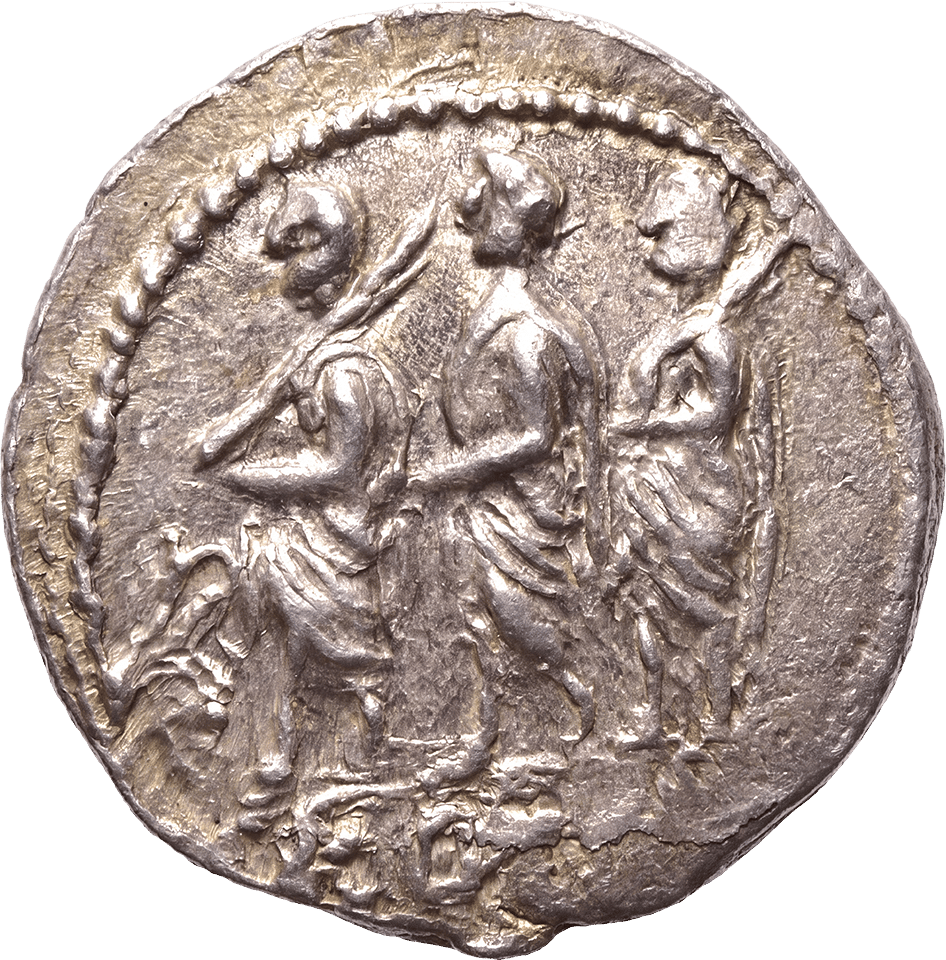
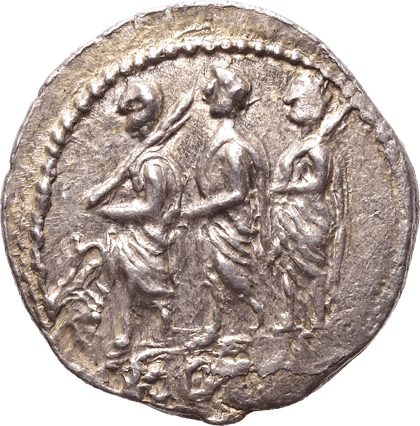
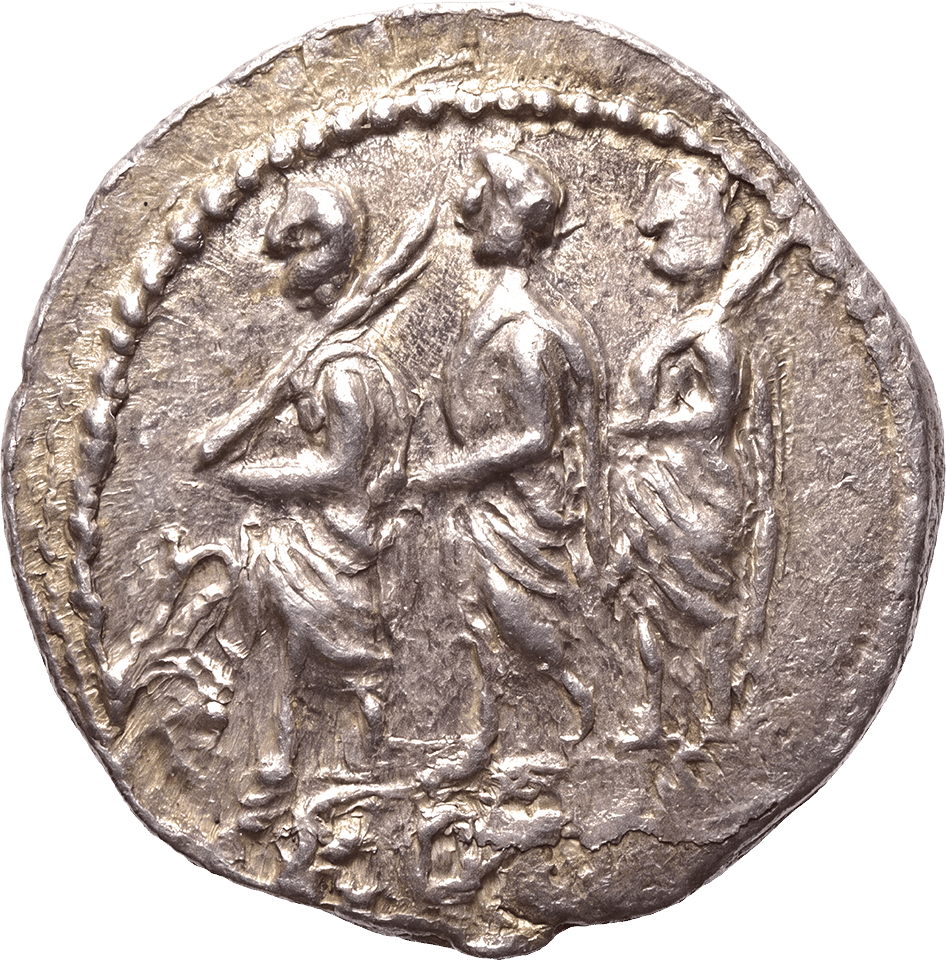
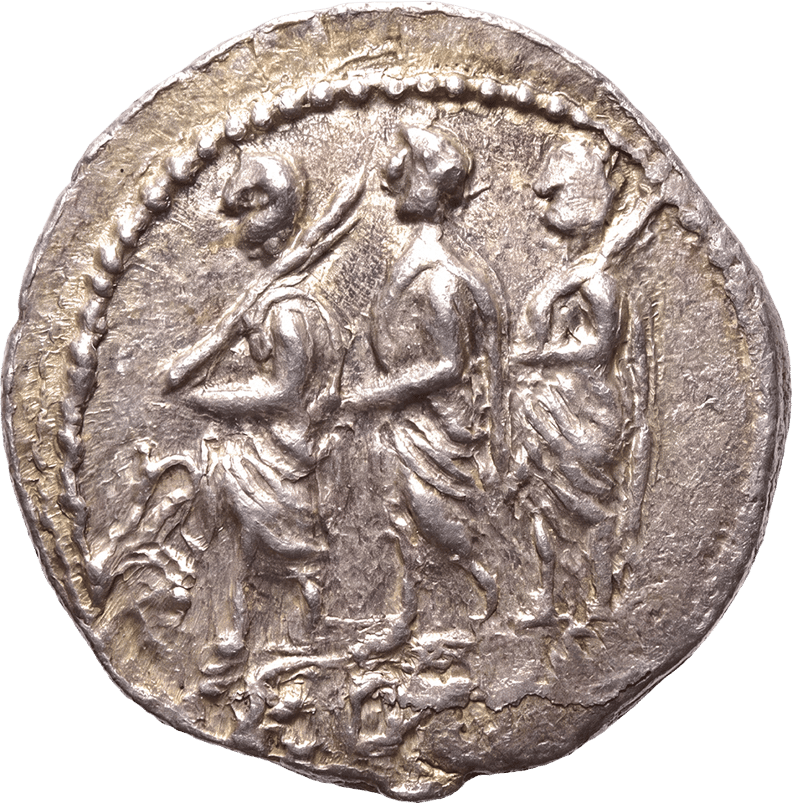
A Roman consul between 2 lictors: that is how the procession of 3 men in togas is read. Its model was probably a denarius of Marcus Junius Brutus from 54 BC.
- Ruler
- Koson1st century BC
- Diameter
- 18 mm
- Weight
- c. 4.2 g
A Roman consul between 2 lictors: that is how the procession of 3 men in togas is read. Its model was probably a denarius of Marcus Junius Brutus from 54 BC.
- Ruler
- Koson1st century BC
- Diameter
- 18 mm
- Weight
- c. 4.2 g

The late Roman Republic · 1st century to 27 BC
The Republic broke apart, the silver remained: tetradrachm and drachm.
As quaestor, Gaius Cassius had tetradrachms struck in Antioch in the name of a Seleucid king. Years later he was one of the leaders of the conspiracy that killed Caesar on 15 March 44 BC. In Dacia, silver bearing the name Koson shows a procession of three men in togas, read as a Roman consul with his lictors. At Philippi in 42 BC the resistance of the Republic came to an end.
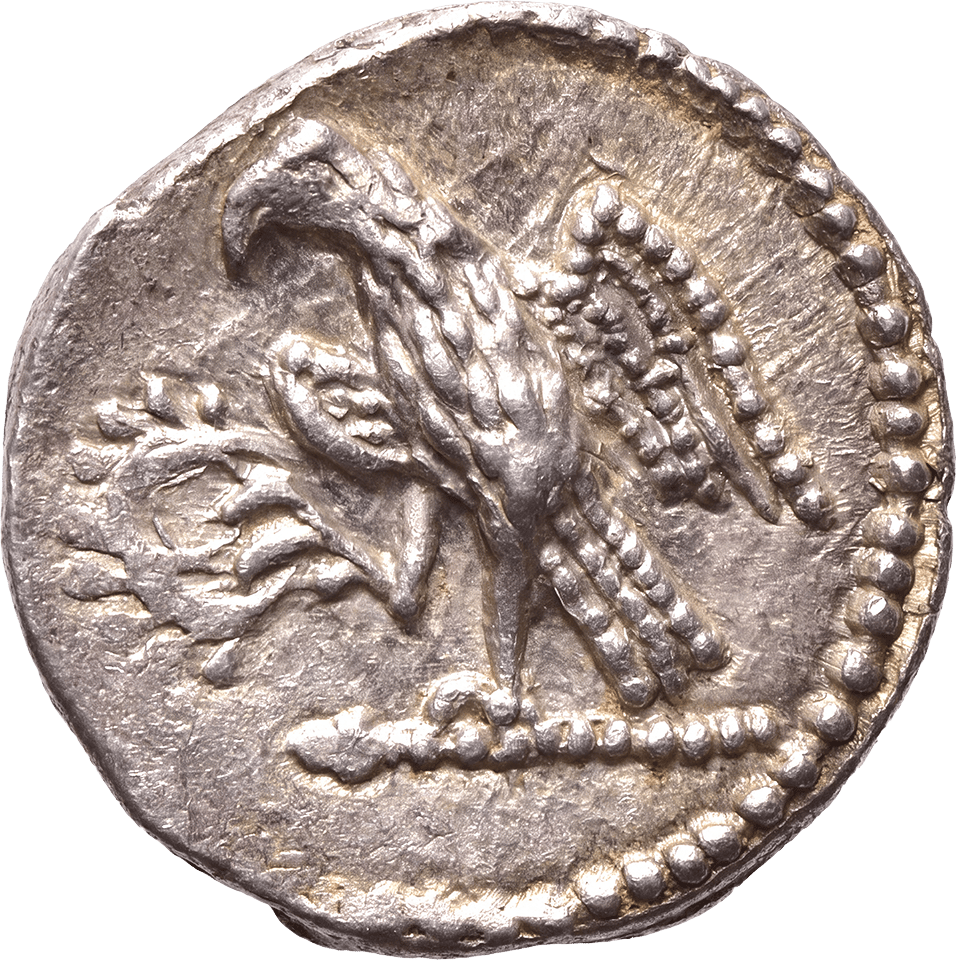
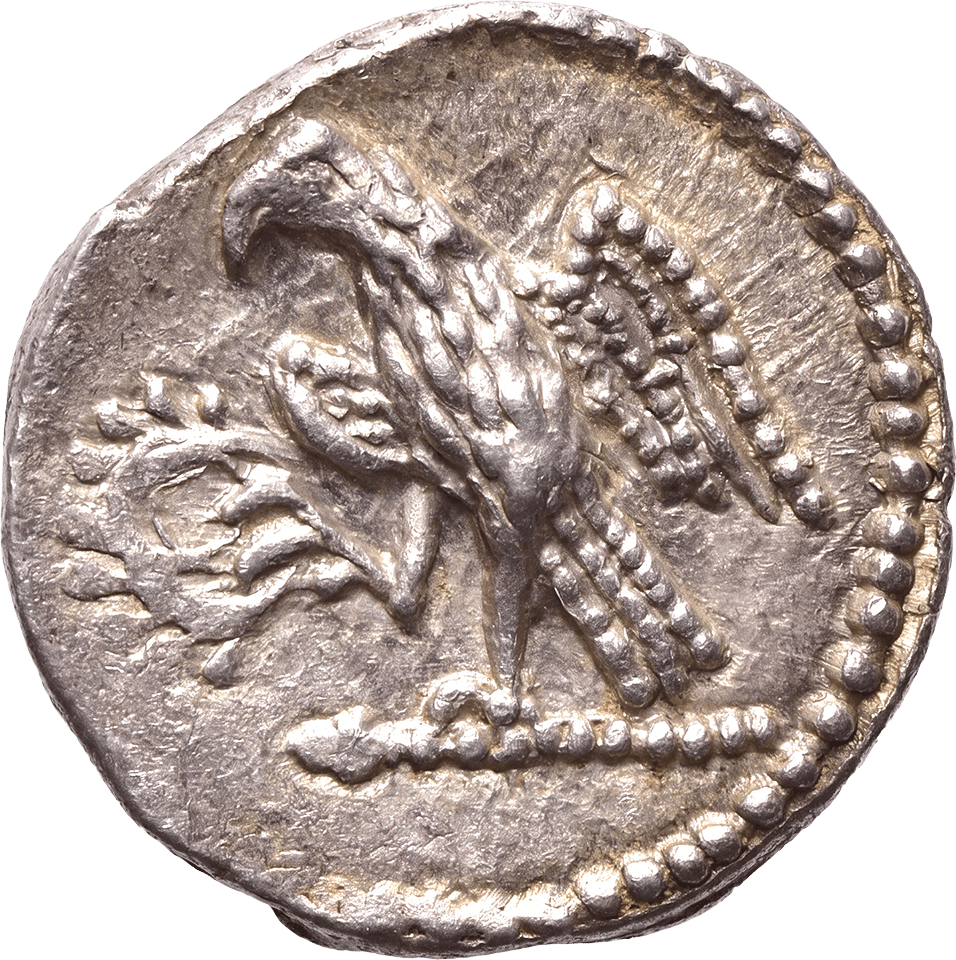
The picture shows an example. The piece you receive may differ in detail. The first and the last man carry an axe over the shoulder. On the other side an eagle stands on a sceptre, holding a wreath. Coins of this type carry the name ΚΟΣΩΝ; the catalogue Roman Provincial Coinage places the coinage in Dacia.
Under the lens
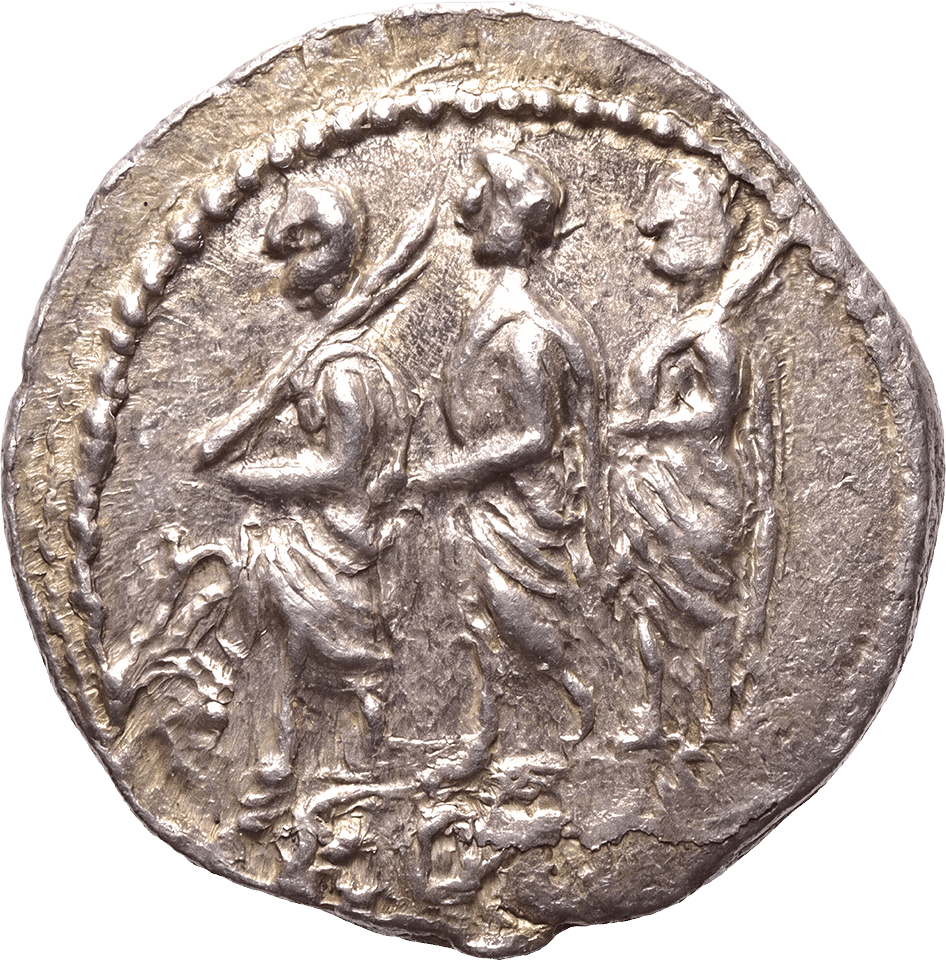
Drachm with a Roman consul and lictors up close: every detail about 2,100 years old.
At the same scale
Rome and its neighbours: coins side by side
The follis changed its size: about 27 mm early in the tetrarchy, 20 to 24 mm under Maximinus II, 20 mm under Constantine and his sons, 28 mm under Justinian.
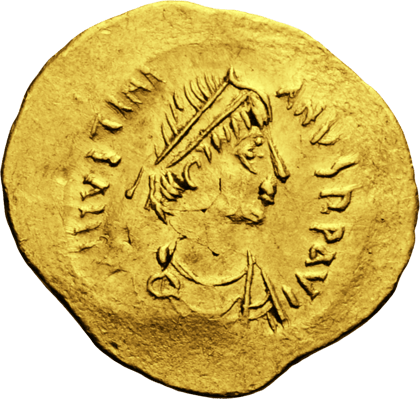 TremissisJustinian I
16 mm
 DrachmKoson
18 mmthis page
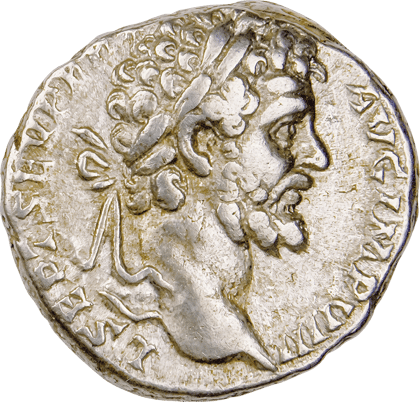 DenariusSeptimius Severus
c. 18 mm
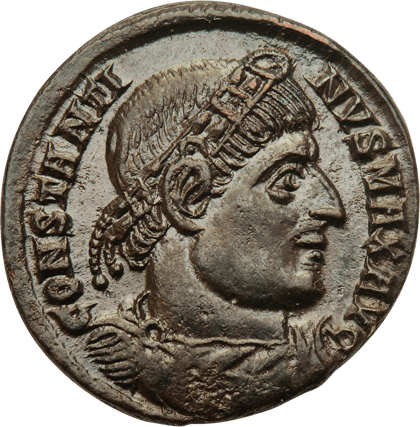 FollisConstantine I
20 mm
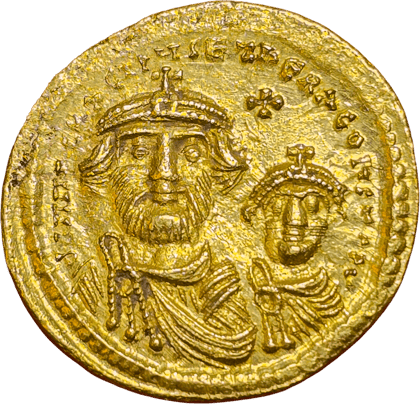 SolidusHeraclius
20 mm
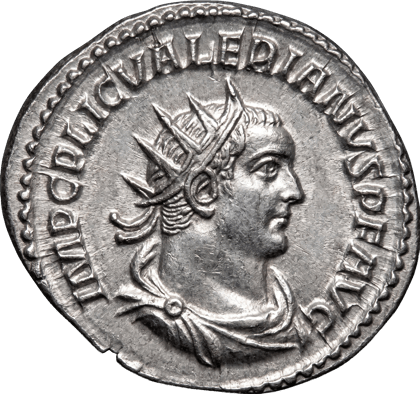 AntoninianusValerian I
21 to 23 mm
 1 eurofor comparison
23.25 mm
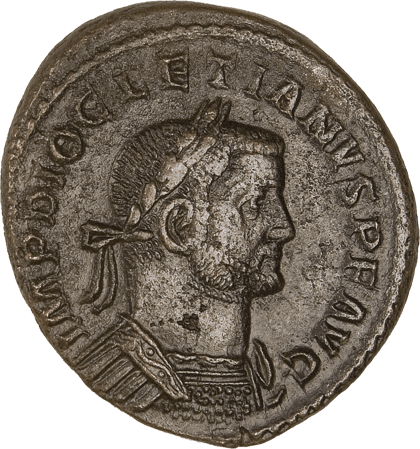 FollisDiocletian
27 mm
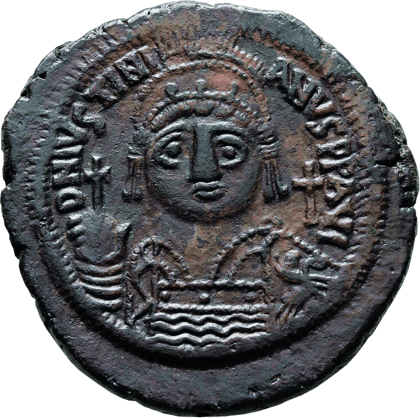 FollisJustinian I
28 mm
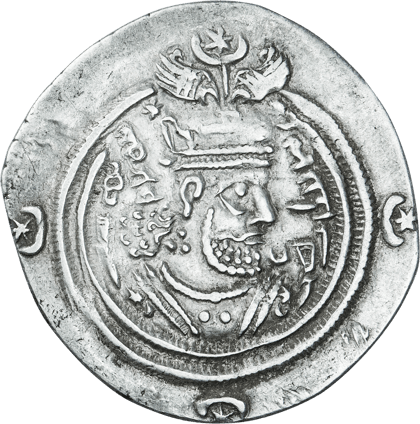 DrachmXusro II
30 mm
Where it belongs
42 originals from about 1,100 years
Each piece stands at the years of its ruler or of its type. The era of this piece is highlighted; choose another one to see its originals.
The late Roman Republic 1st century to 27 BC · 2 originals
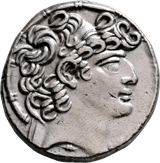 Tetradrachm of Cassius Longinus53 to 51 BC
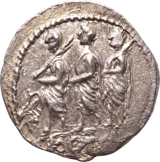 Drachm with a Roman consul and lictors1st century BCthis page

Keeping it
First things first: do not clean it.
The dark layer on bronze and the matte grey on silver are called patina. It has grown over centuries and protects the surface. Polishing it away takes that protection from the piece.
- Hold it by the edgeSkin oil can etch itself permanently into the surface. Take the piece by the rim between thumb and forefinger, over a soft surface.
- Store each piece on its own, and dryKeep each piece on its own in a dry place, in a capsule or an acid-free case. PVC sleeves do not belong there, they attack the surface.
- No agents, no polishing clothNo vinegar, no silver cloth, no ultrasound. According to the Bank of Canada Museum, almost any attempt at cleaning without a conservator leaves damage, mostly from abrasion.

Struck about 2,100 years ago.
Koson and his world are long gone. The piece has remained, with the traces of its circulation.
Silver Drachm "Roman Consul with Lictors" – History You Can Hold in Your Hand
Hardly any ancient coin combines two worlds as impressively as this drachm from the city of Olbia on the Black Sea. On a Greek flan, Roman state power appears in its purest form: a consul, accompanied by two lictors. The piece was struck around the middle of the 1st century BC – in an era when the Roman Republic was breaking apart in civil wars and the Empire was pushing eastward. Whoever holds this silver between their fingers holds over two millennia of world history.
The Coin Design: Fasces, Eagle, and a Disputed Monogram
The obverse shows a Roman magistrate striding to the left, accompanied by two lictors. The two attendants – the lictores – carry shouldered bundles of rods with an inserted axe, the famous fasces, a symbol of magisterial authority. In the field is a monogram, and in the exergue the legend ΚΟΣΩΝ. This motif is not an invention of the die engravers: it derives from the denarius of the moneyer Marcus Iunius Brutus from 54 BC, which depicts his ancestor Lucius Iunius Brutus, consul of 509 BC, in the procession of his lictors.
The reverse presents an eagle with outstretched wings. It stands facing left on a sceptre and holds a wreath in its talons. Here too, a Republican model served as the template – a denarius of Q. Pomponius Rufus from 73 BC. The combination of both sides makes this coinage one of the most fascinating testimonies to ancient image borrowing.
- Obverse: Roman consul between two lictors with rod bundles, striding left; monogram in the field, ΚΟΣΩΝ in the exergue
- Reverse: Eagle on sceptre facing left, wreath in its talons
- Models: Denarii of M. Iunius Brutus (54 BC) and Q. Pomponius Rufus (73 BC)
- Reference literature: Fischer-Bossert, Koson Type B; RPC I 1701C; HGC 3.2
Koson – King, Riddle, Collector's Magnet
The legend ΚΟΣΩΝ has occupied numismatics for generations. For a long time, Koson was considered an unknown Scythian king; later he was seen as a ruler from Thrace who controlled Olbia and allegedly had coins struck for Caesar's assassin Brutus. More recent research led by Oliver Hoover instead equates Koson with the Geto-Dacian king Kotison and rejects the Brutus connection: the coin images, it is argued, are simply types borrowed from designs already circulating in Dacian monetary use. Even the monogram remains a matter of interpretation – it has been read as BR for Brutus, as ΟΛΒ for the mint of Olbia, and as ΒΑ for the royal title. It is precisely this ambiguity that makes these pieces so sought after among collectors.
A second silver type of the same ruler, incidentally, bears the bust of Artemis on a Macedonian shield and the legend ΚΟΣΩΝ ΔΡΟΥΕΙΣ on the reverse – it is modeled on the tetradrachm of the Roman-Macedonian protectorate. The Scythian and Thracian coinages of the late Republic thus form a small, self-contained collecting field.
Olbia itself was a Milesian colony founded in the 6th century BC, situated where the Hypanis and Borysthenes rivers flow into the Black Sea. Grain, fish, and long-distance trade made the city wealthy. The fact that Roman consuls appeared on silver coinage at this edge of the Hellenic world says more about the reach of Rome than many a chronicle.
Technical Data at a Glance
- Precious metal: Silver
- Face value: Drachm (Attic standard, 1 drachm ≈ 4.3 g)
- Gross weight: approx. 4.2 g
- Diameter: approx. 18 mm
- Minting period: approx. 1st century BC
- Mint: Olbia on the Black Sea
- Country of origin: Hellenic world
- Series: History
- Condition: Circulated coinage, varying grades of preservation
Preservation: You Receive an Original, Not a Series Product
These pieces are circulated currency and bear corresponding traces: darker patina, individual centring, nicks, wear, and in some cases weaker portions of the legend. This is precisely what makes them appealing. Since the year of minting, mint, and reverse variant may vary, the piece delivered may differ from the image shown – you receive an original, not a series product. We therefore kindly ask for your understanding that the image in the shop serves as an example and may individually differ from the delivered item in terms of appearance and condition due to historical circumstances.
Silver: A Store of Value Since Antiquity
This drachm impressively demonstrates what silver has achieved for millennia. It served as soldiers' pay, trade goods, and currency – and its metal remains unchanged after two thousand years. Silver is durable, traded worldwide as a commodity, and possesses intrinsic value derived from its physical properties. Fiat money, by contrast, rests solely on trust in governments. This is why investors and collectors continue to value precious metals to this day as an inflation hedge and as crisis protection.
- Industrial demand: Electronics, solar, and medical technology require silver; new technologies continue to increase demand.
- Limited supply: Availability is finite – an argument for long-term value stability.
- Divisibility: Small silver denominations serve as a medium of exchange, especially in times of currency instability.
- Liquidity: Silver is well established and can be resold at any time.
- Tax aspect: Profits from the sale of silver are generally tax-free, provided the holding period is at least one year.
- Generations: Physical tangible assets can be passed on – wealth from generation to generation.
For Collectors and Lovers of Ancient Silver Coins
Compared to the famous gold staters of the same design type, the silver drachm offers a much more accessible route into this coinage – with a virtually identical motif. Compared to Roman Republican denarii, it scores with its exotic origin at the edge of the Greek world; compared to classic Greek drachms, with its unmistakably Roman symbolism. One limitation should be noted: the legend and monogram are not always fully legible on circulated pieces. Those seeking flawless detail are better served by modern silver coins. Those who want patina, history, and uniqueness are in exactly the right place here.
Gold and silver are humanity's oldest currencies – they have outlived every paper currency. This drachm is compelling proof of that.
As a collector's item with historical depth, the Silver Drachm "Roman Consul with Lictors" is aimed at all those who wish to combine numismatics with tangible assets: a conversation piece for the display case, an anchor point for an ancient coin collection, and a piece of monetary history that can be passed on. Shipping is carried out as insured value shipping.
Product image may differ from the actual product.
