





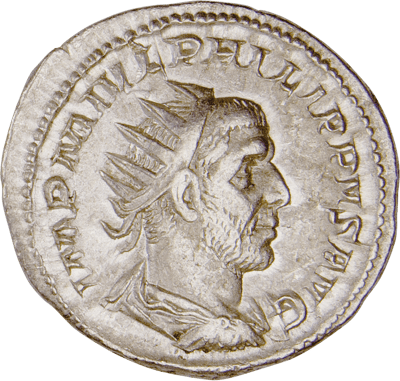

Silver Antoninianus Emperor Philip I the Arab (244-249 AD | Rising Star from Arabia)
- Genuine Original: around 1,800 years old
- Emperor's Portrait: with radiate crown
- Gift Idea: with real storytelling value
- Genuine OriginalEach piece is unique and passed through Roman hands
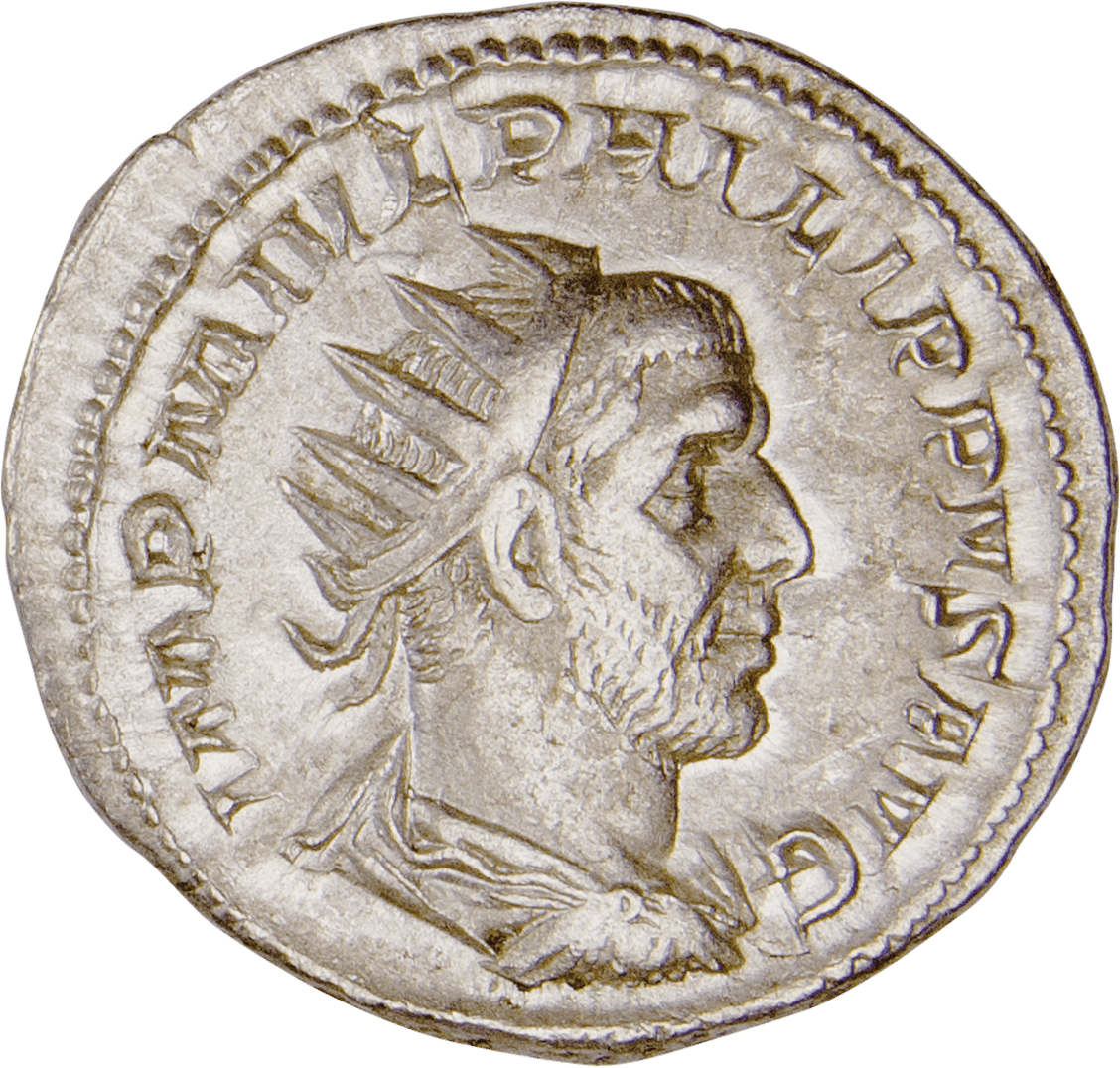
- Emperor's PortraitDraped, armored bust with striking features
- Gift IdeaA gift for history lovers, emperor included




- Genuine Original: around 1,800 years old
- Emperor's Portrait: with radiate crown
- Gift Idea: with real storytelling value
 Price alert
 Share

Ancient original · Crisis of the third century
Antoninianus of Philip I the ArabAbout 1,800 years old.
Caracalla introduced the antoninianus in the year 215. The radiate crown of the emperor marks it as a double denomination.
- Ruler
- Philip I the ArabAD 244 to 249
- Diameter
- c. 22 mm
- Weight
- c. 4.2 g
Caracalla introduced the antoninianus in the year 215. The radiate crown of the emperor marks it as a double denomination.
- Ruler
- Philip I the ArabAD 244 to 249
- Diameter
- c. 22 mm
- Weight
- c. 4.2 g
Crisis of the third century · AD 235 to 284
The antoninianus: silver that turned into bronze.
In fifty years at least 26 men claimed the imperial title. At the same time the money decayed: the antoninianus began as a silver coin, probably worth two denarii, and ended as a bronze piece with a thin wash of silver. Hold a coin from these decades and you are holding an inflation.
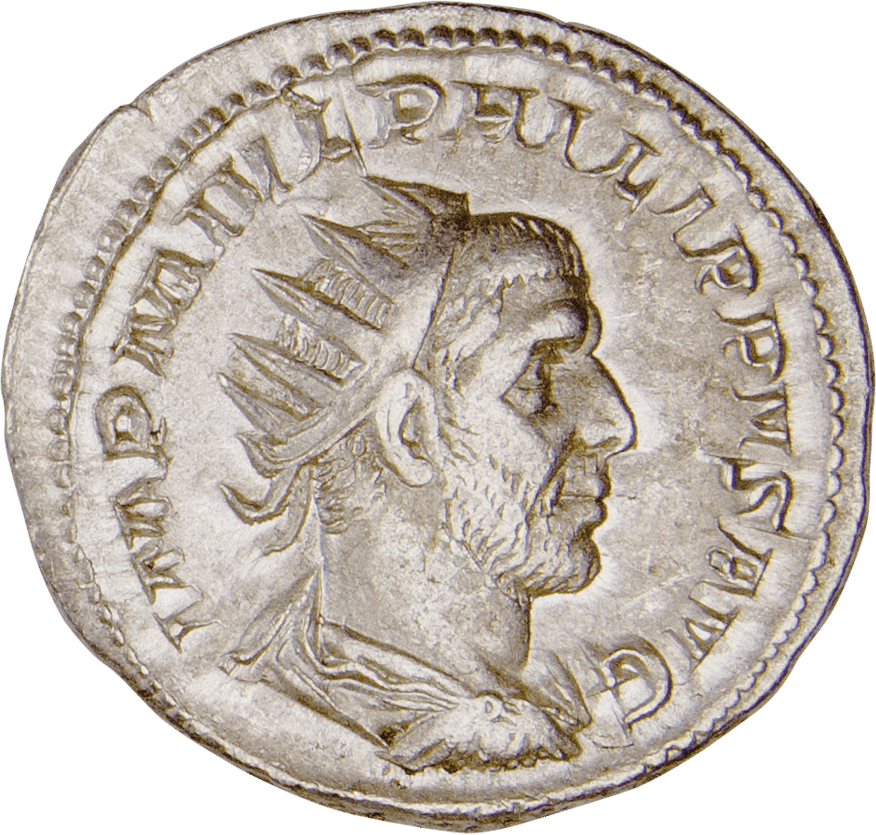
The picture shows an example. The piece you receive may differ in detail.
At the same scale
Rome and its neighbours: coins side by side
The follis changed its size: about 27 mm early in the tetrarchy, 20 to 24 mm under Maximinus II, 20 mm under Constantine and his sons, 28 mm under Justinian.
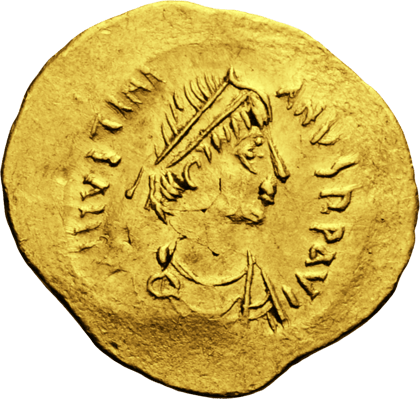 TremissisJustinian I
16 mm
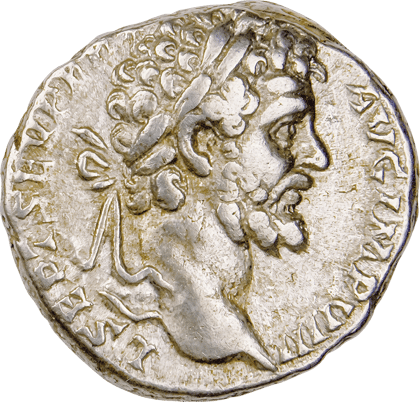 DenariusSeptimius Severus
c. 18 mm
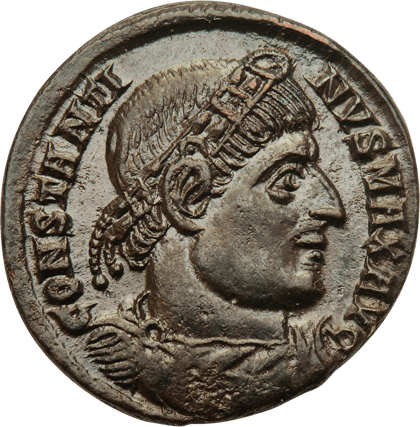 FollisConstantine I
20 mm
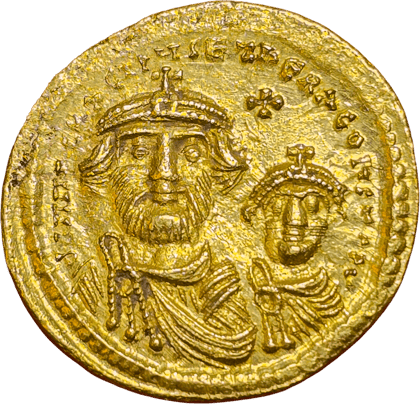 SolidusHeraclius
20 mm
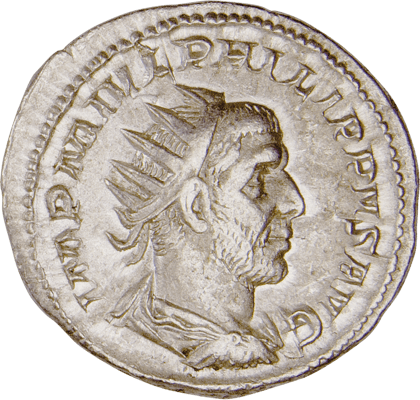 AntoninianusPhilip I the Arab
c. 22 mmthis page
 1 eurofor comparison
23.25 mm
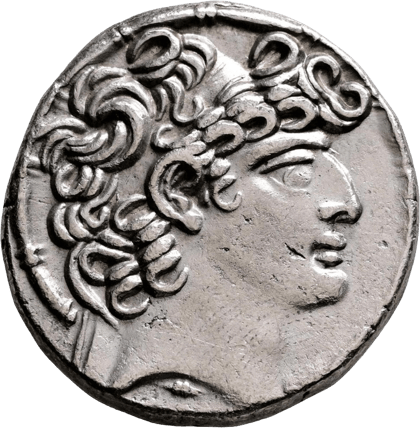 TetradrachmGaius Cassius
c. 27 mm
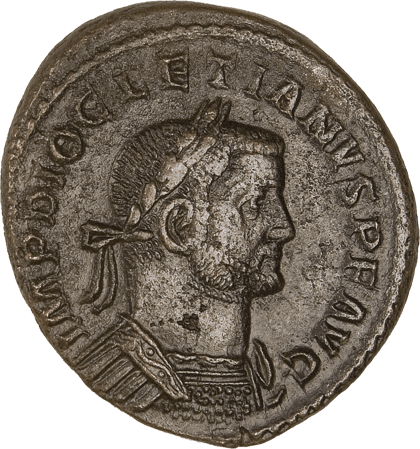 FollisDiocletian
27 mm
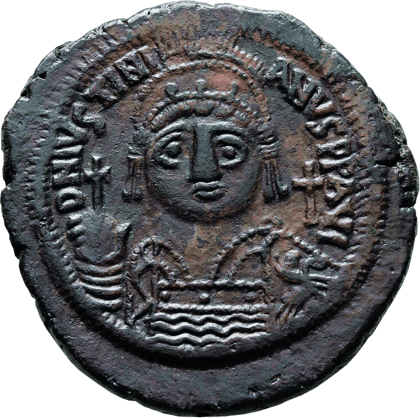 FollisJustinian I
28 mm
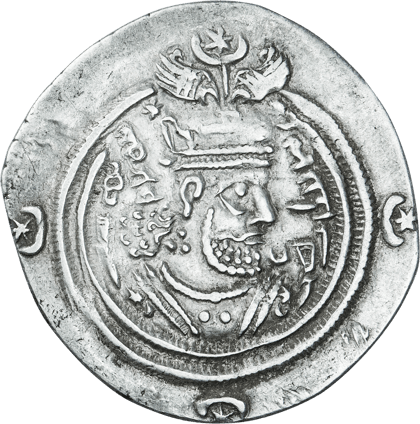 DrachmXusro II
30 mm
Where it belongs
43 originals from about 1,100 years
Each piece stands at the years of its ruler or of its type. The era of this piece is highlighted; choose another one to see its originals.
Crisis of the third century AD 235 to 284 · 9 originals
 Antoninianus of Gordian IIIAD 238 to 244
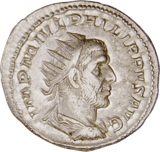 Antoninianus of Philip I the ArabAD 244 to 249this page
 Antoninianus of Philip IIAD 247 to 249
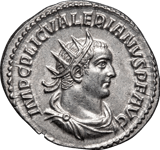 Antoninianus of Valerian IAD 253 to 260
 Antoninianus of Valerian IIAD 256 to 258
 Antoninianus of GallienusAD 260 to 268
 Antoninianus of Claudius II GothicusAD 268 to 270
 Antoninianus of AurelianAD 270 to 275
 Antoninianus of ProbusAD 276 to 282

Keeping it
First things first: do not clean it.
The dark layer on bronze and the matte grey on silver are called patina. It has grown over centuries and protects the surface. Polishing it away takes that protection from the piece.
- Hold it by the edgeSkin oil can etch itself permanently into the surface. Take the piece by the rim between thumb and forefinger, over a soft surface.
- Store each piece on its own, and dryKeep each piece on its own in a dry place, in a capsule or an acid-free case. PVC sleeves do not belong there, they attack the surface.
- No agents, no polishing clothNo vinegar, no silver cloth, no ultrasound. According to the Bank of Canada Museum, almost any attempt at cleaning without a conservator leaves damage, mostly from abrasion.

Struck about 1,800 years ago.
Philip I the Arab and his world are long gone. The piece has remained, with the traces of its circulation.
Silver Antoninianus of Philip I the Arab – the Rising Star from Arabia in Your Hand
- Precious metal: genuine silver from an ancient strike – fineness varies depending on emission and mint
- Minting quality: not a modern collector's issue, but historical circulated currency with a naturally grown patina
- Weight & format: 4.2 g gross weight at approx. 22 mm diameter
- Face value: Antoninianus – the double denarius of the Roman imperial era
- Origin: Roman Empire, reign from 244 to 249 AD
- Design: imperial portrait with radiate crown, reverse designs vary
- One-of-a-kind character: every specimen is an original – not a modern mass-produced item
- Tax advantage: capital gains on silver are generally tax-free after a holding period of at least one year
- Delivery: as insured shipment, insured and discreetly packaged
Some coins were simply money. This one is a witness to history. Whoever holds an Antoninianus of Emperor Philip I the Arab between their fingers holds a piece of the 3rd century AD – minted under a ruler whose life story reads like an ancient rags-to-riches tale.
From an Officer in the Province of Arabia to the Imperial Throne
Marcus Iulius Philippus, known as Philip the Arab, was born around 204 in Shahba – the very city he later had refounded as Philippopolis in the province of Arabia. Coming from comparatively modest circumstances, he rose rapidly through the ranks of the Roman professional army and attained the position of Praetorian Prefect under Gordian III. When the latter died in 244 during the Persian campaign, the soldiers proclaimed Philip emperor. He first elevated his son of the same name to Caesar, later to co-emperor; his wife Marcia Otacilia Severa became Augusta. In 249, Philip fell in the Battle of Verona against his former governor, Decius.
His greatest moment, however, came in April 248: Rome celebrated the millennium of the city's founding – with lavish games, exotic animals, and generous monetary gifts. The rising star from the East staged the millennium of the eternal city. Rich in symbolism, rich in coin imagery.
The Antoninianus: Double Denarius of a Turbulent Era
The Antoninianus is a Roman silver coin introduced through Caracalla's coinage reform in 215 AD. The name itself, incidentally, is a modern coinage by collectors. One unmistakable feature distinguishes it from the denarius: the emperor's radiate crown on the obverse. Nominally the piece was valued at two denarii, though by weight and silver content it corresponded more closely to around one and a half denarii. After Gordian III, this denomination gradually replaced the denarius as the empire's leading silver coin.
The silver content declined significantly over the course of the century: around 238 it averaged roughly 40 percent, while by around 270 it had fallen below three percent. Coins struck during the reign of Philip thus date from a period when the Antoninianus still contained a noticeable amount of silver – one of the reasons why these pieces in particular are so sought after by collectors of ancient coins. Compared to a heavy bronze sestertius, the Antoninianus offers genuine precious metal; compared to an early denarius, it is larger, more substantial, and often more expressive in its portraiture.
Design: Radiate Crown, Legend, and Reverse Variety
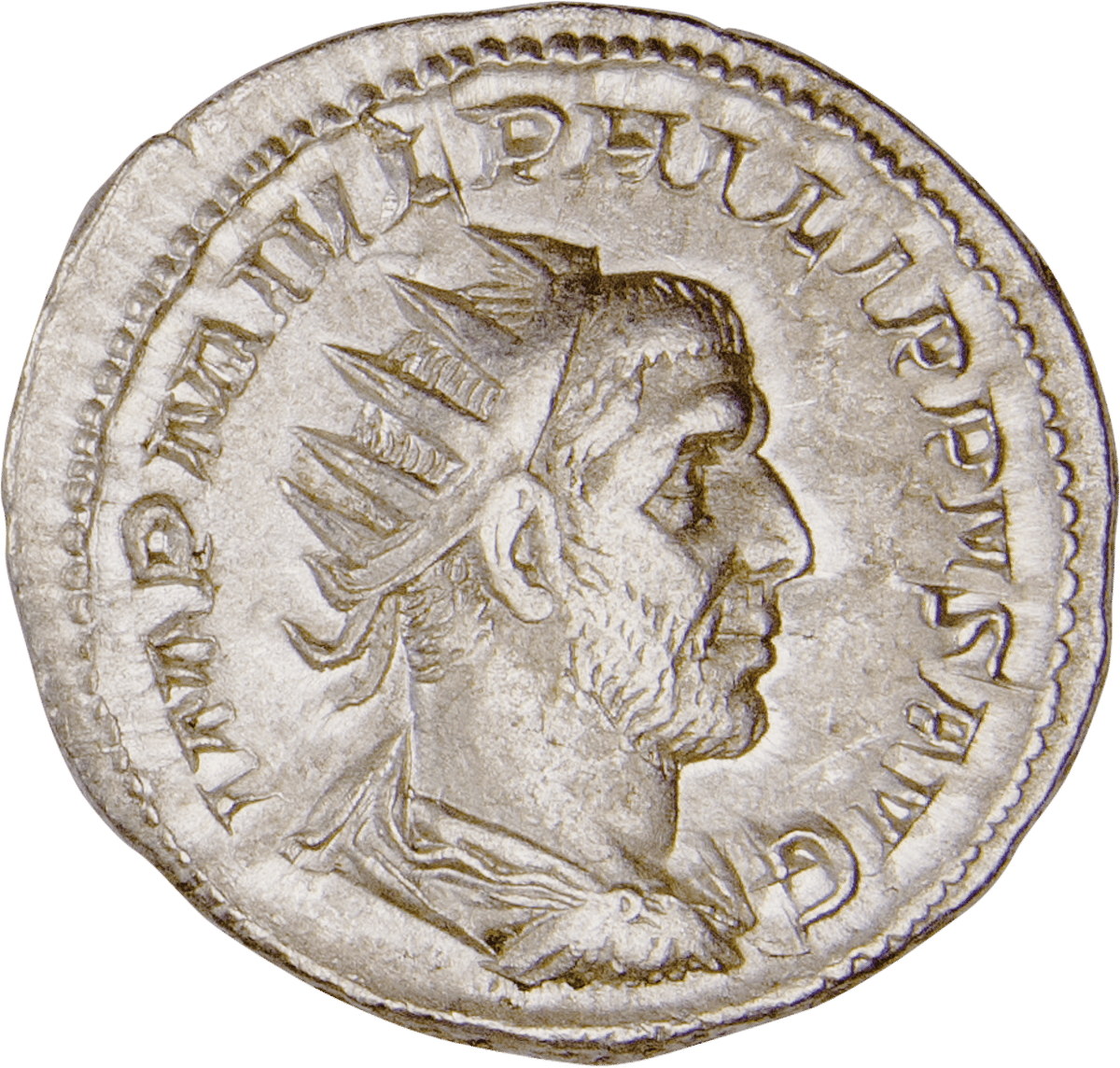
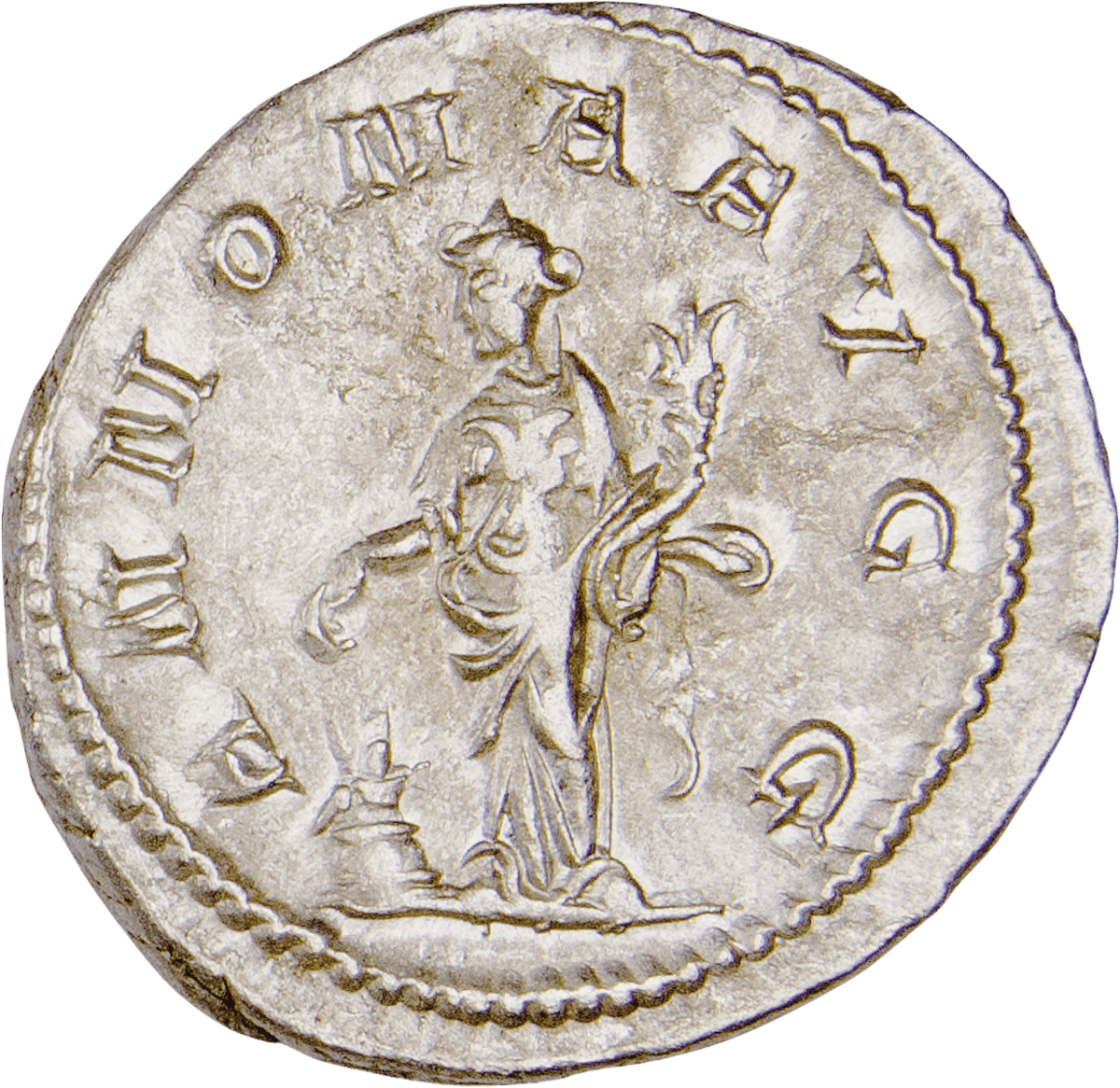
The obverse shows the emperor's portrait facing right – draped, cuirassed, and wearing the characteristic radiate crown. The legend states his name and titles, such as IMP M IVL PHILIPPVS AVG. On the reverses appear personifications of Roman civic virtues: Moneta with scales and cornucopia, along with, depending on the type, Annona, Aequitas, Fides, or Concordia. Minting took place, among other places, in Rome and Antioch; the types are recorded in the standard reference work Roman Imperial Coinage (RIC).
Condition: Traces That Define the Appeal
Those familiar with modern collector's issues in Proof (PP) quality should deliberately rethink their expectations here. Ancient Antoniniani were never struck in Proof quality – they were coins in active circulation and bear corresponding traces: darker patina, individual centering, nicks, wear, and sometimes weaker areas of the legend. That is precisely what makes them appealing.
As the year of minting, mint, and reverse design may vary, the specimen delivered will differ from the illustration – you will receive an original, not a mass-produced item. Please understand that the image shown in the shop serves as an example and may differ individually from the delivered item in terms of appearance and condition due to historical circumstances.
Silver as a Tangible Asset – Then and Now
For millennia, silver served as coinage metal, medium of trade, and symbol of wealth and prestige. This Antoninianus illustrates that vividly. Physical precious metal remains scarce, durable, and tradable worldwide, while industrial demand from electronics, solar, and medical technology meets a limited supply. Unlike fiat money, which relies on trust in institutions, silver possesses an intrinsic value derived from its physical properties. Many investors and collectors therefore value it as an inflation hedge and as crisis protection – a tangible asset that can be passed down through generations.
The Roman Empire has passed, its currency long since history – yet the silver in this coin has endured for roughly 1,800 years.
Who This Piece Is Made For
- Collectors of ancient coins seeking a tangible entry point into the Roman imperial era
- History enthusiasts who want to not just read about antiquity, but hold it in their hands
- Beginners who prefer silver coins with historical depth over modern mass-produced issues
- Gift-givers seeking a present with genuine storytelling value – emperor included
An Antoninianus of Philip the Arab is thus both: a numismatic collector's item from our "History" series and a piece of honest precious metal that has already passed through Roman hands.
Product image may differ from the actual product.
