





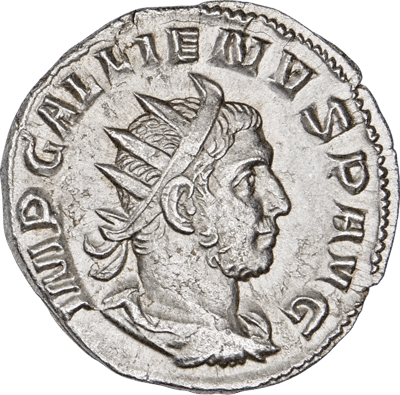

Antoninianus Emperor Gallienus (260-268 AD | Age of the Imperial Crisis)
- Ancient Original: around 1,760 years old
- Radiate Crown: and cuirassed bust
- Hand-struck: every piece unique
- Ancient OriginalPassed through the hands of legionaries and traders
- Radiate CrownImperial portrait with pointed rays and fluttering ties
- Hand-struckIrregular shape and patina as signs of genuine age




- Ancient Original: around 1,760 years old
- Radiate Crown: and cuirassed bust
- Hand-struck: every piece unique
 Price alert
 Share

Ancient original · Crisis of the third century
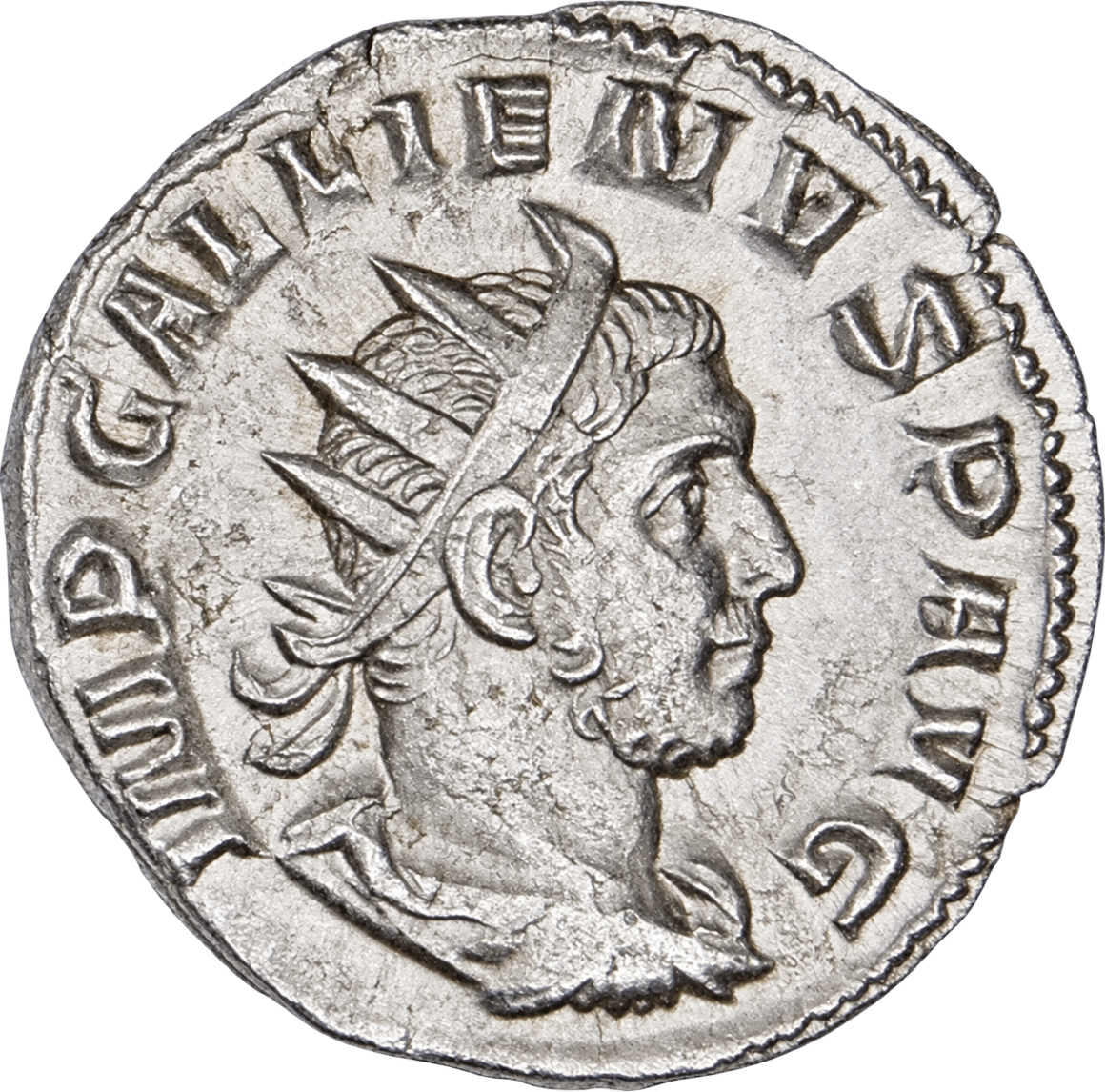
Antoninianus of GallienusAbout 1,750 years old.
Caracalla introduced the antoninianus in the year 215. The radiate crown of the emperor marks it as a double denomination.
- Ruler
- GallienusAD 260 to 268
- Diameter
- 20 mm
- Weight
- c. 3.5 g
Caracalla introduced the antoninianus in the year 215. The radiate crown of the emperor marks it as a double denomination.
- Ruler
- GallienusAD 260 to 268
- Diameter
- 20 mm
- Weight
- c. 3.5 g

Crisis of the third century · AD 235 to 284
The antoninianus: silver that turned into bronze.
In fifty years at least 26 men claimed the imperial title. At the same time the money decayed: the antoninianus began as a silver coin, probably worth two denarii, and ended as a bronze piece with a thin wash of silver. Hold a coin from these decades and you are holding an inflation.
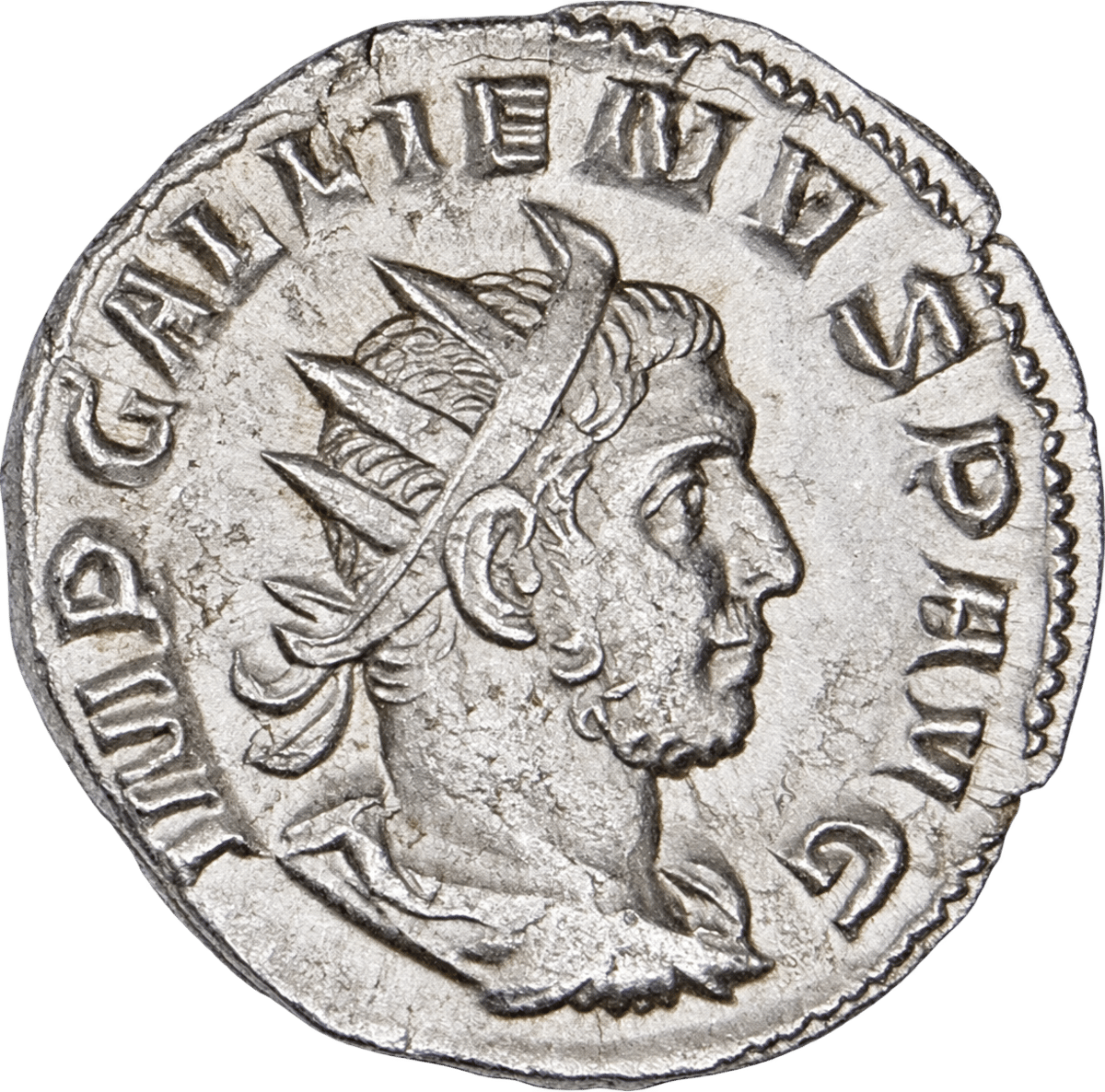
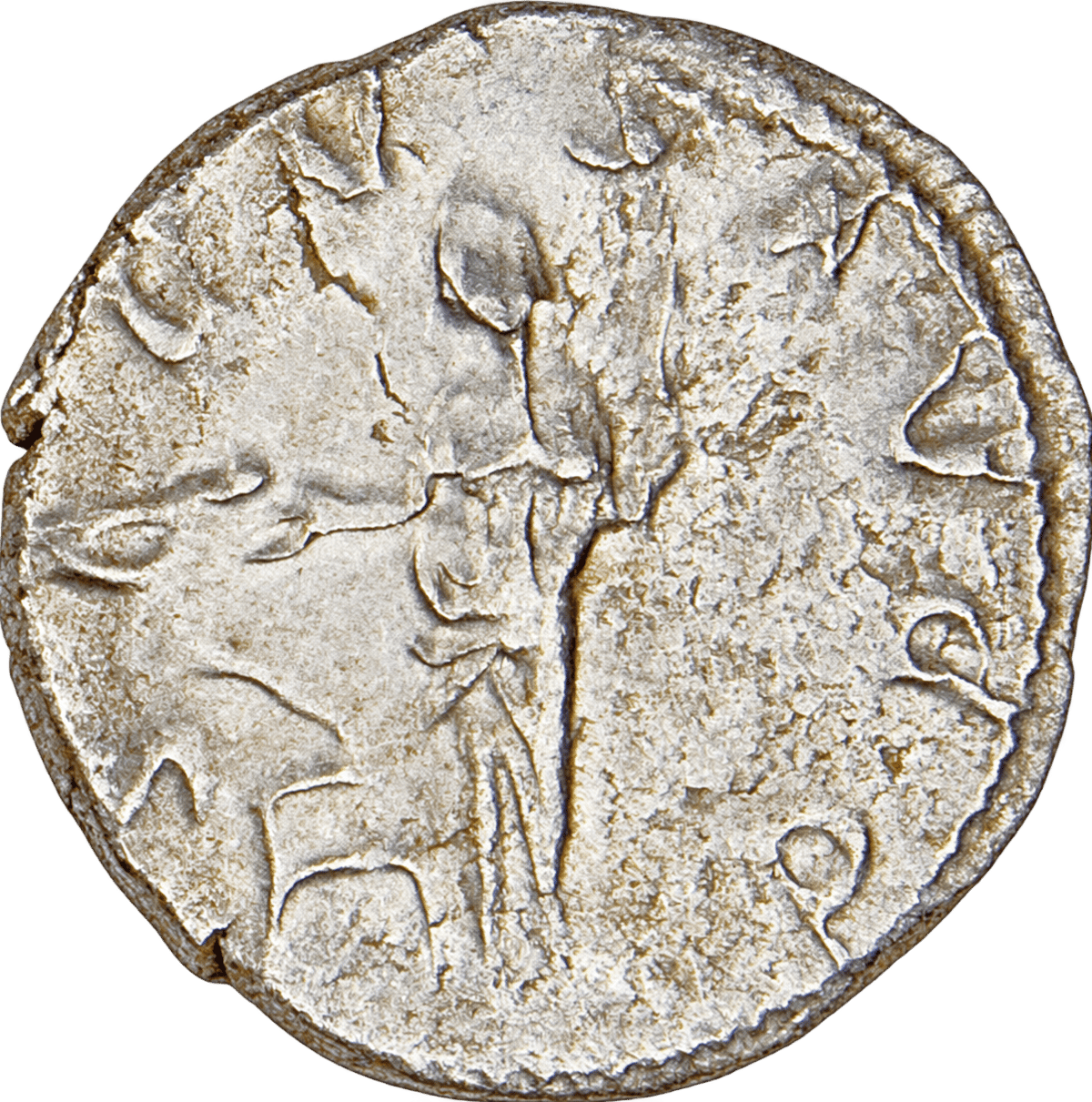
The picture shows an example. The piece you receive may differ in detail.
At the same scale
Rome and its neighbours: coins side by side
The follis changed its size: about 27 mm early in the tetrarchy, 20 to 24 mm under Maximinus II, 20 mm under Constantine and his sons, 28 mm under Justinian.
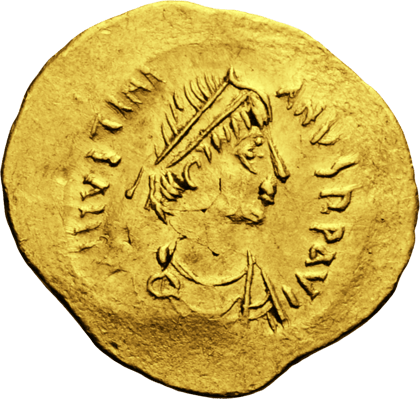 TremissisJustinian I
16 mm
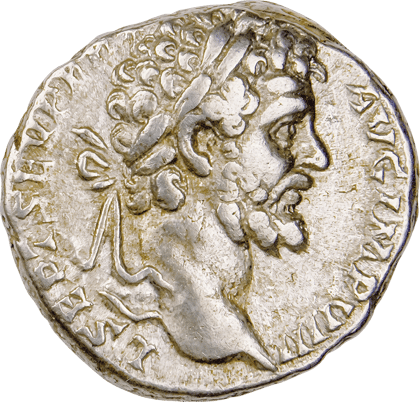 DenariusSeptimius Severus
c. 18 mm
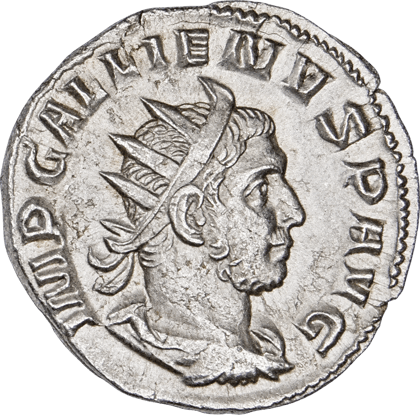 AntoninianusGallienus
20 mmthis page
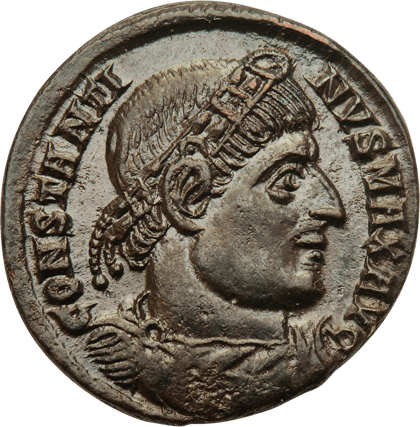 FollisConstantine I
20 mm
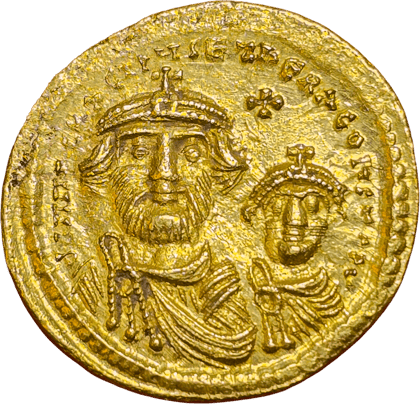 SolidusHeraclius
20 mm
 1 eurofor comparison
23.25 mm
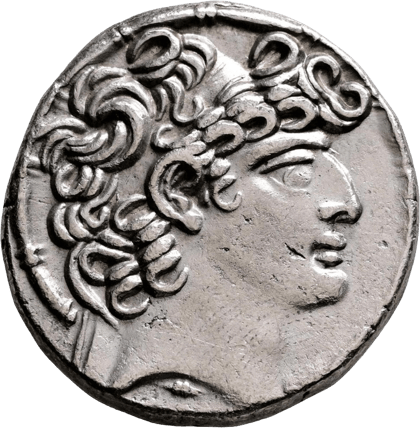 TetradrachmGaius Cassius
c. 27 mm
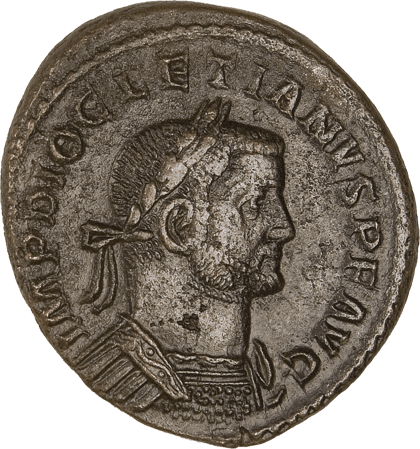 FollisDiocletian
27 mm
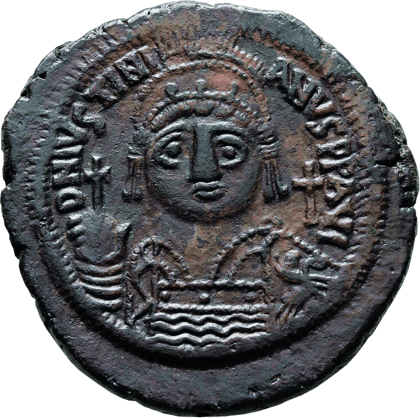 FollisJustinian I
28 mm
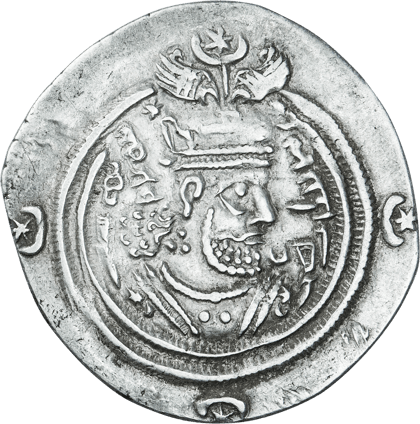 DrachmXusro II
30 mm
Where it belongs
43 originals from about 1,100 years
Each piece stands at the years of its ruler or of its type. The era of this piece is highlighted; choose another one to see its originals.
Crisis of the third century AD 235 to 284 · 9 originals
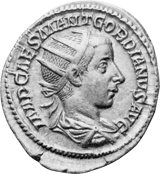 Antoninianus of Gordian IIIAD 238 to 244
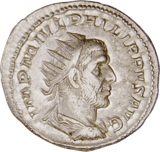 Antoninianus of Philip I the ArabAD 244 to 249
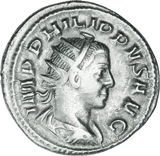 Antoninianus of Philip IIAD 247 to 249
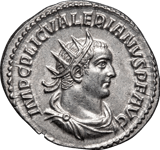 Antoninianus of Valerian IAD 253 to 260
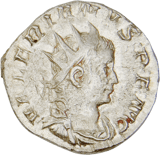 Antoninianus of Valerian IIAD 256 to 258
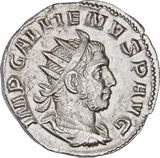 Antoninianus of GallienusAD 260 to 268this page
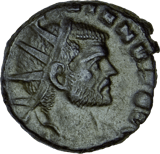 Antoninianus of Claudius II GothicusAD 268 to 270
 Antoninianus of AurelianAD 270 to 275
 Antoninianus of ProbusAD 276 to 282

Keeping it
First things first: do not clean it.
The dark layer on bronze and the matte grey on silver are called patina. It has grown over centuries and protects the surface. Polishing it away takes that protection from the piece.
- Hold it by the edgeSkin oil can etch itself permanently into the surface. Take the piece by the rim between thumb and forefinger, over a soft surface.
- Store each piece on its own, and dryKeep each piece on its own in a dry place, in a capsule or an acid-free case. PVC sleeves do not belong there, they attack the surface.
- No agents, no polishing clothNo vinegar, no silver cloth, no ultrasound. According to the Bank of Canada Museum, almost any attempt at cleaning without a conservator leaves damage, mostly from abrasion.

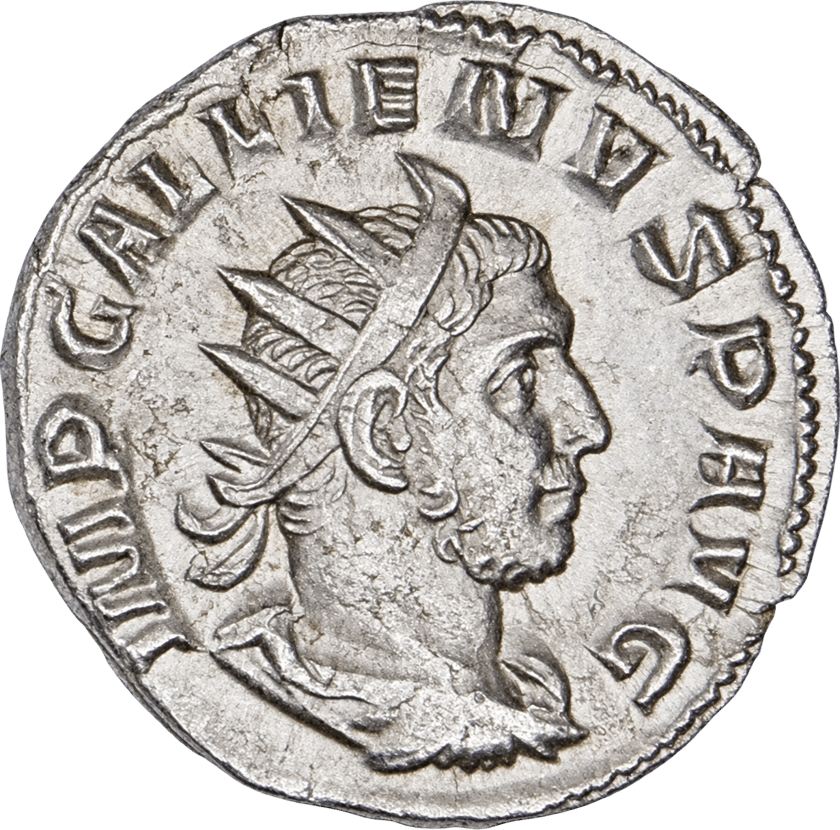
Struck about 1,750 years ago.
Gallienus and his world are long gone. The piece has remained, with the traces of its circulation.
Antoninianus of Gallienus: Silver Coinage from Rome's Imperial Crisis
An emperor whose father falls into Persian captivity. An empire under pressure on the Rhine, the Danube and the Euphrates all at once. And right in the middle of it all, a coin that witnessed it. This Antoninianus of Emperor Gallienus dates from the years of his sole rule and is a genuine piece of the Roman imperial era that you can hold in your own hand. It is neither a recast nor a modern replica, but an original that passed through the hands of soldiers, merchants and citizens as a means of payment some 1,760 years ago. Among ancient silver coins, the Gallienus Antoninianus is one of the most fascinating pieces of all, for it reflects the history of an entire era.
Gallienus: Ruler in Turbulent Years
Publius Licinius Egnatius Gallienus began his reign in 253 AD, initially ruling jointly with his father Valerian. Around 260, Valerian was defeated by the Persian king Shapur I and taken captive. From then on, Gallienus stood alone at the head of the empire. The reign of Gallienus (253–268) is regarded as the peak of the Crisis of the Third Century: in the west, the Gallic Empire emerged under Postumus, in the east Palmyra gained increasing independence under Odaenathus, and in the provinces ever more usurpers rose up.
Despite this, Gallienus remained capable of action. He established mobile cavalry units and reformed the army, measures that later emperors would continue. In 268 AD he fell victim to a conspiracy by his own officers during the siege of Milan. What remains are his coins. To this day, they bear witness to a time in which the Roman Empire fought for its very survival.
The Antoninianus: Double Denarius with Radiate Crown
The Antoninianus was introduced around 214/215 AD under Emperor Caracalla. It owes its modern name to Caracalla's official name, Marcus Aurelius Antoninus. Nominally, it was valued as a double denarius. Its unmistakable feature is the radiate crown on the emperor's head, as this symbol had long marked double denominations on Roman coins. Over the course of the 3rd century, the Antoninianus became the most widely minted coin of the empire. Its weight and silver content declined step by step, mirroring the currency debasement of the time. It was not replaced until Diocletian's coinage reform at the end of the century.
This is precisely what makes it so historically appealing. With an Antoninianus of Gallienus, you own a tangible document of ancient monetary history. The coin also shows just how much people of that era already trusted the value of genuine silver. It was minted at several mints throughout the empire, including Rome, Milan and Siscia. This is also why the individual pieces differ so noticeably from one another.
Design and Imagery in Detail
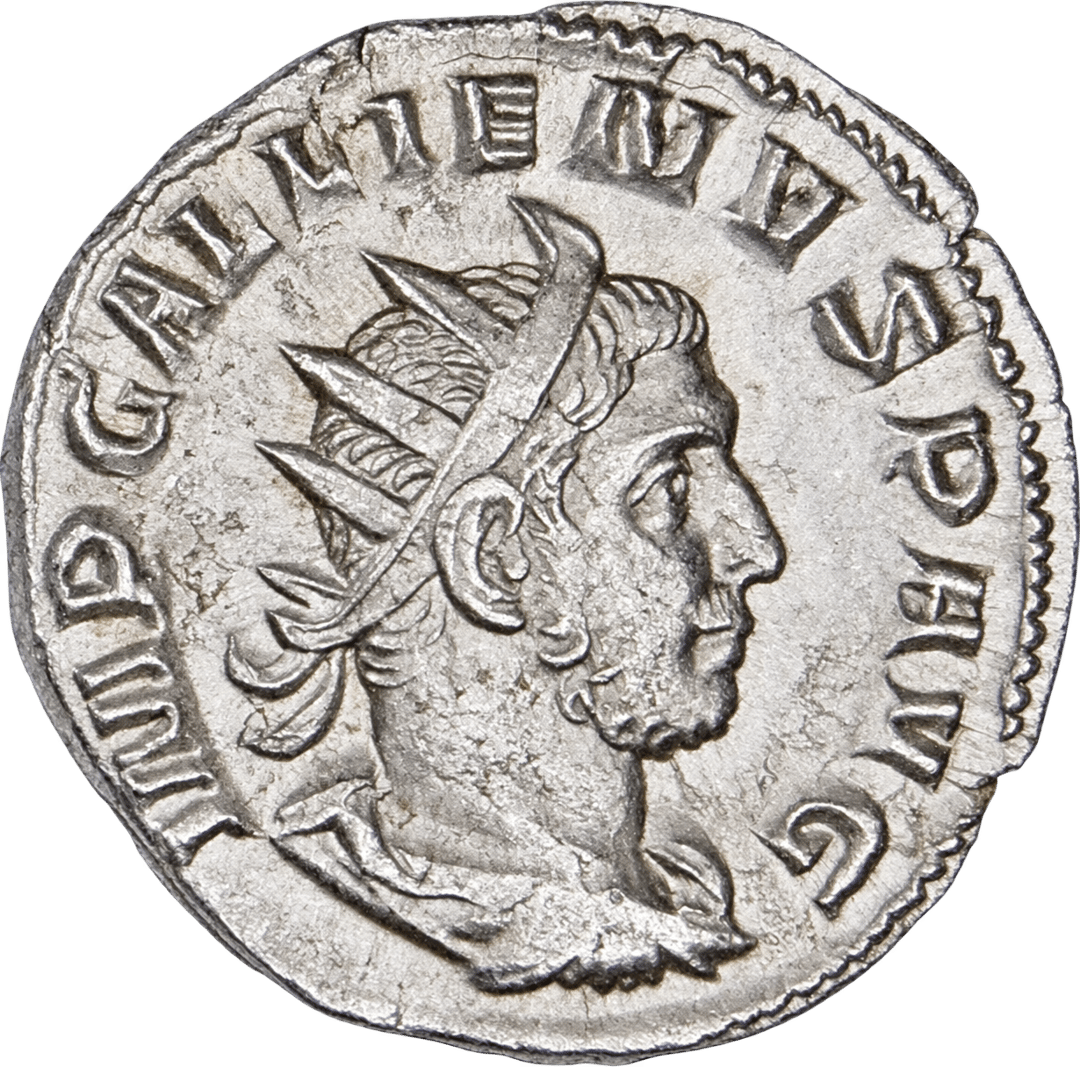
The obverse shows the emperor's bust facing right, wearing a radiate crown, draped and armoured. The short curls, the pronounced bridge of the nose, the strong chin and the well-groomed beard are all clearly recognisable. At the back of the head, the ribbons of the crown flutter. The legend IMP GALLIENVS P F AVG runs around the portrait, written out in full as Imperator Gallienus Pius Felix Augustus. A beaded border frames the coin's design. Due to the individual striking, it is cut off in places.
The reverse bears different depictions depending on the specimen, often deities or personifications of Roman virtues. On the example piece shown, a standing figure can be seen. Which reverse variant, which mint and which year of issue you will receive is not determined in advance. This makes every delivery a small discovery in itself.
Technical Data at a Glance
- Denomination: Antoninianus (double denarius)
- Ruler: Emperor Gallienus, sole rule 260–268 AD
- Country: Roman Empire
- Metal: silver alloy, fineness varies
- Gross weight: approx. 3.5 g
- Fine weight: approx. 1.5–2.1 g silver
- Diameter: approx. 20 mm
- Year of issue, mint, reverse design: varies
- Condition: circulated (used), condition varies
Traces of History: Every Piece Is Unique
These coins were in circulation, and this is visible in their appearance. Herein lies precisely their appeal. Expect a darker patina, individual centring, nicks, wear, and at times weaker-struck areas of the legend. The coin blanks are rarely perfectly round and the edges are often uneven, as is typical for hand-struck ancient coins. On a modern bullion coin, these would be flaws. Here, these characteristics show that the coin is genuine and old.
Please note that the image in the shop expressly shows an example. For historical reasons, the specimen delivered will differ individually in appearance, condition, year of issue, mint and reverse variant. You will receive an original, not a mass-produced product.
Reasons for Adding a Gallienus Antoninianus to Your Collection
- Genuine antiquity: an original from the Roman imperial era, around 1,760 years old
- Significant era: currency from the Crisis of the Third Century
- Precious metal content: a notable silver content with approx. 1.5–2.1 g fine weight
- Ideal starting point: a good beginning for a collection of Roman coins
- A special gift: for history enthusiasts, lovers of Latin and numismatists
Denarii of earlier emperors such as Trajan or Hadrian come from calmer times. The Antoninianus of Gallienus, by contrast, tells of one of the most dramatic phases in Roman history, and it is precisely this that makes it so fascinating for many collectors. Those who wish to delve deeper can combine it well with Antoniniani of his father Valerian, his wife Salonina, or his rival Postumus. In this way, a collection dedicated to an entire ruling family and its era gradually takes shape.
Silver as a Store of Value with a Long Tradition
Silver has accompanied humankind for thousands of years as a monetary metal, a symbol of wealth, and a medium of trade. It has intrinsic value, is traded worldwide as a commodity, and is used in electronics, solar technology and medical devices. Paper money relies on trust in governments, whereas silver derives its value from the metal itself. Many people therefore value it as an inflation hedge and as protection in times of crisis, see our crisis protection products. The history of the Antoninianus vividly illustrates how important genuine precious metal content already was to people in antiquity.
Good to know: Under current German law, profits from the sale of physical silver are tax-free if more than one year has passed between purchase and sale. However, for this piece, the collector's value is clearly the primary consideration. It is a piece of world history that has already outlasted many generations and can be passed on to the next.
An Antoninianus of Gallienus is more than just a coin. It comes from a time when Rome fought for its very survival, and it has outlasted that time to this very day.
Product image may differ from the actual product.
