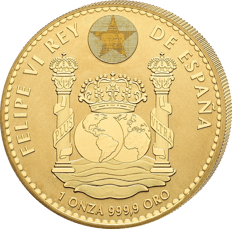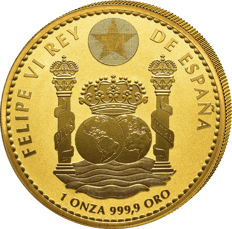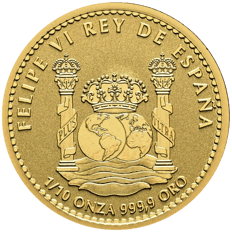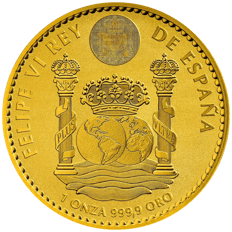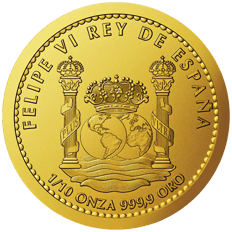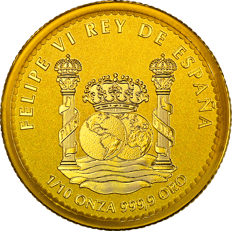
1/10 oz Gold Aguila Imperial 2025 (Mintage: 20,000)
£357.00
VAT-free and excl. shipping
Available in 2–3 business days

 More than 310,000
 Over 30 years
 Secure shipping
 Google: 4.9/5


Authenticity
Every piece bears the mark of the Real Casa de la Moneda. Before it goes out to you, we check it ourselves.
Every bullion coin bears the design of its mint and the year it was struck, and almost every one its weight and fineness.
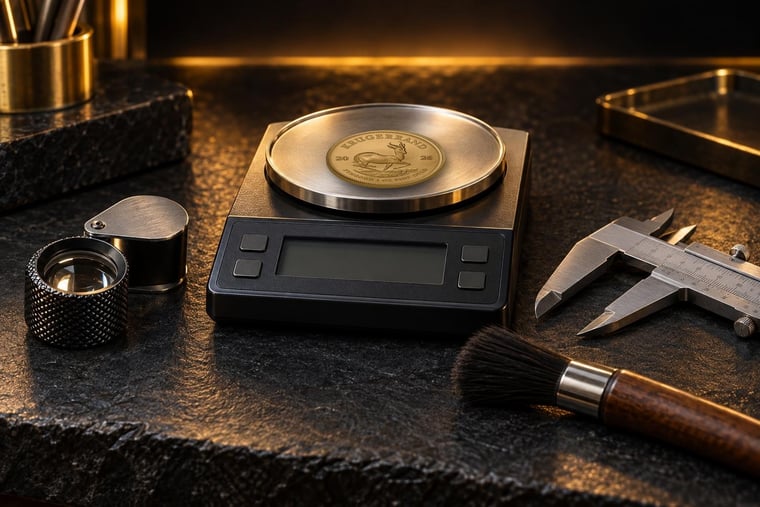
In our CCTV-monitored high-security area, two specialists check every order following the four-eyes principle, including its weight and, by X-ray, its authenticity.
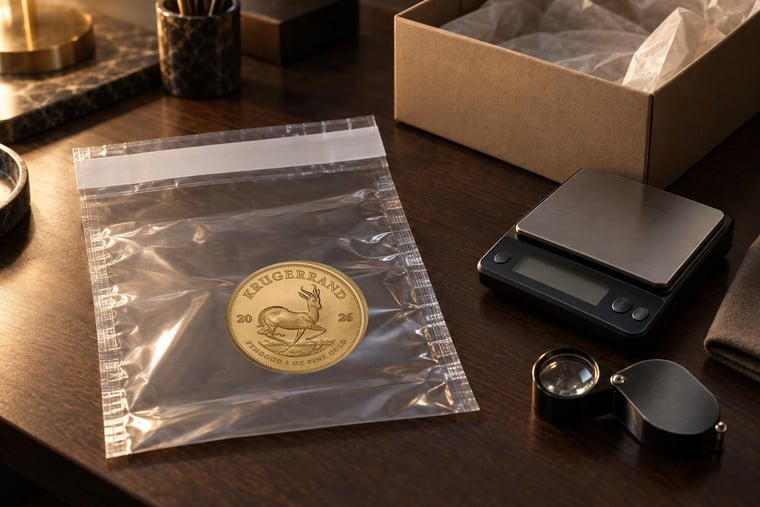
We then seal your order in a security bag that can only be opened once. You will be the first to open it.
Our testing methods
The house
Sources: manufacturer’s details, as of 14 November 2026
Behind the name Spanish Mint lies one of the oldest state minting institutions in Europe: the Fábrica Nacional de Moneda y Timbre – Real Casa de la Moneda (FNMT-RCM for short), headquartered in Madrid. For centuries it produced mainly circulation coins and banknotes for the Kingdom of Spain, but today it strikes a young, much-admired series of investment gold coins celebrating the elegance of Iberian wildlife. This guide explores the history of the mint, its modern gold designs, denominations, authenticity features, tax aspects and proper storage.
The Fábrica Nacional de Moneda y Timbre took its present form in 1893, when two institutions rich in tradition merged: the Casa de la Moneda (the actual mint) and the Fábrica del Sello (the stamp factory). Both had already shared a joint building on the Plaza de Colón since 1861. The roots of Spanish coinage, however, run much deeper: as early as the 18th century, under King Philip V, minting was monopolised and private mints were abolished in favour of state control.
Today, the Real Casa de la Moneda is a public company under state supervision that produces far more than coins. Its remit includes banknotes, official documents such as passports and identity cards, and security printing. Production is spread across Madrid and Burgos. For collectors and investors, the numismatic issues are of particular interest, from historical Pesetas gold coins to the modern bullion series. Those seeking an overview of other state and private mints will find a broad selection in the overview of manufacturers and mints.
Spain's historical significance for numismatics is immense. As early as the Age of Discovery, precious metal imported from the New World was struck into coins such as the famous Escudos, gold coins that shaped international trade for centuries. Through the Pillars of Hercules and the motto Plus Ultra, still today an authenticity and design feature on the gold coins, the mint carries forward this golden age of Spanish coin history. The Pesetas gold coins minted between 1870 and 1904, under monarchs such as Alfonso XII and Alfonso XIII, remain among the most sought-after classic collector's items of Spanish production to this day. In the 20th century too, the mint remained one of Europe's most important mints under King Juan Carlos I. Collector-oriented pieces can also be found in the collector's coins section.
For a long time, Spain lacked a classic bullion coin of its own, a format embodied internationally by, for example, the Krugerrand or the Austrian Vienna Philharmonic. That changed in 2021: with the Iberian Lynx (Spanish Lince Ibérico), the mint launched its first modern bullion coin with a euro face value, intended to appear annually in a new mintage. This places Spain among the small group of European countries issuing investment gold with legal tender status in euros.
The series is defined by a strong unifying design concept: the reverse of each issue depicts a characteristic animal of the Iberian Peninsula, while the obverse bears the royal insignia with the inscription Felipe VI. Rey de España. This creates an emotional link between an investment product and the Spanish natural landscape, a coin design that embodies not just gold value but tells a story. Those wishing to see the full spectrum of comparable coins will find an extensive selection in the gold coins section as well as among gold bullion coins.
A hallmark of the Spanish investment gold coins is the annual change of design within a themed wildlife series. Designs issued to date include:
These animal designs also make the series appealing to themed collectors. Those searching specifically for coins featuring birds of prey or wild animals will find what they are looking for in the categories birds of prey and predators. The fine mintages, often in the five-figure range, lend the annual issues an additional collector's dimension without pushing the pure gold value into the background. Beyond the bullion series, the mint also regularly dedicates commemorative issues to outstanding personalities and cultural treasures, such as the Catalan architect Antoni Gaudí, rounding off Spain's numismatic output.
The modern investment gold coin from Spain follows the internationally established troy ounce standard. The main issue weighs one troy ounce (31.1 grams) and consists of 999.9 fine gold, meaning almost pure gold with no alloy addition, comparable to the Maple Leaf from Canada. Smaller fractional pieces are also issued, offering a more affordable entry point.
Those preferring small gold values will also find comparable options among 1/10 oz gold bars or 1 gram gold bars. As a general rule: the smaller the denomination, the higher the relative premium over the pure material value, a classic trade-off between flexibility and cost efficiency.
Gold coins from a state mint such as the FNMT-RCM come with clearly defined security and quality features. These include precisely maintained dimensions, exact weight, sharp strike, and characteristic design details, such as the Pillars of Hercules with the Plus Ultra scroll. These elements are difficult to counterfeit for a trained eye and are easily captured by machine verification.
Before a purchase, it is generally advisable to note the following points:
For this purpose, Kettner Edelmetalle relies on ISO-compliant authenticity verification in a fully automated, high-security logistics centre. For subsequent safe storage, suitable coin capsules accessories are recommended, which protect the coin from scratches and environmental influences.
A key advantage of investment gold coins is their tax status. Investment gold is exempt from VAT in Germany, provided it meets the statutory criteria, a significant difference from many silver coins, which are subject to the margin scheme or the standard tax rate. The Spanish bullion coin, with its fineness of 999.9/1,000, meets the requirements for investment gold.
Tax notice
Investment gold is generally exempt from VAT in Germany. On private sales, any capital gain may be tax-free after the one-year holding period has elapsed. This is general information and does not replace individual tax advice.
For investors wishing to make targeted use of the tax advantage of physical gold, in addition to coins, gold bars in various weight classes are also available. Those who view gold as a building block of long-term provision will find further information in the retirement provision section.
Proper storage protects not only the material value but also the condition, and thus, for collector's items, a possible numismatic premium. Pure fine gold is chemically very stable, yet fingerprints, mechanical damage and friction should still be avoided.
Practical accessories for an organised collection, from coin cassettes to coin cases, ensure that even a growing series remains organised and protected. At Kettner Edelmetalle, shipping is always fully insured at 100 percent.
In the international competition among bullion gold coins, the Spanish issue is a comparatively young format, and that is precisely what makes it appealing. While established classics such as the Krugerrand rely on decades of tradition and the highest liquidity, and the Vienna Philharmonic is considered Europe's best-selling gold coin, the Iberian gold lynx scores with limited annual mintages and a changing design concept.
This combination appeals to two target groups at once: investors value the pure fine gold and the euro denomination, while collectors are drawn to the themed animal series with its manageable mintage. Those wishing to combine both worlds will find similarly conceived annual designs with collector appeal in the Lunar series or the Chinese China Panda.
A bullion coin carries gold value in its substance and homeland in its design, therein lies the special character of the Spanish animal series.
It is the Fábrica Nacional de Moneda y Timbre – Real Casa de la Moneda (FNMT-RCM), headquartered in Madrid. It is the official state mint of Spain and was formed in 1893 from the merger of the Casa de la Moneda and the Fábrica del Sello. Besides coins, it also produces banknotes and official documents.
In 2021, Spain issued its first modern bullion coin with a euro face value, the Iberian Lynx. Since then, the series has continued annually with changing animal designs from the Iberian Peninsula, such as the bull, brown bear and Spanish imperial eagle.
The modern bullion gold coin consists of 999.9 fine gold, meaning almost pure gold. The main issue weighs one troy ounce (31.1 grams); smaller fractional pieces such as the 1/10 oz are also available.
Yes. Since the Spanish bullion gold coin meets the statutory criteria for investment gold, it is exempt from VAT in Germany. This general information does not replace individual tax advice.
Both are bullion gold coins with a euro face value and 999.9 fine gold. The Vienna Philharmonic is a long-established classic with very high liquidity, while the Spanish series is considerably younger and offers an additional collector's dimension through annually changing animal designs and limited mintages.
They combine both aspects. Through the pure fine gold and the ounce denomination, they are a classic investment product; the limited annual mintages and the changing design concept of the animal series also make them attractive to collectors.
 Spanish Mint

Personal advice
Our client advisers know the range of the Real Casa de la Moneda and help you choose, by phone or at an appointment that suits you.
Monday to Friday, 8 am to 8 pm
Stay informed with product launches, financial news and exclusive offers. Sign up for our free newsletter today.
By entering your email address and clicking the "Submit" button, you give the following consent: "I agree to be informed by email about new products, financial news and exclusive offers, and therefore consent to the processing of my email address for the purpose of sending the newsletter. I can revoke this consent at any time without giving reasons, with effect for the future. The lawfulness of processing carried out prior to revocation remains unaffected."