





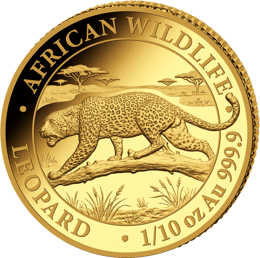


1/10 Unze Gold African Wildlife Leopard 2026 (Auflage: 3.000)












 Top Investment: A true investment classic
- Shipping costs: Free shipping within Germany available
- Secure shipping: 100% insured & anonymous delivery
 Price alert
  Share
Share
African Wildlife · Somalia 2026
Rosette and spot, two coats for two worlds.


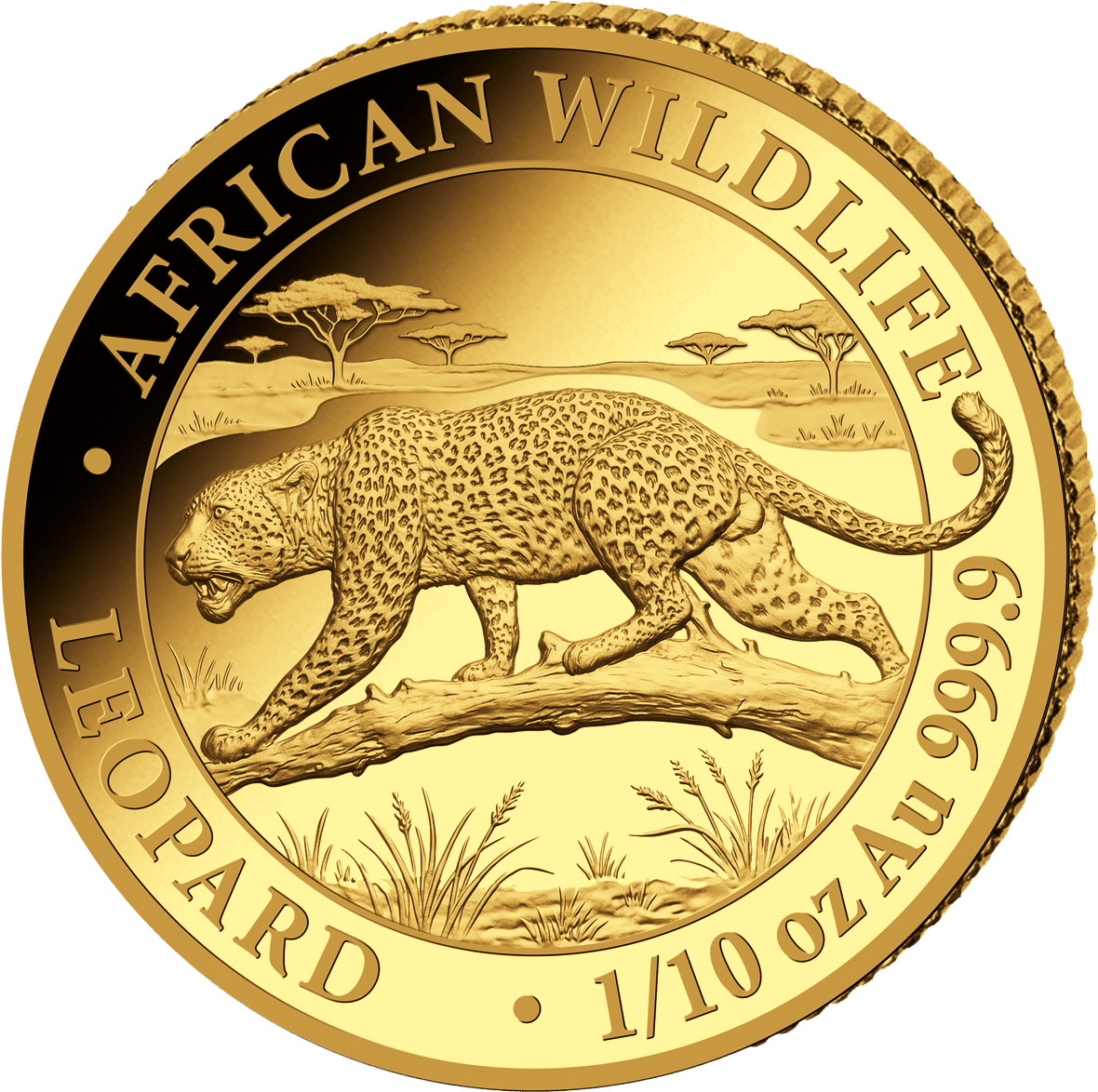
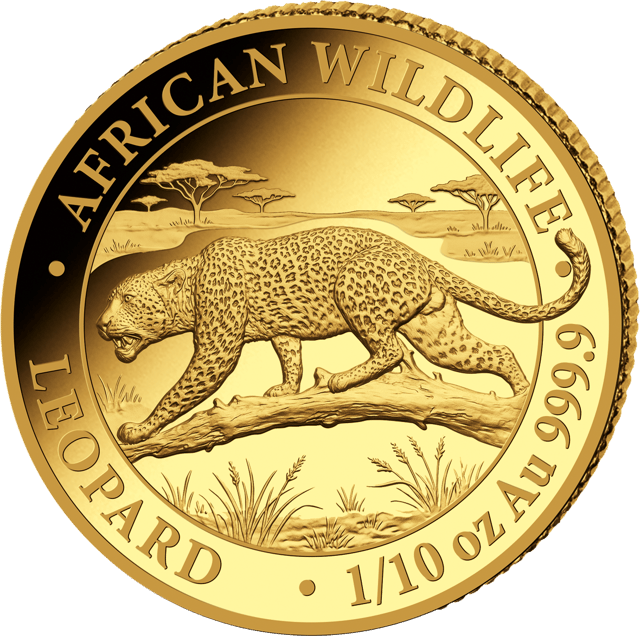
African Wildlife Leopard 2026, 1/10 ounce gold, picture side
The leopard’s coat suits its life in trees, in the forest and at night. The 2026 coin shows the leopard walking over a fallen tree trunk, acacias behind it.

The leopard
From the desert to the rainforest
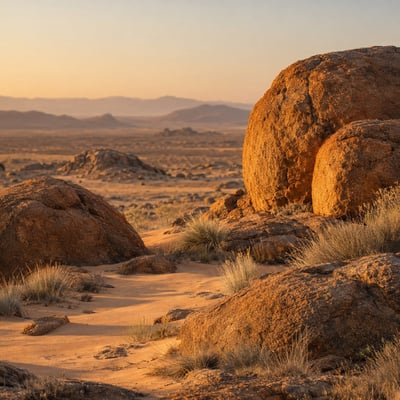 Desert
 Mountain forest
 Rainforest
No other big cat is as widespread: leopards live in some 62 countries across Africa and Eurasia, in deserts, savannas, mountains and rainforests.
They prefer rocky ground with dense bush and riverine forest. The leopard climbs well, spends much of its time in trees and is mostly active at night, as a loner.
Its coat carries dark, irregular spots, the rosettes; the base colour ranges from pale yellow in warm, dry regions to reddish orange in dense forests. Instead of purring, it calls with a rough, rasping sound.

The cheetah
The only one of its genus
Its genus, Acinonyx, has no other living member today. The cheetah needs wide, open land and is mostly active by day, unlike many other cats.
Its coat carries solid, round or oval black spots from 1.9 to 3.8 centimetres; only the throat and belly stay white. The tail ends in four to six black rings.
Cheetahs do not roar; their most common call is a chirp. Females live alone, while males often join up in groups.
Why two patterns
The coat often suits where the cat lives
Rosette
For trees, forest and night.
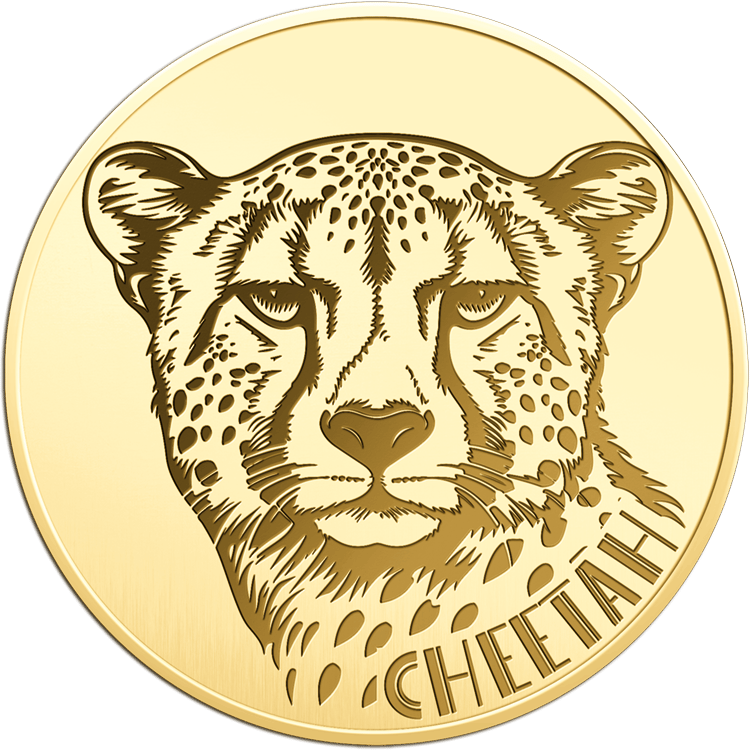
Spot
Black, without a ring.
A study of 35 cat species shows that whether a coat is patterned is linked to the habitat. How intricate and irregular the pattern is also relates to life in trees and to activity at night.
Over the course of evolution, such camouflage adapts comparatively quickly to a way of life. In the grey grass where cheetahs often live, their spots can take up the shadows of the blades and let the animals merge with their surroundings.
Allen et al. 2011, Proceedings of the Royal Society B
Rosette
For trees, forest and night.
Spot
Black, without a ring.
Allen et al. 2011, Proceedings of the Royal Society B

Rare coats
A black panther can be a leopard
Leopards with melanism, that is with almost black fur, are often called black panthers. Black cheetahs, by contrast, are not known.
In the rare king cheetah, the spots merge into blotches and stripes. It is not a species of its own but carries a rare variant of the gene Taqpep, which shapes the variations of the tabby pattern in domestic cats.
Young cheetahs wear a coat of their own as well: a thick, silvery grey mantle along the back, which they shed at about three months of age.

African Wildlife · Somalia
The leopard on both sides
Somalia’s coat of arms of 1956 shows a gold-framed shield held by two leopards standing on spears. So each of these coins shows the leopard on both sides: as the motif of the picture side and twice over as a supporter of the shield on the value side.


Two leopardsTwo leopards hold the arms of Somalia
Leopard and cheetah in more series
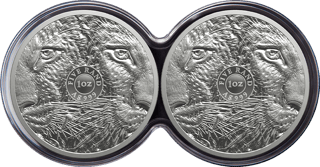 Big FiveTwo coins side by side make one whole face.
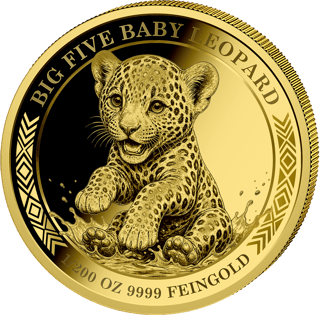 LiberiaLeopards in gold and silver, exclusively for Kettner Edelmetalle.
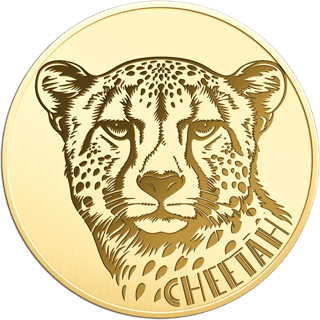 1/1,000 ounce of goldRosette and spot in the same small format.
At a glance
- Series
- African Wildlife
- Metal
- gold
- Weight
- 1/10 ounce
- Fineness
- 999.9/1,000
- Country of issue
- Somalia
- Face value
- 100 Shillings
- Year
- 2026
- Mintage
- 3,000 pieces
- Struck in
- Germany
- Packaging
- coin capsule
Leopard and cheetah
Both are listed as vulnerable on the IUCN Red List.
1/10 Unze Gold African Wildlife Leopard 2026 – Erstausgabe mit nur 3.000 Exemplaren
- Streng limitiert: weltweit erscheint diese Zehntelunze in einer Auflage von nur 3.000 Stück.
- Wachstumschancen: hohes Wertsteigerungspotential durch die scharfe Limitierung und die traditionell hohe Nachfrage der Serie.
- Investitionsziel: Sammlerstück mit echtem Anlagekern – Feingold zum Anfassen statt Papierversprechen.
- Rarität für Liebhaber: erste Ausgabe des Leoparden im kleinen 1/10-oz-Format – ein Sammelgebiet, das gerade erst beginnt.
- Motiv: ein pirschender Leopard auf einem Baumstamm, dahinter die Akaziensavanne – das Design wechselt Jahr für Jahr.
- Material / Feinheit: 3,11 g pures Feingold; die Motivseite weist die Angabe „1/10 oz Au 999.9“ aus.
- Hersteller: geprägt vom renommierten Bayerischen Hauptmünzamt in Deutschland.
- Herkunftsland: Deutschland – Ausgabeland ist die Republik Somalia, Nennwert 100 Shilling.
- Ausstattung: prägefrischer Stempelglanz, geriffelter Rand, 20,00 mm Durchmesser, einzeln in einer schützenden Münzkapsel.
Mit dieser Gold African Wildlife Sammlermünze kommt eine echte Rarität in den Handel. Denn während die großen Bullion-Serien in fast unbegrenzten Mengen ausgegeben werden, bleibt hier bei nur 3.000 Stück Schluss. Wer schon einmal versucht hat, eine ältere Leoparden-Ausgabe nachzukaufen, kennt das Problem: Die Stücke verschwinden in Sammlungen und Tresoren – und kommen selten zurück.
Das Motiv: Afrikas eleganteste Raubkatze in Gold
Die Motivseite zeigt einen ausgewachsenen Leoparden, der geschmeidig über einen liegenden Baumstamm pirscht. Grasbüschel im Vordergrund, weite Savanne mit Schirmakazien im Hintergrund, dazu ein Blick, der keinen Zweifel lässt, wer hier jagt. Rundum im breiten Randbereich stehen die Umschriften „AFRICAN WILDLIFE“ und „LEOPARD“ sowie Gewicht und Feinheit „1/10 oz Au 999.9“.
Die Wertseite trägt das Staatswappen der Republik Somalia: ein Schild mit fünfzackigem Stern, gehalten von zwei aufgerichteten Leoparden, darunter zwei gekreuzte Speere und Palmenblätter. Am Rand die Angaben „SOMALI REPUBLIC“, das Prägejahr 2026 und der Nennwert „100 SHILLINGS“. Diese Wertseite bleibt jährlich gleich – die Tierdarstellung wird jedes Jahr neu gestaltet.
African Wildlife: eine Serie mit Geschichte
Der Somalia Elefant prägt die Serie seit 2004 und gehört zu den beliebtesten Anlagemünzen überhaupt. 2018 kam der Leopard als Schwesterserie dazu – von Beginn an in deutlich kleineren Stückzahlen. Die 1-Unzen-Goldmünze wird beispielsweise nur in 1.000 Exemplaren pro Jahrgang geprägt. Verantwortlich für die Herstellung ist das Bayerische Hauptmünzamt, das diese Agenturausgaben im Auftrag Somalias in Deutschland fertigt.
Vergleichen lohnt sich
- Gegenüber dem Somalia Elefant: gleiche Serienfamilie, gleiche Prägequalität – aber die Elefanten-Zehntelunze erscheint unlimitiert, der Leopard ist streng limitiert.
- Gegenüber klassischen Bullionmünzen wie Krügerrand, Maple Leaf oder dem Nugget aus Australien: ähnlich gute Handelbarkeit, jedoch mit dem Reiz des Motivwechsels und einer sehr niedrigen Auflage.
- Gegenüber den Silber-Ausgaben der Serie: Gold bindet den Wert auf kleinstem Raum – 3,11 g passen in jede Handfläche, Silber benötigt für denselben Gegenwert ein Vielfaches an Platz.
- Kleine Stückelung: die Zehntelunze ist der günstige Einstieg in ein Sammelgebiet, das sonst schnell vierstellig wird.
Gold: der Wertspeicher, der alle Währungen überlebt hat
Gold ist die älteste Währung der Menschheit. Über 6.000 Jahre Geschichte, unzählige gescheiterte Papiergeldsysteme – und der Glanz ist geblieben. Einen Wert von Null hatte Gold nie, weil sein Wert im Metall selbst steckt und nicht im Vertrauen in eine Regierung. Dass die Zentralbanken selbst die größten Goldbesitzer der Welt sind, spricht Bände über ihr Vertrauen in das eigene Fiat-Geld.
Gold ist knapp, weltweit anerkannt und jederzeit liquide – deshalb dient es Generationen als Vermögensspeicher, nicht als Modeerscheinung.
Für Anleger kommen handfeste Vorteile hinzu: Der Kauf von Investmentgold ist von der MwSt. befreit, Gewinne aus dem Verkauf sind nach einer Haltefrist von mindestens einem Jahr grundsätzlich steuerfrei. Als Inflationsschutz und als Krisenschutz bewahrt physisches Metall Kaufkraft, wenn Papierwerte schwanken. Kleine Goldmünzen wie diese sind dabei besonders praktisch: Sie lassen sich einzeln verkaufen, verschenken oder weitergeben – man muss nicht gleich eine ganze Unze antasten.
Für wen sich diese Goldmünze besonders lohnt
Sammler greifen zu, weil die Erstausgabe einer neuen Stückelung immer ein Datum in der Seriengeschichte ist. Anleger schätzen den Feingoldkern und die weltweite Fungibilität. Und wer beides verbindet, erhält eine Sammlermünze, die Werterhalt und numismatischen Reiz unter einen Hut bringt. Bei einer Limitierung dieser Größenordnung gilt allerdings: Wer wartet, schaut oft nur noch zu.
Product depiction may differ from the final product.
