





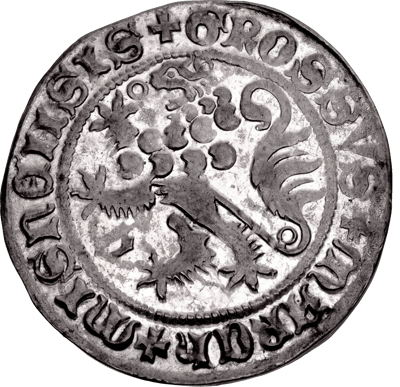

Silver Fürstengroschen Balthasar of Thuringia (1381-1407 | Knight in the Hundred Years' War)
- Genuine Original: from the Middle Ages
- Short Minting Period: only 1393 to 1406
- Meissen Lion: and cross of lilies
- Genuine OriginalNo restrike, but over six centuries old
- Short Minting PeriodIt ended with the coin lord's death at Wartburg Castle
- Meissen LionCRVX in the cross of lilies was a silent code for money changers




- Genuine Original: from the Middle Ages
- Short Minting Period: only 1393 to 1406
- Meissen Lion: and cross of lilies
 Price alert
 Share

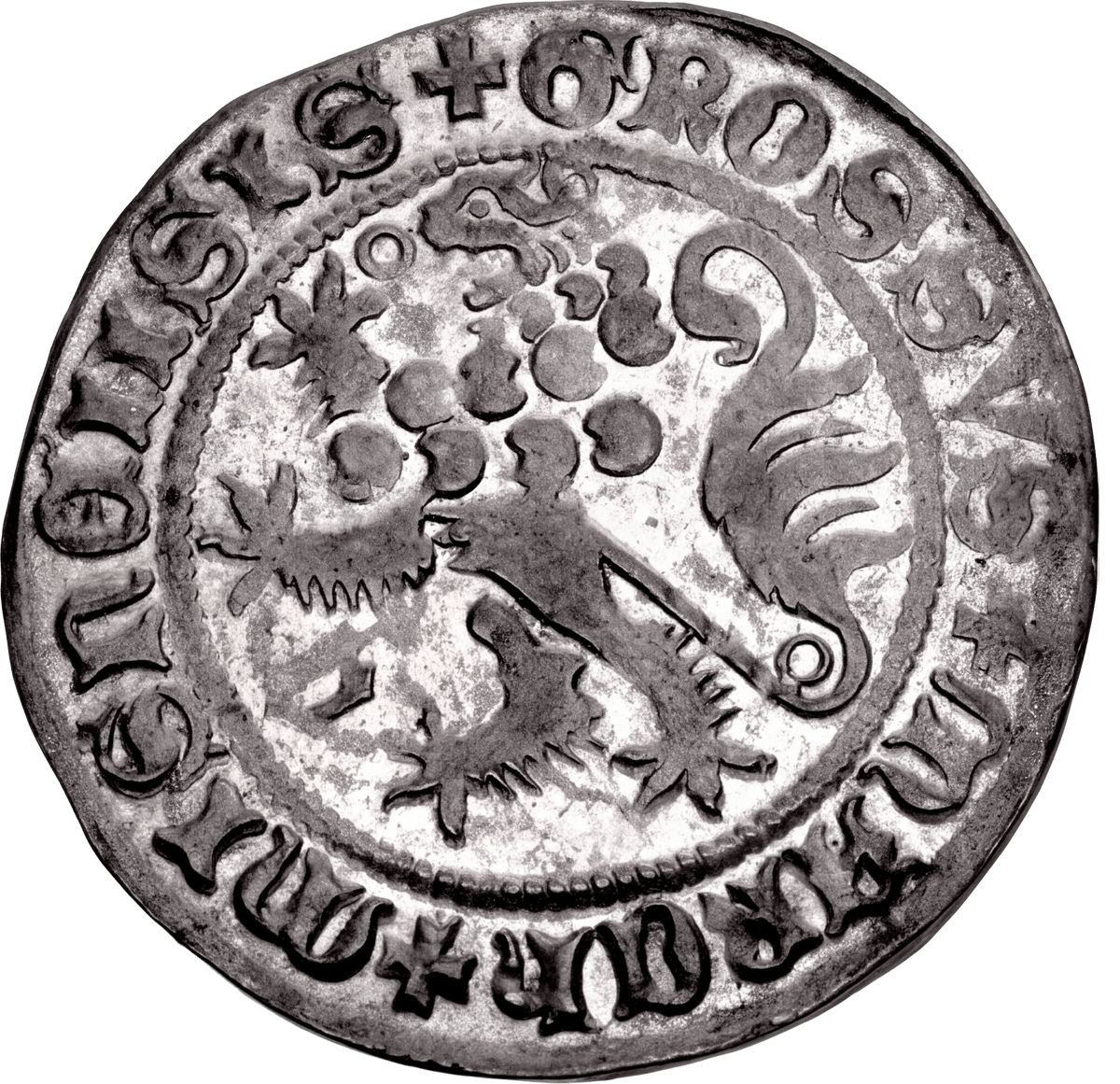
House of Wettin
The prince’s groschen.Less silver, the same shine.
From 1396 the prince’s groschen contained much less silver. The blanks were boiled in tartar before striking, so they still shone like silver.
- Age
- over 600 years
- Coin
- Groschen, silver
- Weight
- 2.85 g
From 1396 the prince’s groschen contained much less silver. The blanks were boiled in tartar before striking, so they still shone like silver.
- Age
- over 600 years
- Coin
- Groschen, silver
- Weight
- 2.85 g
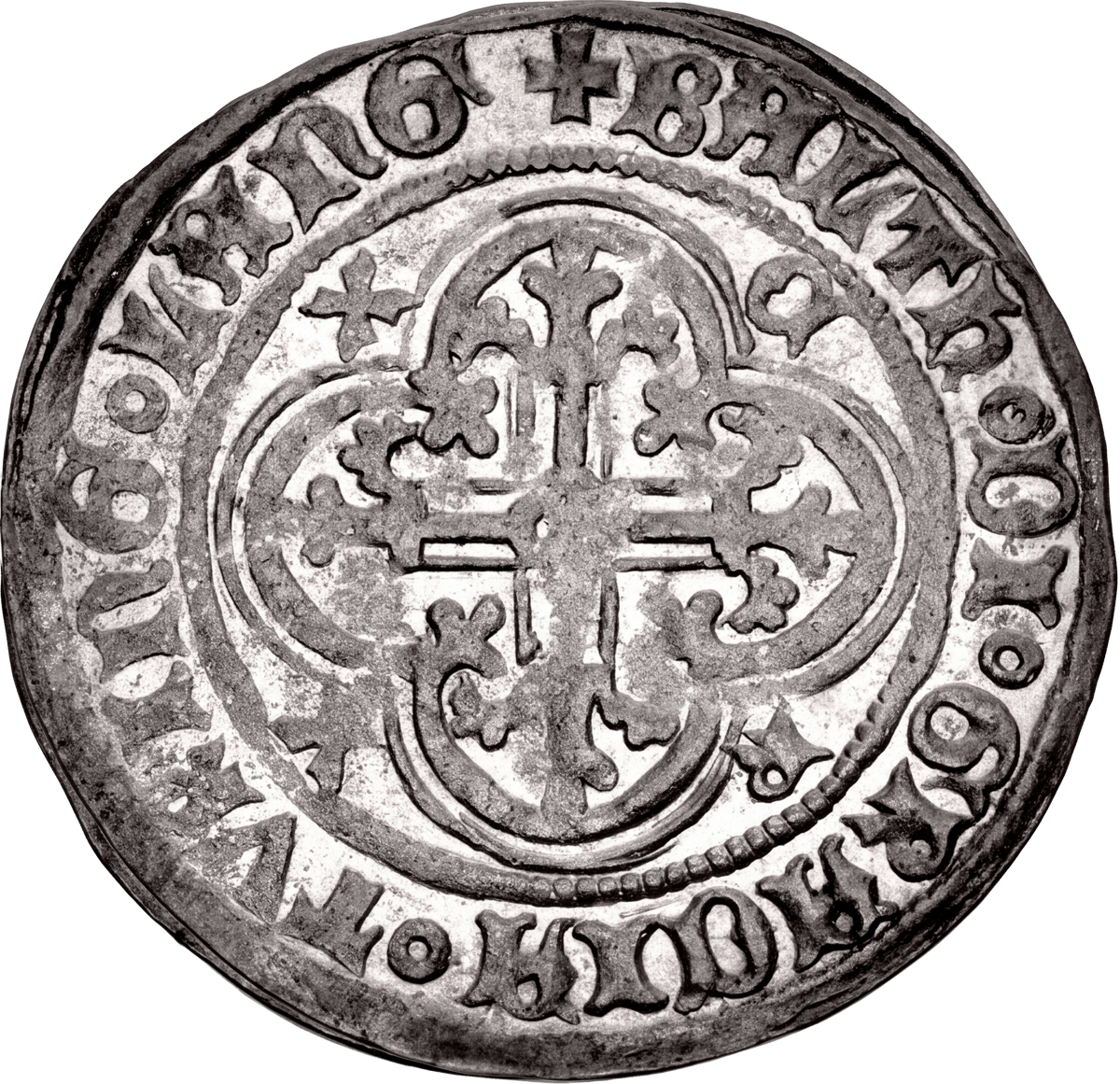
The other side
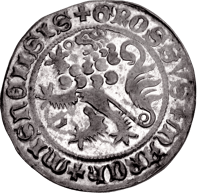
Lion and lily cross.
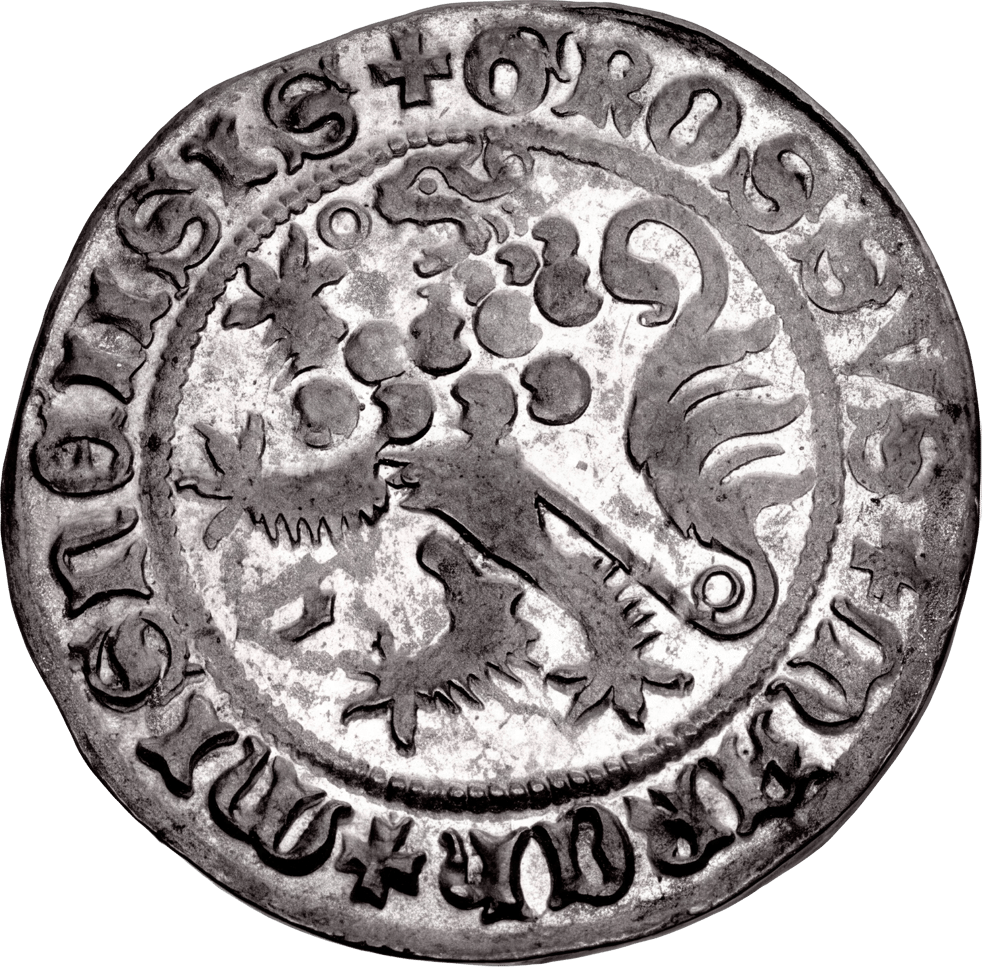
The rampant lion is the heraldic animal of the House of Wettin. The other side shows a lily cross in a quatrefoil and the name of Balthasar. The landgrave had the groschen struck from March 1393 in Freiberg and Sangerhausen. At first about 23 of them made one Rhenish gulden.
With Balthasar’s death on 18 May 1406 the striking of the prince’s groschen came to an end.

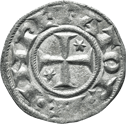
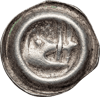
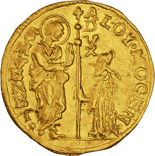
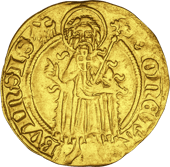

Size comparison
14 coins, one scale.
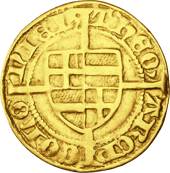
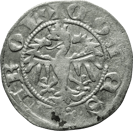
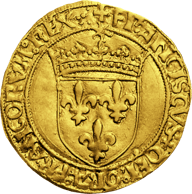
All 14 lie on the table in their true proportions, the oldest on the left. Your piece measures 27 mm.
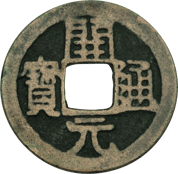
- Cash coin24 mm · 2.6 g
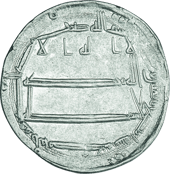
- Dirham23 mm · 2.9 g
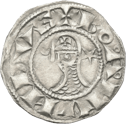
- Denier17 mm · 0.83 g
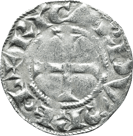
- Denier of Poitou18 mm · 1 g
- Denier of Sicily17 mm · 0.7 g
- Bracteate13.5 mm · 0.2 g
- Zecchino21 mm · 3.5 g
- Gold gulden23 mm · 3.9 g
- Gulden with arms23 mm · 3.9 g
- Prince’s groschen27 mm · 2.85 gthis page
- Kreuzer18 mm · 0.7 g
- Écu d’or26 mm · 3.4 g
- Gold fanam8 mm · 0.3 g
- Trade ducat21.4 mm · 3.5 g
The heaviest piece is not the widest: the gold gulden weighs almost twenty times as much as the bracteate and is still narrower than the groschen. Gold is almost twice as dense as silver.
Timeline
From 621 to 1797.
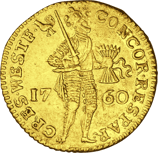
Each bar shows the years from which the pieces of a type come. For the zecchino that is 468 years, for the prince’s groschen only 13.
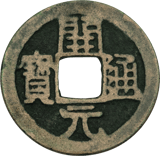 Tang dynasty621 to 907
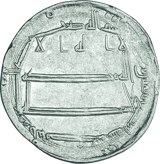 Abbasid caliphate8th and 9th centuries
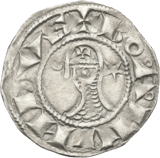 Principality of Antioch1163 to 1232
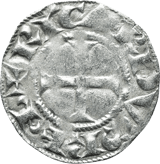 County of Poitou1189 to 1196
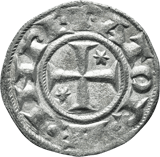 Kingdom of Sicily1194 to 1197
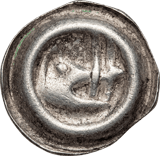 Town of Schweidnitz14th and 15th centuries
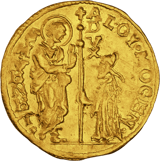 Republic of Venice1329 to 1797
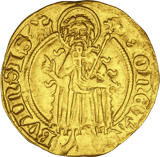 Electorate of Cologne1371 to 1463
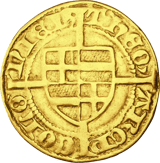 Electorate of Cologne1371 to 1463
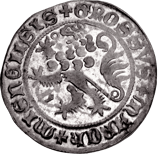 House of Wettin1393 to 1406 · Your piece
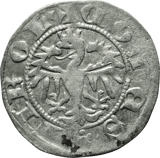 Tyrolfrom 1477
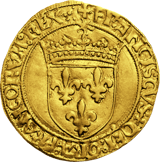 Kingdom of France1515 to 1547
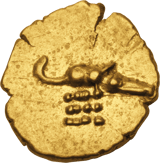 South India1600 to 1750
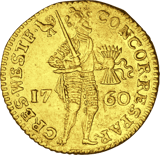 United Provinces1739 to 1794

14 coins.Over 1,100 years.
From 621 to 1797 and from China to the North Sea: every one of these coins was money that people paid with.
Silver Prince's Groschen Balthasar of Thuringia – A Knight's Pocket Money from the Hundred Years' War
An irregularly hammered round of silver – and yet a witness to the late Middle Ages. The Prince's Groschen of Landgrave Balthasar of Thuringia was struck from 1393 onwards, at the state mint of Freiberg and at the mint of Sangerhausen, built specifically for this purpose. You will not receive a modern restrike or a medal, but a genuine means of payment from the Holy Roman Empire that has survived more than six centuries.
The Coin's Issuer: A Wettin Knighted in 1369
Balthasar of Wettin, born in 1336 in Weißenfels, was no prince content to sit at a desk. He rode alongside the English King Edward III into the Hundred Years' War and was knighted in 1369. After the Chemnitz Partition of 1382, he received the Landgraviate of Thuringia, having previously been Margrave of Meissen. In 1391, he had the Sangerhausen mint built – its groschen were the first to be produced outside the state mint of Freiberg, fed by silver from mining in the Harz region. When Balthasar died at Wartburg Castle in 1406, the minting of Prince's Groschen ended, and the Sangerhausen mint was closed. This is precisely what makes this type from the Meissen-Saxon groschen era so appealing to collectors: a clearly defined time window, bound to the life of a single man.
Coin Design and Legend: The Lily Cross, the Meissen Lion, and the Mysterious "b"
- Obverse: A lily cross within a quatrefoil; in the outer angles stand the letters of the word CRVX (cross) – their arrangement was a silent code for mint officials and money changers, not for the general public.
- Legend: BALTh(A) • DI • GRACIA • TVRING • LANG, meaning "Balthasar, by the Grace of God Landgrave of Thuringia".
- Reverse: The rampant Meissen lion facing left, preceded by the mark "b" – the distinguishing feature of the Prince's Groschen, established in the 1393 minting agreement with Margrave Frederick the Belligerent.
- Mint abbreviations: BALTh points to Freiberg, BALThA to Sangerhausen.
- Catalogue reference: listed in the standard reference work by Gerhard Krug, "Die meissnisch-sächsischen Groschen 1338 bis 1500" (Berlin, 1974).
Technical Data at a Glance
- Precious metal: Silver, hammered coinage using medieval technique
- Face value: Groschen (Prince's Groschen), originally referred to as a "half-fine groschen" upon introduction
- Gross weight: 2.85 g
- Diameter: 27 mm
- Country: Holy Roman Empire
- Year of minting, mint, fineness, and condition: varied
The fineness varies considerably for historical reasons: to support the regional currency, the Prince's Groschen was initially valued at around 23 pieces to one Rhenish guilder – from 1396 onwards, coins were struck with significantly reduced silver content, with the blanks boiled in tartar to give the surface a silvery-white appearance. This surface-whitening technique is today a tangible piece of economic history in itself.
On Condition: These Pieces Were Circulated Currency – and They Look the Part
Darker patina, individual centering, small nicks, wear, and in places weakly struck sections of the legend: these are not flaws, but biography. Every trace stems from hands that, centuries ago, used these coins to settle goods, freight, or debts. Since the year of minting, mint, and reverse variant may vary, the piece delivered will differ from the image shown.
Please understand the photo in the shop explicitly as a sample image: appearance, exact weight, and condition vary from piece to piece for historical reasons. You are acquiring an original.
A Collector's Piece with Substance – Why Silver Convinces
Silver has been a monetary and coinage metal for millennia, a symbol of wealth and prestige, and remains to this day a medium of exchange for smaller transactions. Unlike unbacked paper money, which rests solely on trust, it possesses intrinsic value: industry, electronics, solar, and medical technology consistently demand it, while the extractable supply remains limited. Those who collect historical silver coins combine numismatics with real tangible assets – this groschen is thus both a piece of history and a building block for inflation hedging and crisis protection.
Compared to later Wettin types such as the Shield Groschen or the Helmet Groschen, which appeared from 1405 onwards with higher silver content, the Prince's Groschen is the older, historically more charged representative – though often simpler in its coin design and lower in silver content. Compared to modern bullion coins made of fine silver, it does not win on fine weight, but on rarity, provenance, and narrative power. A note for collectors and investors: profits from the sale of silver are generally tax-free in Germany, provided a minimum holding period of one year is observed. Precious metal outlasts generations, is durable, liquid at any time, and can be passed down within the family – together with a story that ends at Wartburg Castle and continues in your collection. Shipping is carried out as insured value shipping.
Product image may differ from the actual product.
 ManufacturerMünze DeutschlandOfficial state distributor · GermanyAll products
