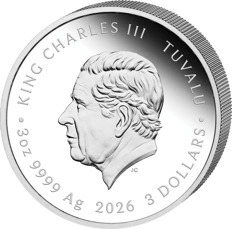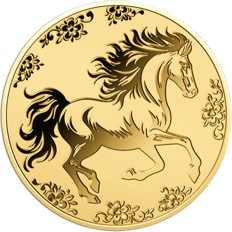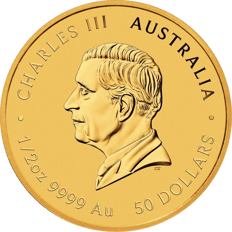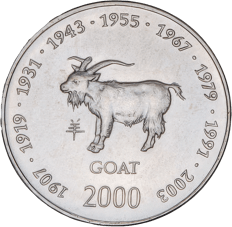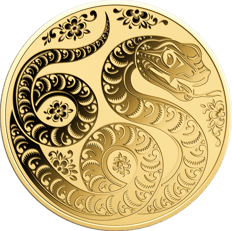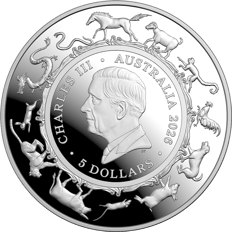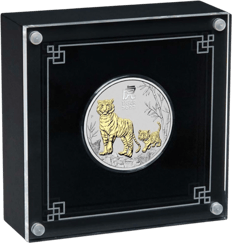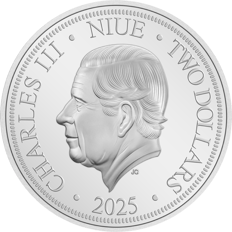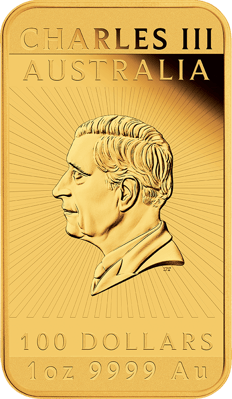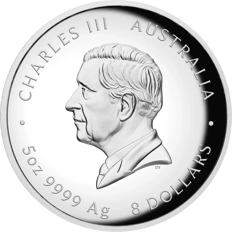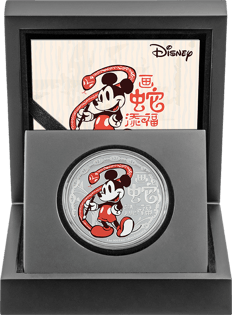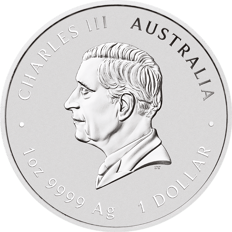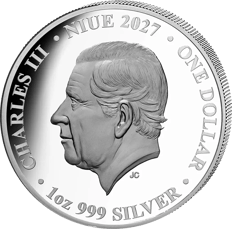
1 oz Silver Lunar Year of the Goat 2027 (Mintage: 888 | Proof)
£176.67
excl. UK import VAT and shipping
Available in 2–3 business days

 More than 310,000
 Over 30 years
 Secure shipping
 Google: 4.9/5


Every year, to mark the Chinese New Year, the design changes: sometimes a dragon, sometimes a rat, sometimes a horse. The Lunar series from the Australian Perth Mint has combined the fixed material value of gold and silver with annually changing zodiac designs and limited mintages since 1996. It is precisely this dual character as both a bullion coin and a collector's coin that makes the series one of the most actively traded issues in the precious metals sector. This guide places the three generations in context, explains designs, denominations and mintages, and shows when the collector's aspect exceeds the pure precious metal value.
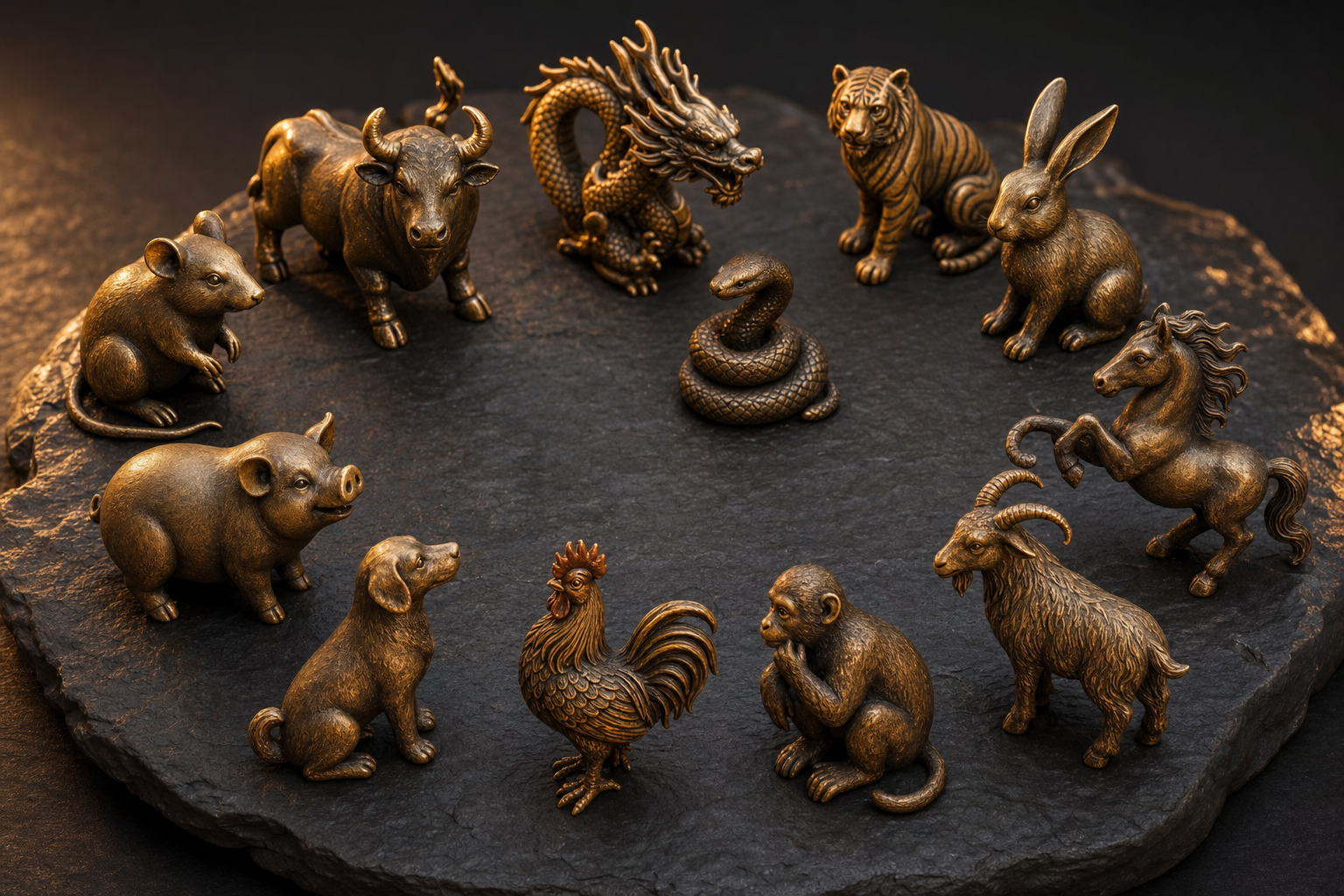
The name Lunar comes from Latin and refers to the moon, more precisely to the Chinese lunar calendar, which gives the coins their theme. In a twelve-year cycle, each year is assigned one of the twelve zodiac signs: rat, ox, tiger, rabbit, dragon, snake, horse, goat, monkey, rooster, dog and pig. Each issue of the series takes up the respective year's animal and strikes it as the design on the reverse of the coin.
This makes the Lunar series fundamentally different from classic bullion coins, whose design remains virtually unchanged for decades. With Lunar, the image changes every year, and with it the appeal for collectors who bring together twelve years' worth of coins to form a complete cycle. Hardly any other series tells the rhythm of time so directly: each animal stands for a year, each coin for a story. Anyone wanting to explore the symbolism behind the designs further will find additional inspiration in related series on the theme, for example in the Western interpretation of the zodiac signs. The coins are made of fine gold or fine silver in bullion quality and, through their changing years of issue, also carry a pronounced numismatic character.
The Perth Mint launched the first Lunar coin in 1996, with the Year of the Rat as its opening chapter. This first generation, referred to in retrospect as Lunar I, ran through a full twelve-year cycle until 2007. Even at this early stage, the pattern that still defines the series today was evident: a fixed theme, annually changing designs and limited availability. The gold issues appeared from 1996, with the silver issues following from 1999.
The second generation, Lunar II, began with the Year of the Rat in 2008 and ran until the Year of the Pig in 2019. It brought the series international recognition, driven in part by strong demand from the Asian market. Since 2020, the third generation, Lunar III, has been carrying the cycle forward once again, with the Year of the Horse 2026 as one of the current years of issue. A look at other Australian issues from the Perth Mint, such as the Koala range or the Kookaburra silver coins, shows just how strongly this mint has shaped the global market for design-driven bullion coins.
At first glance, the three generations appear interchangeable, all following the zodiac cycle. In terms of design, mintage policy and availability, however, they differ considerably. A wide selection of older and current years of issue can be found in the ranges for Lunar II gold coins and Lunar II silver coins.
The first generation laid the foundation. Early years of issue were in some cases produced in comparatively modest quantities, the 1/4 oz gold coin of the Rat 1996, for example, with only around 1,390 pieces. Well-preserved pieces from the first series are sought after by collectors, as they mark the historical beginning of the Lunar family in gold.
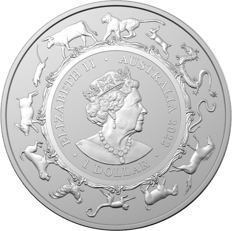
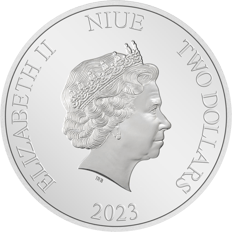
The second generation is probably the best known. The 1 oz gold issue had a mintage cap of 30,000 pieces per year, the 1 oz silver coin a cap of 300,000 pieces. On the obverse, coins of this era carry the portrait of Queen Elizabeth II, while the reverse shows the respective year's animal. It is precisely the low mintages of the larger denominations that explain why certain years of issue have risen considerably in collector's value.
The third generation today offers the widest selection of formats and variants, in gold, silver and platinum, in some cases as coloured special editions, with an antique finish or as Proof with its own mintage limits. Anyone looking for current years of issue is most likely to find them in the Lunar III silver category and among the Lunar III platinum coins.
The three generations at a glance
| Generation | Period | Special feature |
|---|---|---|
| Lunar I | 1996-2007 | Launch of the series, early years of issue now sought after |
| Lunar II | 2008-2019 | 1 oz gold limited to 30,000 pieces, high recognition |
| Lunar III | since 2020 | widest range of formats and materials, many special variants |
The Lunar series covers an unusually wide range of denominations. In gold, the fine weights range from 1/20 oz through 1/10, 1/4, 1/2, 1, 2 and 10 troy ounces up to kilogram formats. Silver is available from 1/2 oz to 10 oz as well as in kilo and multi-kilo formats. Smaller units carry a proportionally higher premium, but are well suited as an entry point or as a gift.
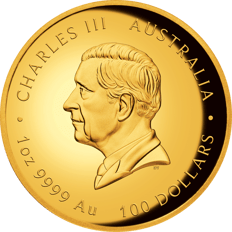
Because of the high fineness of 999.9, the coins are relatively soft; the face value stamped in Australian dollars lies well below the material value and mainly serves to confirm the coin's status as official legal tender. The obverse carries the portrait of the British head of state, framed by the fine weight, fineness and year of issue. The reverse shows the respective year's animal together with the Chinese character and a "P" marking the Perth Mint. Notably, the gold design usually differs from the silver design of the same year.
Anyone who understands the logic of the series, a fixed theme, a changing animal, a limited mintage, makes more informed decisions when buying a Lunar coin.
For the safe storage of delicate, high-fineness coins, suitable accessories such as coin capsules or coin cases are worthwhile, as they can hold a complete twelve-year cycle in an orderly way.
Anyone buying a bullion coin almost never pays only the pure metal value. On top of the material value, weight multiplied by the current precious metal price, there is a premium (also called agio) that covers production, distribution and margin. For continuously minted standard coins such as the Krugerrand, this premium is low. With the Lunar series, by contrast, two factors push it upward:
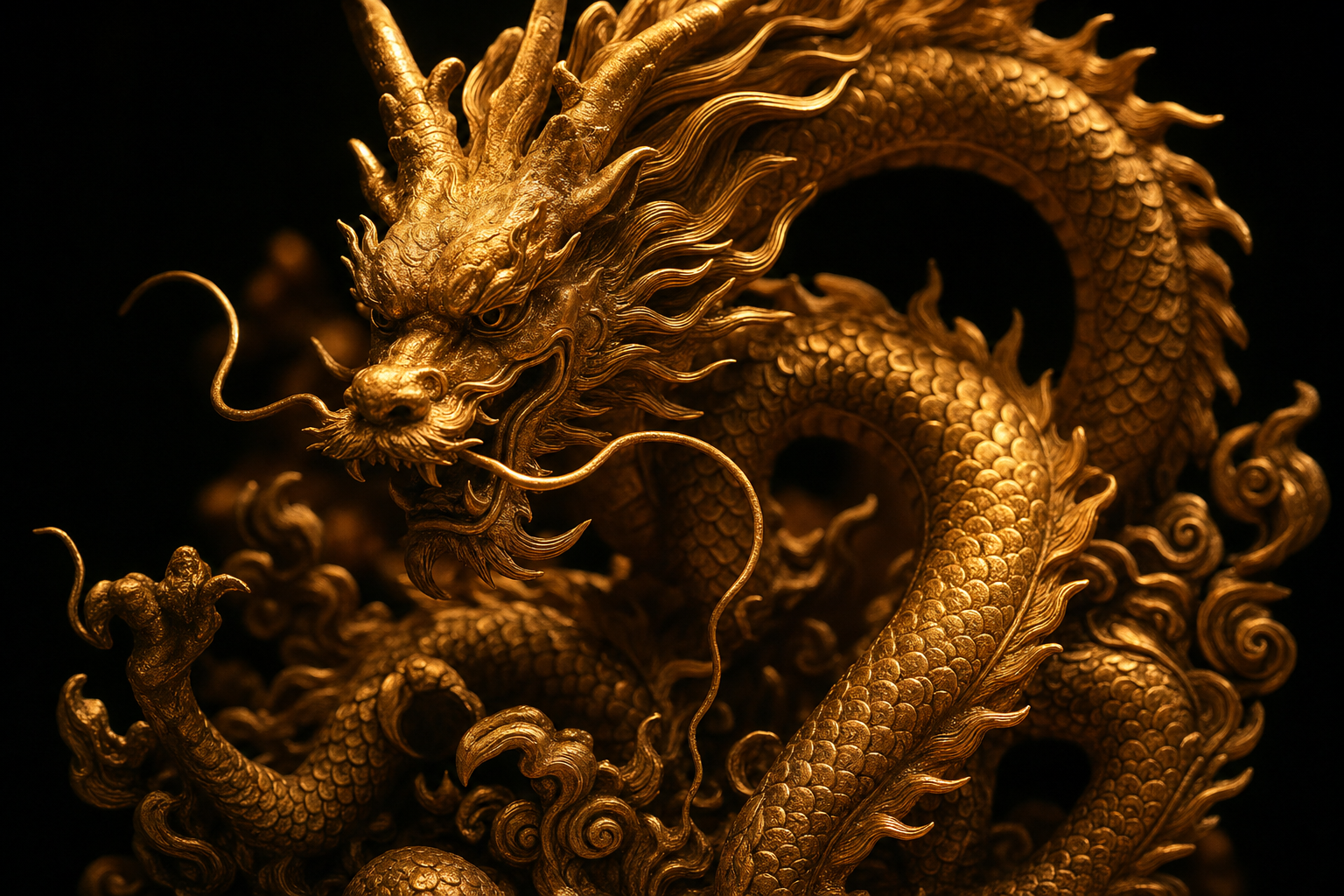
As long as a year of issue is regularly available, the premium follows the current gold price or the silver price, respectively. It becomes interesting once the mintage is exhausted: the market price of a sought-after year of issue can then noticeably exceed its material value. This is exactly where the character shifts from bullion coin to collector's coin. The Year of the Dragon traditionally counts among the most sought-after designs, as the dragon is considered especially auspicious in Chinese culture.
Both variants follow the same design concept but appeal to different buyers. The Lunar gold coin concentrates high value into a small space. Investment gold is exempt from VAT in Germany, easy to store and tradable internationally. Anyone looking for the collector's aspect will find the greatest potential among the limited gold years of issue, albeit with a correspondingly higher capital outlay per piece. A comparison with other classics such as the Maple Leaf or the Vienna Philharmonic helps in assessing the premium.
The Lunar silver coin is the low-threshold entry point. Significantly less capital is needed per coin, which makes collecting entire cycles easier. The tax treatment should be noted: silver coins are subject to VAT in Germany (usually under the margin scheme), which makes the premium higher than for gold. In return, the silver issues are especially often available coloured or as special editions. Anyone wanting to broaden their entry point will find historical years of issue in the Lunar Series I silver range.
Tax note
Investment gold is exempt from VAT in Germany under the applicable regulations. Silver coins, by contrast, are subject to VAT, which is reflected in the premium. This information is general in nature and does not replace tax advice.
To match the right coin to the respective goal, it is worth considering a few practical criteria. Anyone focused mainly on the material value gets the most transparent deal with regularly available years of issue at a low premium; anyone seeking the collector's appeal should pay attention to design, condition and mintage.
As a German family business with ISO-compliant authenticity verification and over 200,000 satisfied customers, Kettner Edelmetalle places great value on verified goods and insured shipping. Anyone wanting to combine the Lunar series with other design-driven bullion coins will find suitable additions in the broader zodiac designs section as well as among the China Panda silver coins.
The Lunar series is a family of bullion and collector's coins from the Australian Perth Mint. Since 1996, it has been dedicated each year to one of the twelve zodiac signs of the Chinese lunar calendar, with the design changing every year. It is available in gold, silver and, in the third generation, also in platinum.
These are three consecutive generations of the same concept. Lunar I ran from 1996 to 2007, Lunar II from 2008 to 2019, and Lunar III since 2020. They differ in design, mintage policy and range of materials, with Lunar III today offering the widest selection.
On top of the pure material value comes a premium. For sold-out or especially sought-after years of issue, an additional collector's surcharge can arise, since the mintage is strictly limited and not struck again. The market price of such years of issue can exceed the precious metal value.
Traditionally, the Year of the Dragon counts among the most popular years of issue, as the dragon is considered especially auspicious in Chinese culture. The horse and the snake are also popular with collectors. Ultimately, demand depends on design, mintage and condition.
That depends on the goal. Gold is VAT-exempt, compact and tradable internationally, but requires more capital per piece. Silver is the more affordable entry point and offers many special variants, but is subject to VAT in Germany and therefore carries a higher premium.
Yes. The Lunar series is internationally established and is actively bought back by precious metals dealers. For resale, regular years of issue follow the daily price of the precious metal; sought-after or rare years of issue can additionally achieve a collector's surcharge.
 Zodiac SignsLunar
Stay informed with product launches, financial news and exclusive offers. Sign up for our free newsletter today.
By entering your email address and clicking the "Submit" button, you give the following consent: "I agree to be informed by email about new products, financial news and exclusive offers, and therefore consent to the processing of my email address for the purpose of sending the newsletter. I can revoke this consent at any time without giving reasons, with effect for the future. The lawfulness of processing carried out prior to revocation remains unaffected."