





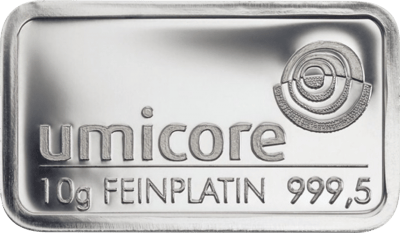


10g Platinum Bar Umicore, Degussa










 999.5/1,000 fineness for high value retention
- Sealed and LBMA-certified
- Free and anonymous shipping
- Excellent purity: 10g platinum bar by Umicore with 999.5/1,000 fineness, ideal for investment and inflation hedge
- Secure investment: Sealed shipping guarantees condition without scratches, LBMA-certified for global acceptance
- Free shipping: Benefit from free shipping within Germany and anonymous delivery
 Price alert set
 share
share
Platinum bar · 10 g
Platinum was entrusted with the kilogram for 130 years.
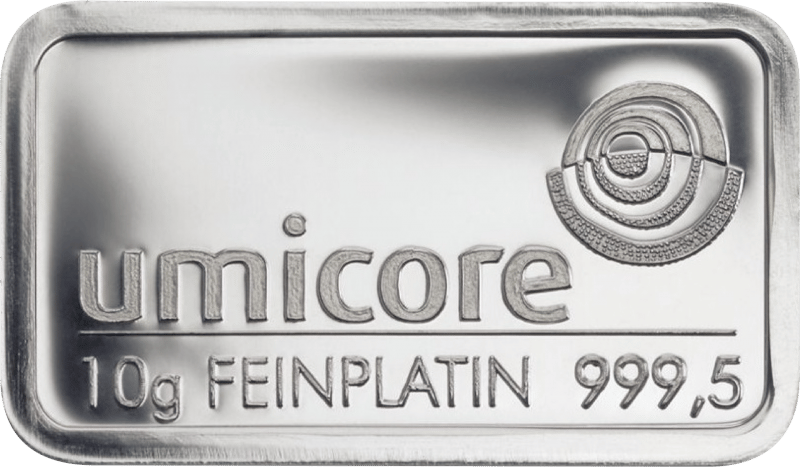
Made of fine platinum with a fineness of 999.5/1,000. From 1889 to 2019, the kilogram itself was a piece of platinum with iridium, kept near Paris.
Measure of all masses
A kilogram under three bell jars.
In 1889 a cylinder of platinum with 10 per cent iridium was declared the unit of mass. Cast in 1879, it was 39 millimetres high and just as wide.
It lay under three bell jars at the International Bureau of Weights and Measures in Sèvres near Paris, in a triple-locked vault. At about the same time, forty siblings were made from the same alloy.
At the third verification, from 1989 to 1991, the original copies typically differed by around 25 millionths of a gram. On 20 May 2019 platinum handed the kilogram over to the Planck constant, as decided on 16 November 2018.
This bar is fine platinum with a fineness of 999.5/1,000 and has a different shape. The two are related through the metal.

Platinum of the Urals
Platinum money, struck in St Petersburg.
In April 1828 Russia decided to strike coins of platinum. At the St Petersburg Mint, more than 1.3 million pieces of 3 roubles were made, and pieces of 6 and 12 roubles were added later.
Every 3-rouble coin states its weight in old Russian units, equivalent to 10.35 grams, and its metal: pure Ural platinum. In 1845 Russia withdrew the platinum money from circulation.
The metal
A white that does not tarnish in air.
Platinum is a silver-white, noble metal. In air it does not tarnish at any temperature.
- Density around 21.5 g/cm³

The second white metal
Palladium first had to prove that it existed.
In 1803 a printed notice with no sender announced “Palladium, or new silver”, to be had only from Mr. Forster in Gerrard Street in Soho. The chemist Chenevix bought up the entire stock and took the metal for an alloy of platinum and mercury. In 1805 the mystery was solved: William Hyde Wollaston had found it and named it after the asteroid Pallas.
View the palladium bars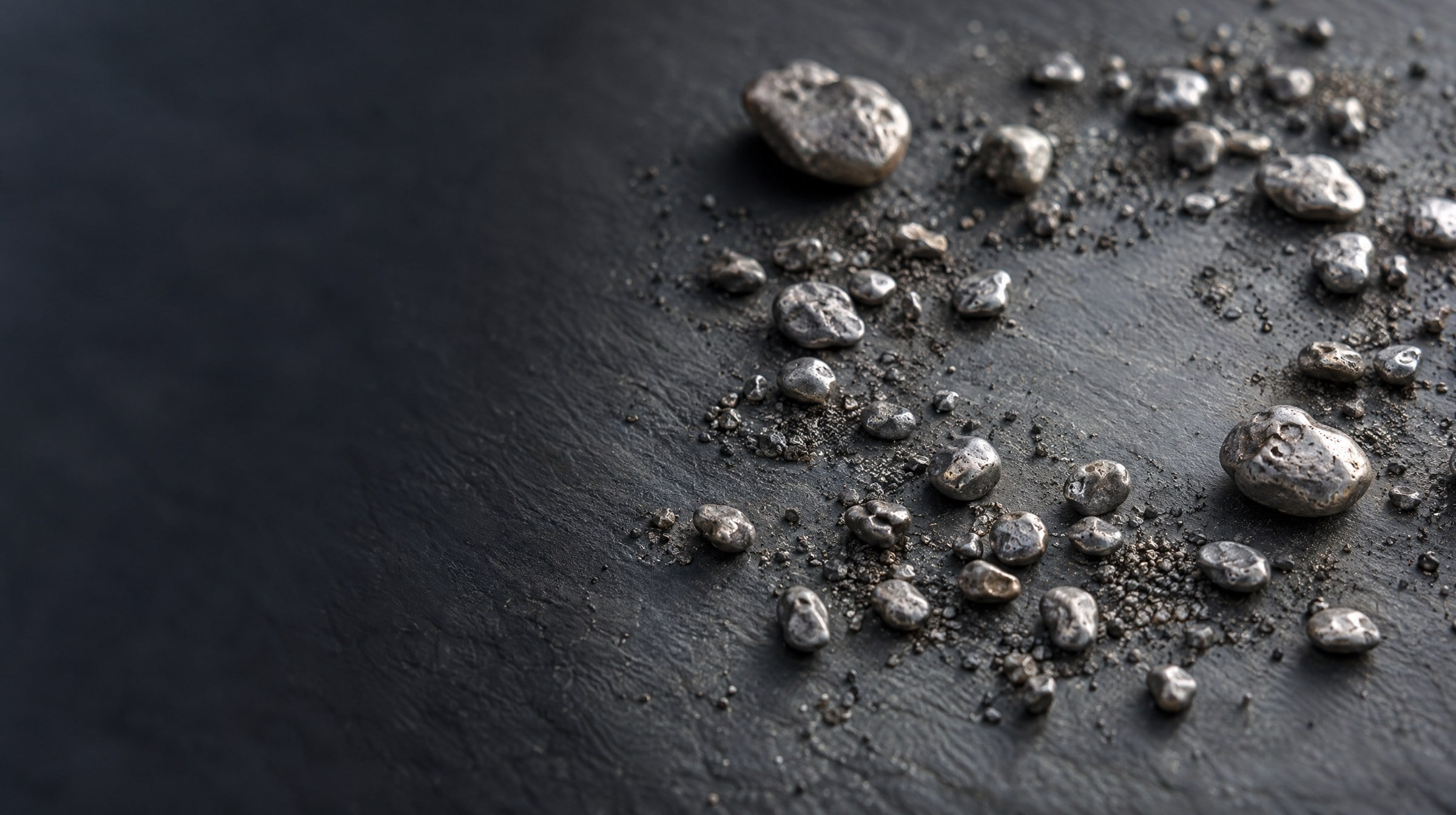
The weights
Platinum from 5 grams to 1 kilogram.
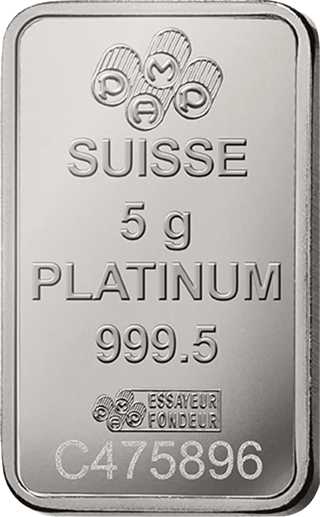
Each weight as pictured in our gallery, not to scale. The bar on this page is marked.
Click on an available bar to open its page.
Platinum bars
 5 g
5 g 10 g
10 g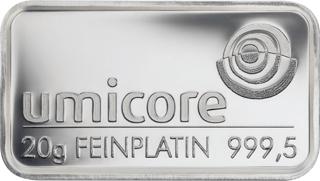 20 g
20 g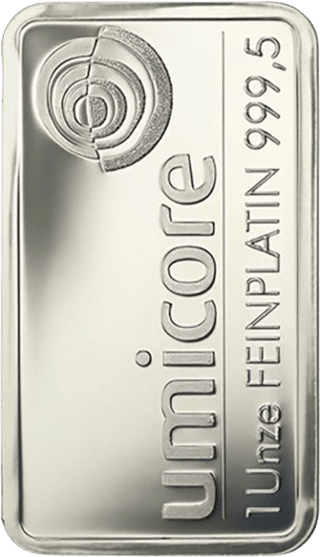 1 ounce
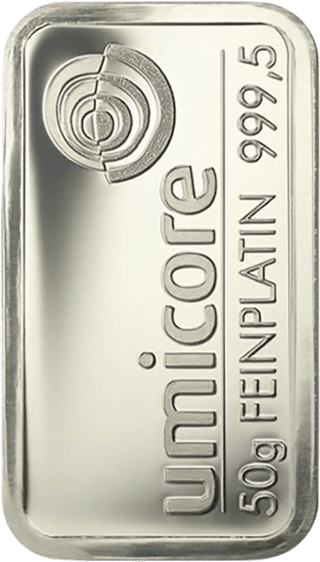 50 g
50 g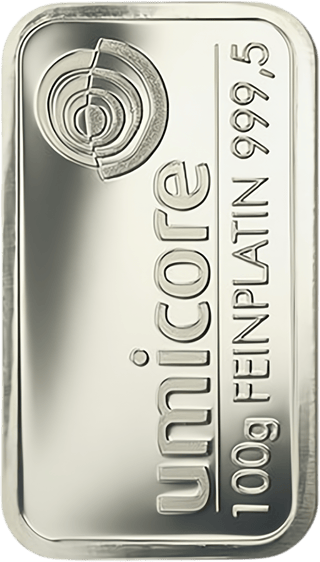 100 g
100 g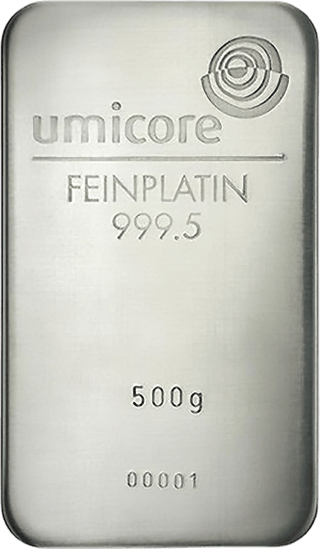 500 g
500 g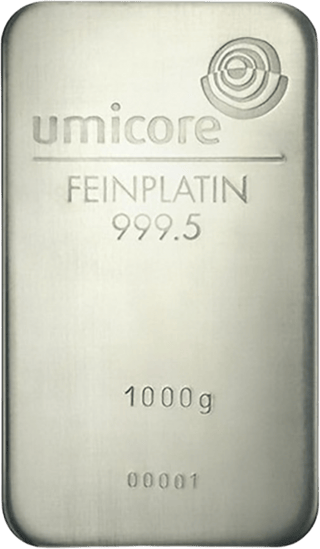 1 kg
1 kg
Platinum divisible bars
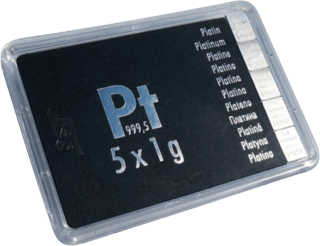 5 g
5 g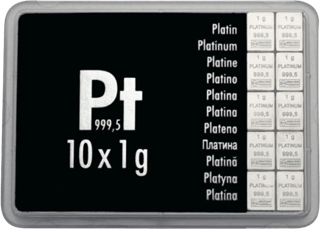 10 g
10 g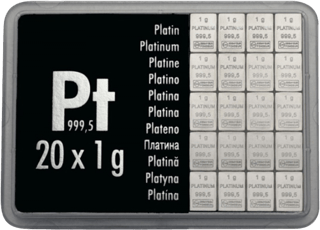 20 g
20 g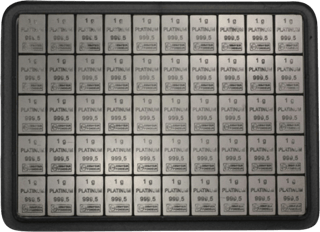 50 g
50 g
At a glance
- Type
- bar
- Metal
- platinum
- Weight
- 10 g
- Fineness
- 999.5/1,000
- Packaging
- sealed in film
- Certificate
- certificate of authenticity
Platinum and palladium
10g Platinbarren Umicore, Degussa
- Material: Platin mit einer Feinheit von 999,5/1.000
- Investitionsziel: Wertanlage, Krisenschutz, Inflationsschutz
- Sicherheit: der Barren wird eingeschweißt verschickt
✔ Informationen zu dem Platinbarren
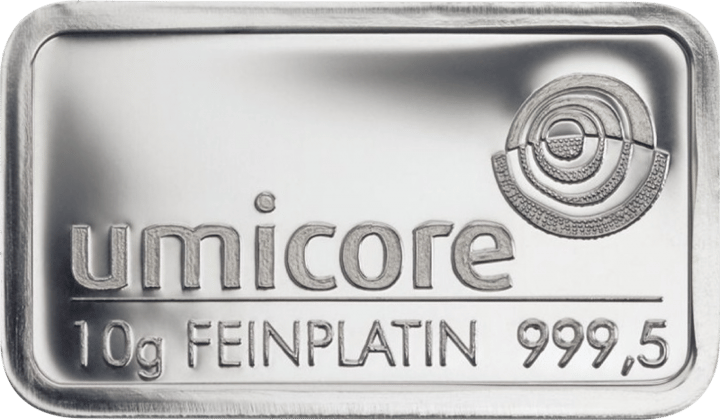
Dieser hochwertige Platinbarren hat eine Feinheit von 999,5/1.000 und ein Gewicht von 10 Gramm. Der Hersteller des Produkts variiert, jedoch handelt es sich immer um ein renommiertes Unternehmen, das im Besitz eines LBMA-Zertifikats ist. Der Platinbarren wird daher auf jeden Fall auf der ganzen Welt akzeptiert. Zu den Herstellern gehören zum Beispiel die Unternehmen Umicore und Degussa. Der Platinbarren wird eingeschweißt verschickt, damit er auch ohne Kratzer bei Ihnen zuhause ankommt.
Auf der Vorderseite des Barrens sind all diese Informationen eingeprägt. Sie finden dort die Stückelung, das Gewicht sowie das Logo des Herstellers.
✔ Die Vorzüge von Barren gegenüber Münzen
Ein großer Vorteil von Barren im Vergleich zu Münzen liegt tatsächlich in der kostengünstigen und unkomplizierten Herstellung. Da bei Barren keine aufwendigen Motive eingeprägt werden müssen, entfallen die damit verbundenen Arbeits- und Produktionskosten. Dies führt dazu, dass Barren in der Regel zu einem günstigeren Preis erhältlich sind als Münzen und somit den tatsächlichen Materialwert besser widerspiegeln.
Ein weiterer Vorteil von Barren ist, dass sie keine zusätzlichen Sammleraufschläge oder andere Kosten mit sich bringen. Im Gegensatz zu Münzen, die aufgrund ihres Sammlerwertes oft einen höheren Preis haben, orientieren sich Barren mehr an den reinen Materialkosten. Dies macht sie besonders attraktiv für Anleger, die weniger an der Sammlerwertsteigerung interessiert sind und stattdessen einfach in das Edelmetall, wie zum Beispiel Platin, investieren möchten.
Die praktische Handhabung von Barren ist ebenfalls ein Pluspunkt. Aufgrund ihrer einheitlichen Form lassen sich Barren problemlos aufeinander stapeln und nehmen weniger Platz ein als Münzen. Dies erleichtert die Lagerung und Organisation des physischen Edelmetalls.
Obwohl Barren keine kunstvollen Motive aufweisen, sind sie dennoch ein Symbol für Wert und Stabilität. Ihr schlichtes und zeitloses Design spricht vor allem Anleger an, die den Fokus auf den reinen Materialwert legen und die Funktion des Edelmetalls als Absicherung und langfristige Investition schätzen.
✔ Die Vorzüge von Platin gegenüber Gold und Silber
Wenn Sie an Edelmetalle denken, dann denken Sie wohl zuerst an Gold und dann an Silber. Womöglich kommt Ihnen Platin gar nicht in den Sinn und Sie fragen sich, ob sich die Investition in Platin tatsächlich lohnt? Die Antwort ist ja. Die Menschen haben sich Währungen geschaffen und zwar in Form von Geld. Geld kann immer wieder gedruckt werden in sehr großen Mengen. Geld hat an sich keine Grenze. Es gibt kein Limit, wie viel Geld theoretisch gedruckt werden konnte. Aus diesem Grund kann es auch zu Inflationen kommen, wie wir sie momentan erleben.
Die Kaufkraft von Geld wird immer geringer. Gleichzeitig aber werden Edelmetalle immer wertvoller. Edelmetalle können nämlich nicht wie Geld immer wieder neu produziert und hergestellt werden. Edelmetalle wie Gold, Silber und eben auch Platin sind Rohstoffe, die in der Natur nur in einer begrenzten Menge vorkommen. Ist diese Menge aufgebraucht, dann kann auch kein neues Material mehr gewonnen werden. Die einzige Möglichkeit, die dann noch bleibt, ist das Recycling von Altmetallen. Platin ist in viel geringeren Mengen vorhanden als Gold und Silber und wird in vielen Bereichen gebraucht. Aus diesem Grund ist Platin unheimlich wertvoll. Die Investition in Platin lohnt sich also auf jeden Fall.
✔ Informationen auf einen Blick
- Gewicht: 10 Gramm
- Zustand: Neuware
- Erhaltungsgrad: Prägefrisch
✔ Informationen zum Schluss
Falls Sie noch Fragen zu diesem Platinbarren haben, oder zum Edelmetall Platin im Allgemeinen, dann dürfen Sie diese gerne an unsere Kundenservice stellen.
Product depiction may differ from the final product.
