





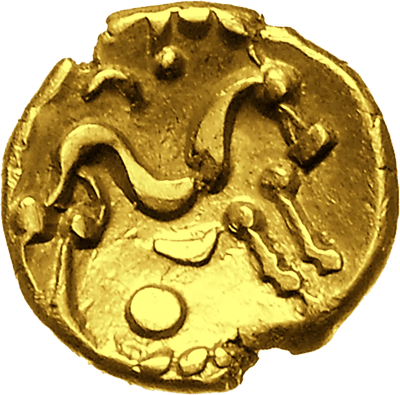

Gold Stater of the Celts (60-50 BC | Ambiani Tribe | Involved in the Resistance against Julius Caesar)
- Gallic War: genuine historical witness
- Celtic Art: horse as ornament
- Genuine Original: with certificate
- Gallic WarMinted in the years Gaul fought against Rome
- Celtic ArtAn ornamental horse of S-band, crescent and dots
- Genuine OriginalAn antique one-off piece, delivered with certificate of authenticity




- Gallic War: genuine historical witness
- Celtic Art: horse as ornament
- Genuine Original: with certificate
 Price alert
 Share

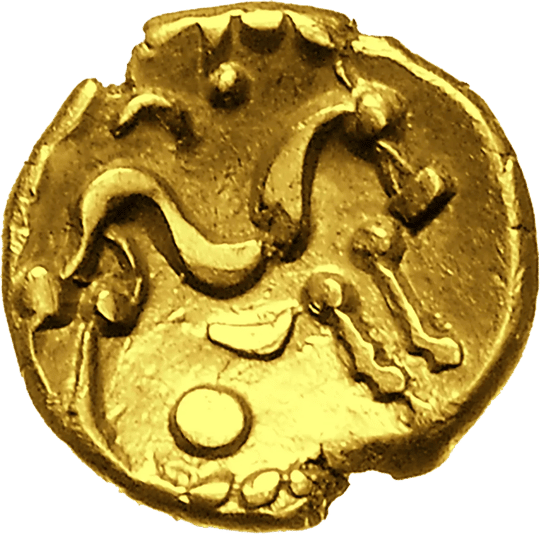
Ambiani · 60 to 50 BC
The gold stater of the Ambiani.A horse from Caesar’s war.
The Ambiani lived on the Somme, and their chief town Samarobriva is today’s Amiens. Caesar counts them among the tribes that allied against Rome.
- Origin
- on the Somme
- Weight
- 6.1 g
- Diameter
- 14 mm
The Ambiani lived on the Somme, and their chief town Samarobriva is today’s Amiens. Caesar counts them among the tribes that allied against Rome.
- Origin
- on the Somme
- Weight
- 6.1 g
- Diameter
- 14 mm

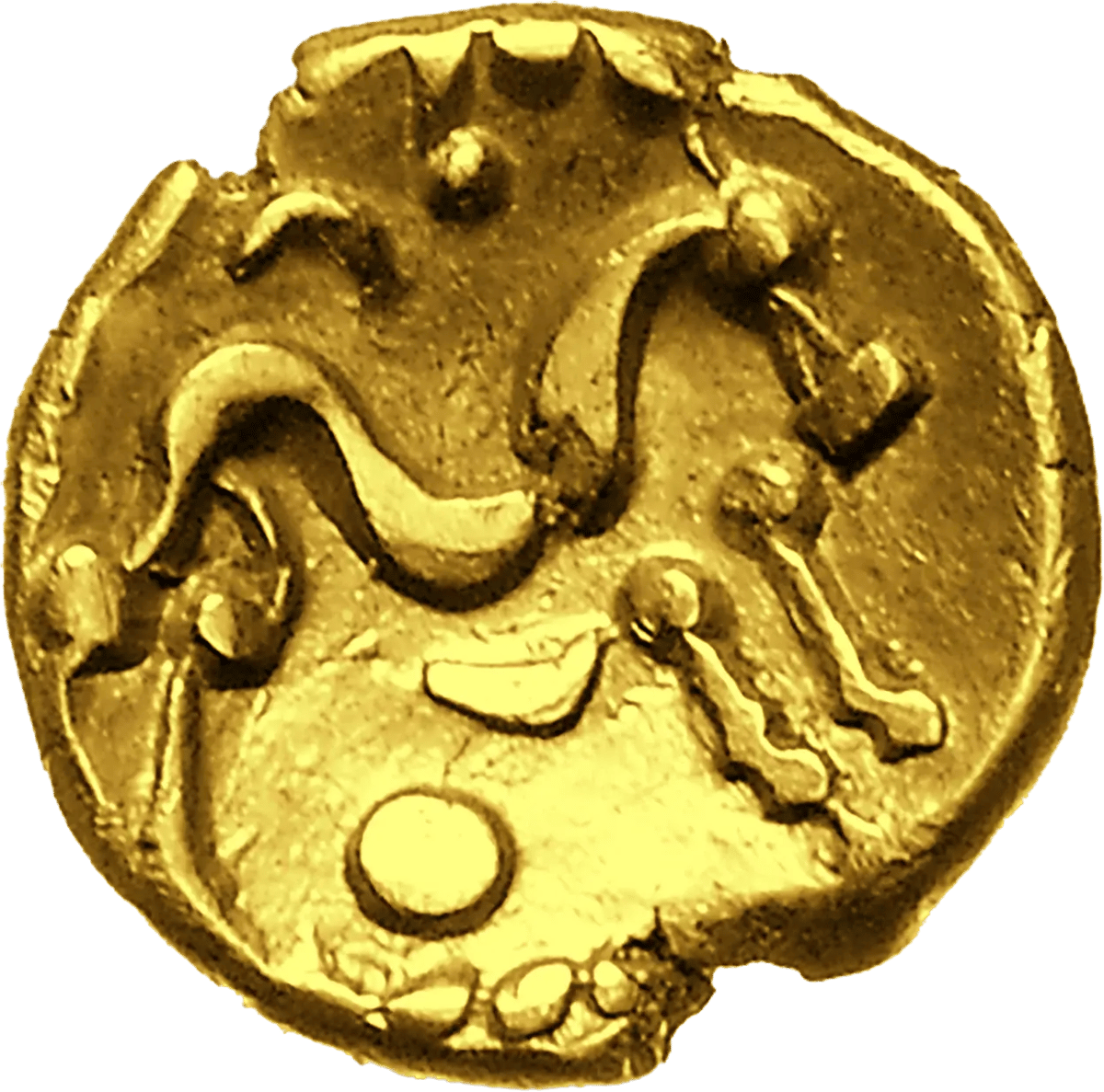
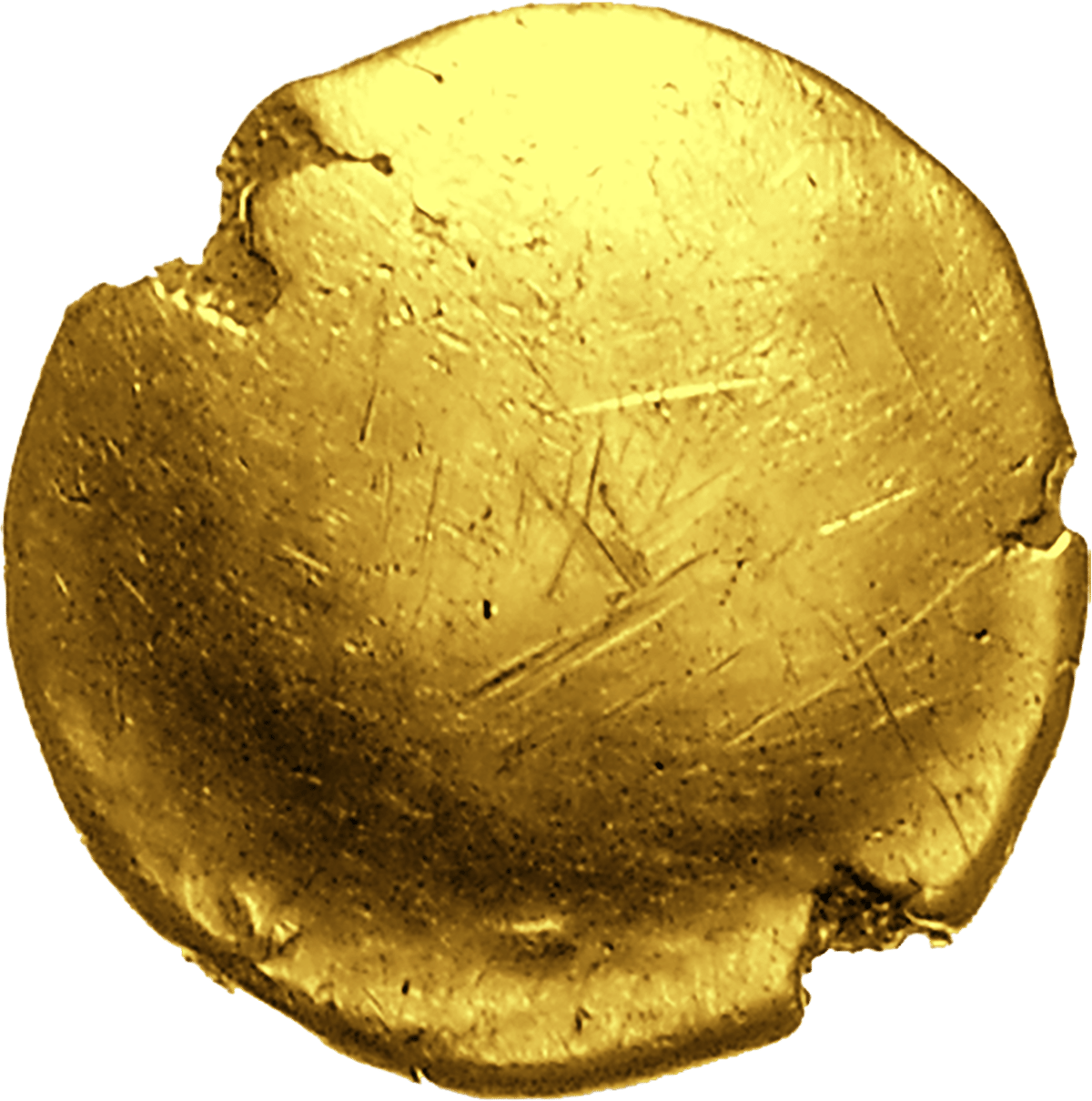
Horse side and blank side
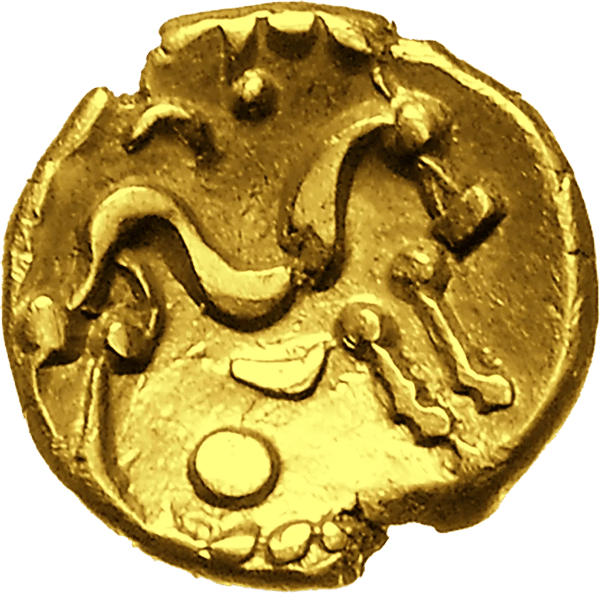
A galloping horse, the other side blank: the gold stater.
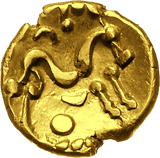
On one side a horse gallops to the right, with dots, crescents and a round disc. The other side bears no image, it is blank and domed. Its distant model is thought to be the gold stater of Philip II of Macedon with the head of Apollo and a two-horse chariot.
Research dates coins of this type to the time of the Gallic War, depending on the source 60 to 50 or 57 to 45 BC.
Origin and time
10,000 men, wrote Caesar.
In the 2nd book of the Gallic War Caesar names the Ambiani with 10,000 men: Ambianos X milia. Their chief town Samarobriva lay on the Somme. The map also shows the places of the 3 Celtic originals of the collection.
Size comparison
Gold beside silver: the stater and the originals of the collection.
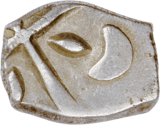
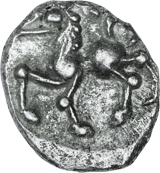
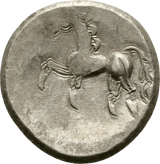
All in true size. The gold stater measures 14 millimetres and weighs 6.1 grams, the tetradrachm measures 22 millimetres.
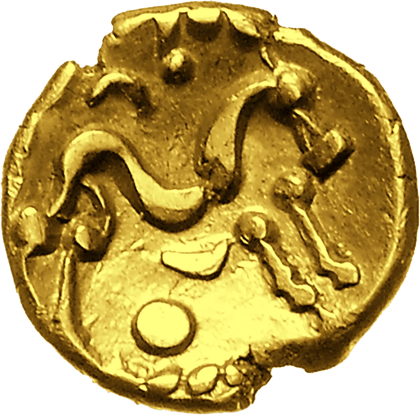 Gold stater14 mmthis page
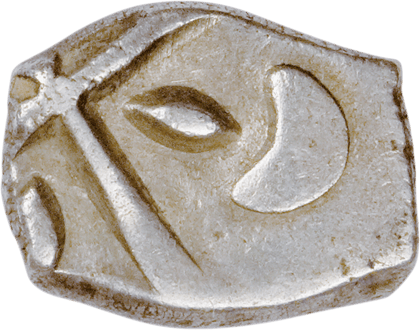 Drachmabout 12 mm
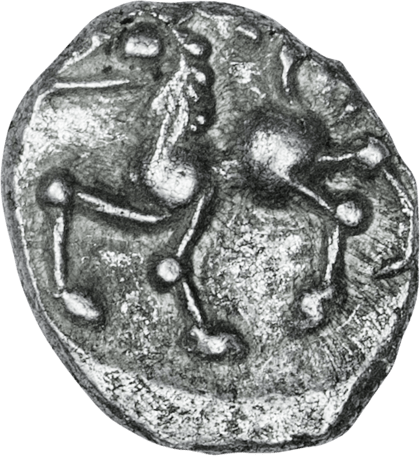 Quinariusabout 12 mm
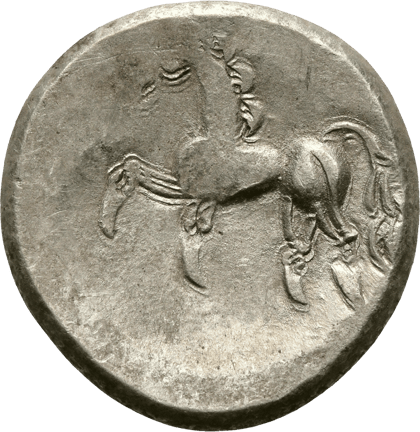 Tetradrachm22 mm

Gold from the land on the Somme: the stater of the Ambiani.
Struck in the time when Caesar came to Gaul. A Celtic original that brings its history with it.
Celtic Stater of the Ambiani – Minted in the Shadow of Caesar's Legions
- Design: A horse dissolved into bold ornamentation gallops to the right, surrounded by crescents, dots and a cord-like exergue line. The smooth, convex reverse was left blank. Experts therefore speak of a "uniface" stater.
- Material / Fineness: Ancient gold, naturally alloyed with silver and copper. The British Museum analysed coins of this series and found an average gold content of around 60%. The exact fineness varies from piece to piece.
- Issuer: The Belgic Celtic tribe of the Ambiani, settled along the Somme in northern Gaul, in what is now Picardy, France. No specific mint has been identified.
- Weight & Size: 6.1 g gross weight at 14 mm diameter
- Condition: Original circulated piece from around 60–50 BC, delivered with a certificate of authenticity
Some coins tell history. This one was there. From 58 BC, Julius Caesar subjugated Gaul, and in the north he encountered the Belgae. He himself called them the bravest of all the Gauls. Among them were the Ambiani, whose main settlement, Samarobriva, is known today as Amiens. In 57 BC, the Belgic tribes allied against Rome, and the Ambiani pledged 10,000 warriors to this alliance. According to current research, the present stater dates from exactly these years of the Gallic War. In the specialist literature, this type is therefore called the "Gallic War" stater.
"… XV milia Atrebates, Ambianos X milia, Morinos XXV milia …" – Caesar, De bello Gallico II, 4: the troop commitments of the Belgic tribes for the war against Rome, including 10,000 men from the Ambiani.
That same year, the Ambiani were forced to surrender to the legions. Yet they did not give up. In 52 BC, they sent 5,000 men to the great Gallic relief army that was to free Vercingetorix, besieged at Alesia. Gold coins of this type were likely used to pay followers and seal alliances. This stater is thus a tangible testament to Celtic resistance.
A Horse Transformed into Ornament
The model comes from far away: it is the gold stater of Philip II of Macedon, featuring the head of Apollo and a two-horse chariot. Celtic die engravers copied the design over generations, altering it to suit their own taste. On the early staters of the Ambiani, the head of Apollo is still clearly recognisable; on this type, it has disappeared entirely. What remains is a horse with a body formed from a curved S-shaped band and dots at the joints and hooves. The crescent above the back is considered the last remnant of the charioteer. The oval marks with a dot in the centre are interpreted by some as an eye, and by others as the wheel of the chariot.
Why the obverse was left blank remains unknown to this day. Some researchers suggest a hasty striking during wartime. Others see it as a deliberate sign that the allied tribes were of equal standing. This abstract, almost modern visual language is a major reason why Celtic coins captivate so many collectors.
Traces of Circulation – Every Piece a One-of-a-Kind
These staters were coins in active circulation and bear corresponding traces: darker patina, individual centring, nicks, wear, and in places weaker strikes. This is precisely what gives them their charm. Since the year of minting, mint, and reverse variant can vary, the piece delivered will differ from the image shown. You will receive an original, not a mass-produced item. We therefore ask for your understanding that the image in the shop is explicitly a sample image and may individually differ from the delivered item in terms of appearance and condition due to historical circumstances.
From Gaul to Britain
A striking number of these coins have been found in southeastern England, for example in Kent, Essex or Suffolk. The Celtic Coin Index at the University of Oxford records well over 1,300 examples of this type. Experts see this as evidence of close ties across the English Channel. The staters may have been given as payment to British allies who helped the Gauls against Rome.
In Comparison: Where Does the Ambiani Stater Stand?
- Compared to earlier Ambiani staters (2nd century BC, featuring the head of Apollo): These are larger, heavier and considerably rarer. The Gallic War stater is more accessible and particularly fascinating historically, as it belongs directly to the period of Caesar's campaigns.
- Compared to modern gold coins: Today's bullion coins offer high fineness and a price close to the gold spot price. The Celtic stater, however, offers something no modern coin can: over 2,000 years of genuine history. Its value derives from both the metal and collector interest.
- Compared to Roman aurei: An aureus comes from the victors. This stater comes from those who stood against Rome. This perspective is still missing from many collections.
Gold – the Currency That Has Outlived All Others
Even the Celts knew what people have known for over 6,000 years: gold retains its value. It is the oldest currency in the world; its supply cannot be arbitrarily increased, and due to its intrinsic value it has never been worthless. Central banks print paper money as needed, whereas the amount of gold is limited. Tellingly, central banks themselves are among the largest gold holders in the world.
This is why many people rely on gold as an inflation hedge and for crisis protection. It guards against loss of purchasing power, is recognised worldwide, and can be passed on to the next generation. A historical stater offers all of this, and is also a one-of-a-kind piece. Good to know: in Germany, profits from the sale of physical gold are generally tax-free after a holding period of at least one year.
Who Is This Stater Suited For?
- For collectors of ancient and Celtic coins seeking a genuine testament to the Gallic War
- For history enthusiasts who would like to hold a piece of Caesar's "De bello Gallico" in their hands
- As a special gift with meaning: gold and history, verified by a certificate of authenticity
- For anyone wishing to add a genuine original from antiquity to their collection
This piece of gold passed through the hands of Gallic warriors, traders and chieftains over two millennia ago. It shone then, and it shines now, and its history is real.
Product image may differ from the actual product.
