 Origin of this gold nugget
Australia
1851 near Bathurst.Within 1 month, 1,000 men were searching for gold in Australia.
Alluvial gold from creeks set off the gold rushes of the 1850s. To this day, prospectors roam Victoria with detectors and pans.

 More than 310,000
 Over 30 years
 Secure shipping
 Google: 4.9/5




 Price alert
 Share

Australia Gold Nugget
This single piece exists only once. Its shape and its surface were made by nature, not by a minting die.
This single piece exists only once. Its shape and its surface were made by nature, not by a minting die.

How it forms
Gold sits in rock, often together with quartz. In Victoria, most of the original gold lies in quartz veins. It settled in cracks that opened in the rock between 440 and 360 million years ago. Wind and weather wear the rock away. The gold remains, because it barely weathers, and ends up in the soil and in the creek beds. This is how gold nuggets come about.

The gold pan
Gold is heavier than almost anything a creek moves along. It collects in hollows and on the bottom. Swirl the pan, and sand and gravel wash out while the gold stays behind.

Victoria, 1869
John Deason found it near Moliagul in Victoria, hid it until dark and dug it out with Richard Oates. In Dunolly it had to be broken on an anvil before it would fit on the bank’s scales. It is regarded as the largest nugget ever found.
Two landscapes
Origin of this gold nuggetAustralia
Alluvial gold from creeks set off the gold rushes of the 1850s. To this day, prospectors roam Victoria with detectors and pans.

Yukon, Canada
Anyone heading for the Klondike had to carry supplies for a whole year at the border. Canada required it, so that no one would starve in the remote Yukon. Small mining operations still dig for gold there today.
Up close
No shape ever repeats itself. The lens moves right up to an example from our range and shows what nature has left behind.
Fineness and colour
Fineness counts the share of gold in thousandths. Even a single gold field such as the Klondike holds gold of high and of low fineness. According to the product details, this gold nugget has a fineness of 830/1,000 to 960/1,000.
Pure gold

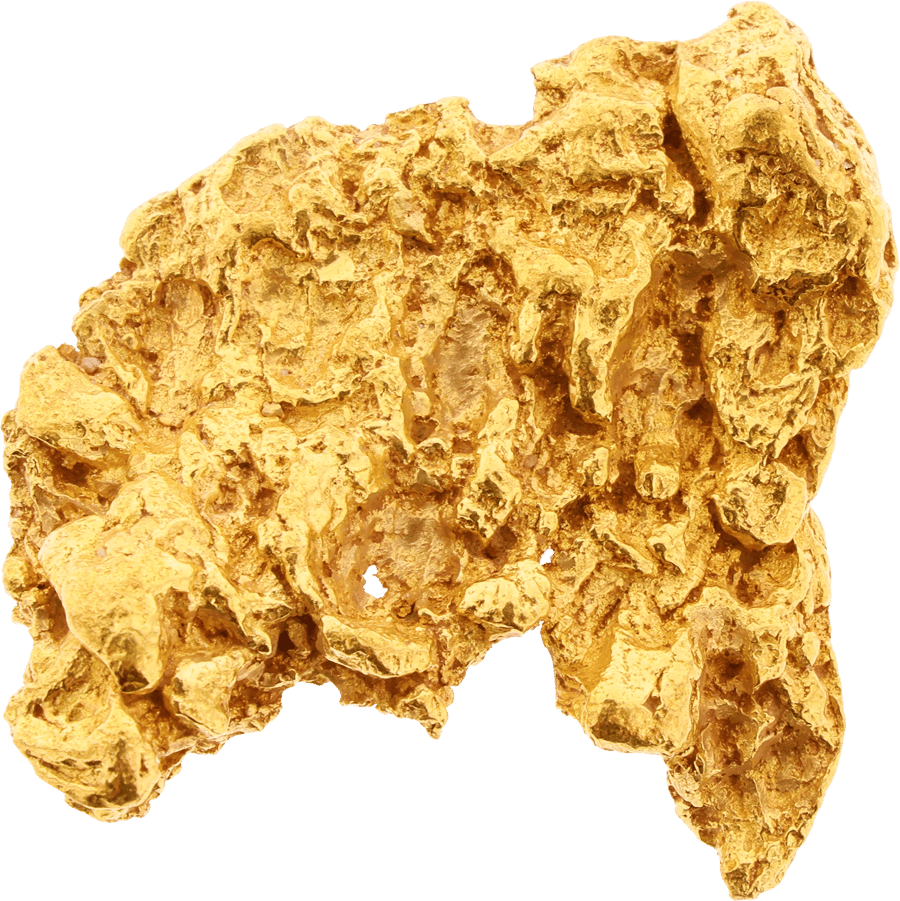
Australia Gold Nugget
Real gold nuggets from the Yukon and from Australia: individually or in sets.
Real gold nuggets from the Yukon and from Australia: individually or in sets.
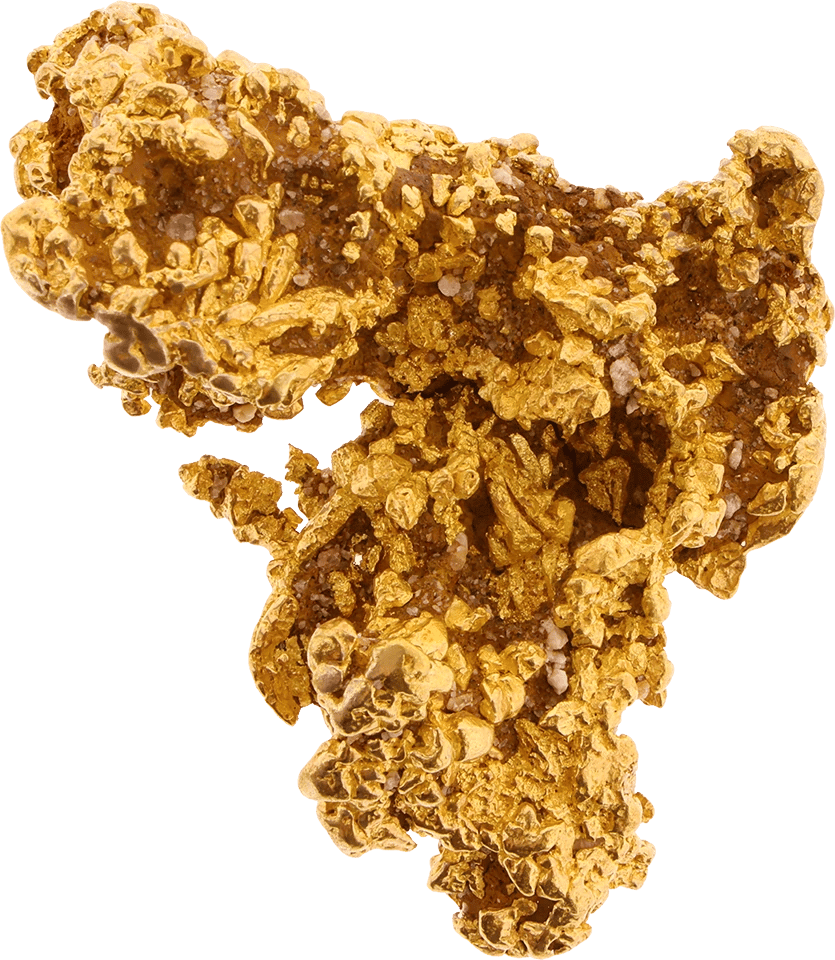
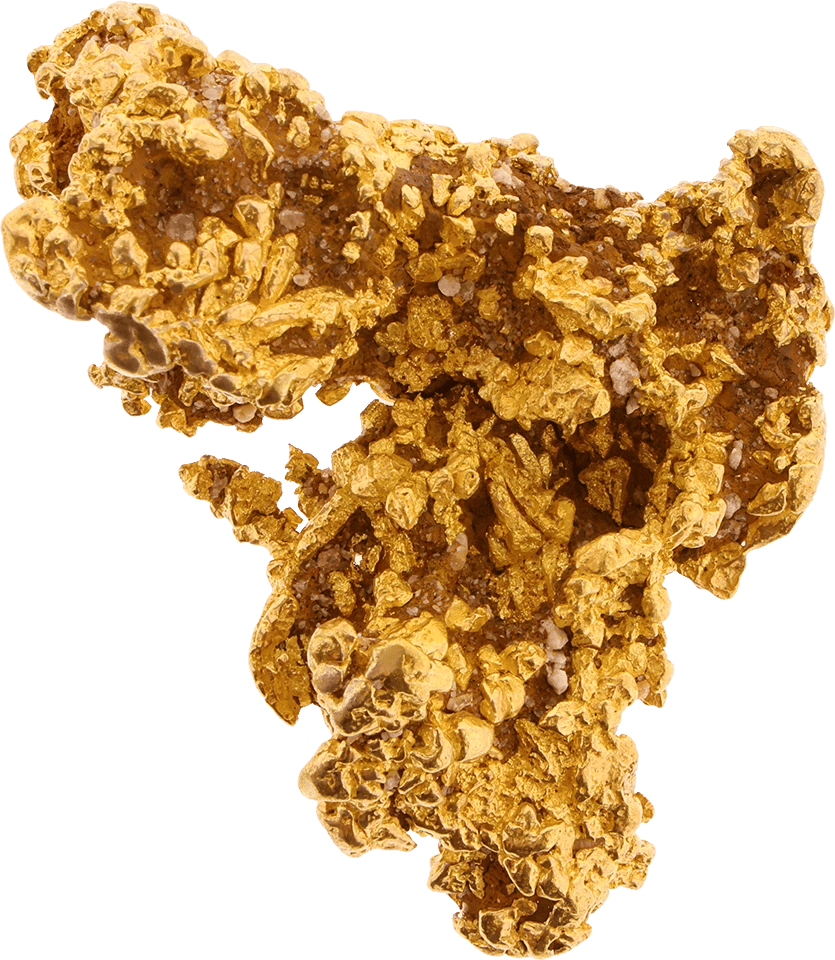
This genuine gold nugget from Australia was not cast, not minted and not formed. It was found. Over millions of years, water, pressure and erosion dissolved the gold from the host rock, compacted it and shaped it into exactly this form. This shape exists nowhere else in the world. The gross weight is 7.29 grams, the fine weight 6.05 grams. This makes the nugget one of the more substantial individual pieces that feel good to hold in your hand.
On closer inspection, the typical features of native natural gold become visible: rugged contours, small cavities and grainy structures. In between lie gently rounded, warmly glowing surfaces. No nugget resembles another, because each one is a unique natural product with its own history of formation.
Nuggets in their original form, just as they come out of the ground, are considered rarer than diamonds. The reason is simple. Only a tiny fraction of the extracted precious metal occurs as a coherent piece at all. And of that, over 95 percent worldwide is melted down and processed into bars, gold coins or jewelry.
What remains is a small stock of natural pieces that keeps shrinking. This is exactly why genuine nuggets are so popular among investors and collectors. Anyone who wants to buy a gold nugget is therefore securing more than just precious metal: a piece of earth history that cannot be reproduced.
Since the gold rush of 1851, Australia has been one of the richest gold regions on Earth. On February 5, 1869, John Deason and Richard Oates discovered the "Welcome Stranger" near Moliagul in the state of Victoria. To this day, it remains the largest alluvial gold nugget ever discovered, with a net weight of around 72 kilograms. More than a century later, in 1980, Kevin Hillier found the "Hand of Faith" near Kingower using a metal detector. It weighs 875 ounces and is considered the largest nugget ever found with a detector.
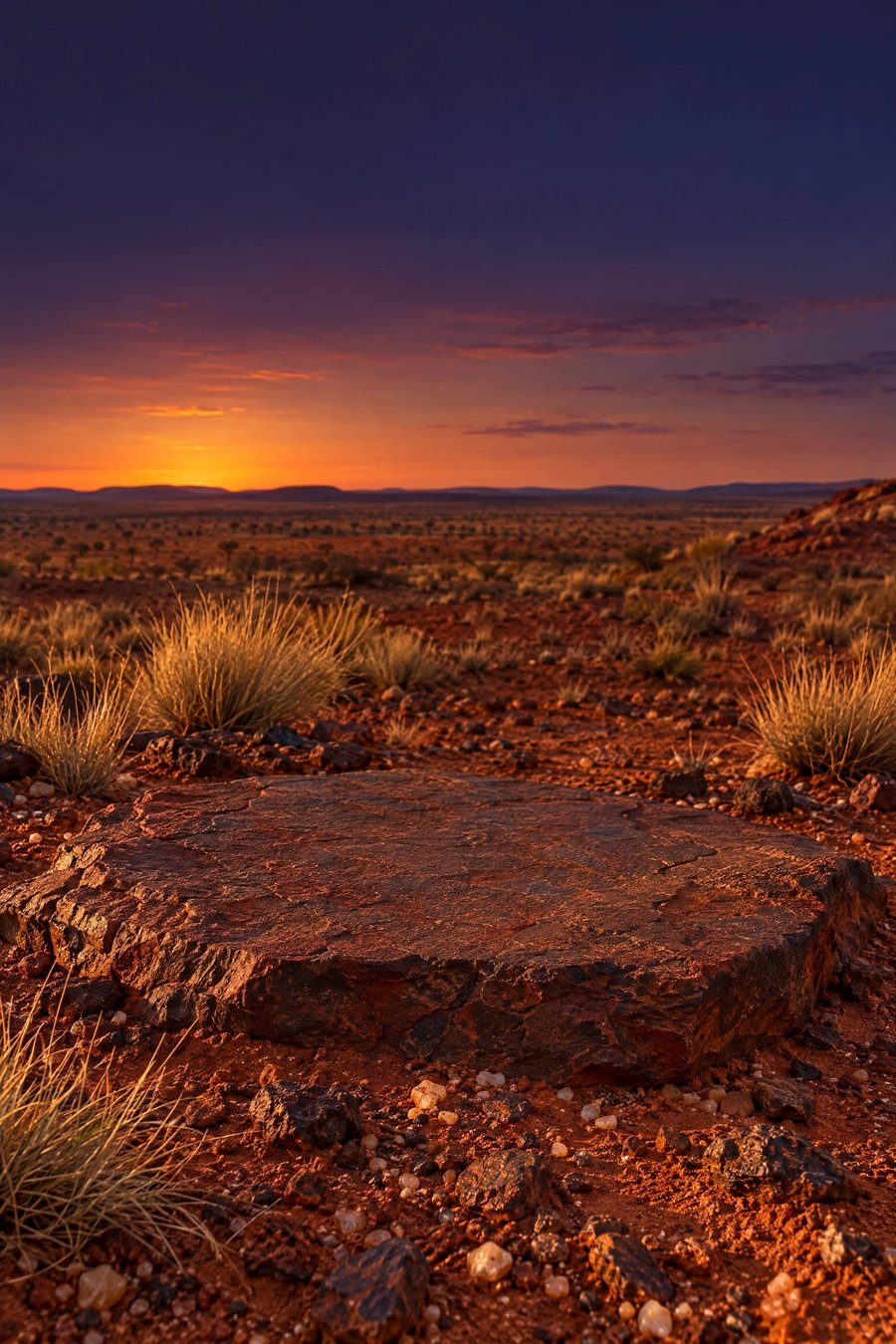
Today, prospectors recover natural gold mainly in the goldfields of Western Australia around Kalgoorlie and in the legendary "Golden Triangle" of Victoria. It is often found in the red sand of the outback, just a few centimeters below the surface.
The fineness of natural gold is never standardized. In addition to pure gold, nuggets naturally contain proportions of other metals, especially silver. This is precisely what makes each specimen an authentic testimony to its deposit.
When it comes to Australia and gold, many people first think of the Australian Nugget, the gold coin from the Perth Mint. The first vintages from 1986 depicted famous natural finds. Later, the kangaroo design became established, which is why the coin is also known today as the Australian Kangaroo. It is a minted bullion coin with a fineness of 999.9.
Coins and gold bars offer standardized purity and a price that closely tracks the gold price. The natural nugget, on the other hand, plays in a league of its own. Its value derives from the fine gold it contains and from rarity, shape and collector demand. As a result, the price of a nugget is usually above the pure material value. No minting die and no casting mold, just nature.
Gold is the oldest currency in the world and has been a proven store of value for over 6,000 years. Even in ancient Egypt, it served as a benchmark in trade. Kings and emperors wore it as a sign of their power, and along the Silk Road it facilitated the exchange of goods. In the 19th and 20th centuries, the gold standard formed the foundation of entire currency systems. Gold has never had a value of zero. It possesses an intrinsic value that does not depend on a government's promise.
Fiat money can be multiplied at will. Gold cannot. It is not for nothing that it is called God's money.
That is why investors use the precious metal as an inflation hedge against loss of purchasing power and as crisis protection in politically and economically turbulent times. Incidentally, the largest gold holders in the world are the central banks. Gold is scarce and durable, it does not lose its shine and can be traded worldwide. Profits from the sale of physical gold in Germany are generally tax-free after a holding period of at least one year.
This Australian gold nugget is delivered in an elegant velvet pouch with a certificate of authenticity. It is suitable as the foundation of a natural gold collection, as a special addition to coins and bars, or as a gift with a story. A piece like this can be passed down from generation to generation. A piece of the outback that exists only once: secure your one-of-a-kind piece.
Product image may differ from the actual product.

Stay informed with product launches, financial news and exclusive offers. Sign up for our free newsletter today.
By entering your email address and clicking the "Submit" button, you give the following consent: "I agree to be informed by email about new products, financial news and exclusive offers, and therefore consent to the processing of my email address for the purpose of sending the newsletter. I can revoke this consent at any time without giving reasons, with effect for the future. The lawfulness of processing carried out prior to revocation remains unaffected."