





Krugerrand Special Edition
Where the classic silver Krugerrand is the pure bullion coin, this is where the realm of collectors' dreams begins: the Krugerrand Special Edition combines the world-famous springbok with finishes such as partial gilding, colouring, hologram effects or a black iced-out finish. These are strictly limited silver coins, often with mintages of only 50 to a few hundred pieces, which turn an investment classic into a small work of art. This guide sheds light on the origin, finishing techniques, mintages, authenticity and storage of these special collector's editions.
What defines the Krugerrand Special Edition
The silver Krugerrand was launched in 2017 to mark the 50th anniversary of the world-famous gold coin and quickly became one of the most popular silver bullion coins. The standard edition is minted in large quantities and traded close to the silver price. The Special Edition takes a completely different approach: here, the silver coin is subsequently given a special finish, coloured or coated with precious metals, and released in tiny mintages. This turns a mass-produced item into a sought-after one-off piece for collectors.
The appeal lies in the interplay between tradition and innovation: the decades-old springbok design remains untouched, yet modern finishing techniques give it an entirely new face. Anyone already familiar with the classic silver Krugerrand will discover in the special editions an emotional, design-driven dimension that pure bullion items simply cannot offer. For newcomers to the subject, it is also worth looking at the Krugerrand gold coins, from which the entire success story originated.

History and origin of the Krugerrand design
The name Krugerrand is made up of two parts: Paul Kruger, President of the South African Republic from 1883 to 1900, and the Rand, South Africa's currency. His portrait on the obverse is based on a design by Otto Schultz, which had already adorned South African gold coins around the turn of the century.
The springbok as an emblem
The reverse shows the galloping springbok, South Africa's national animal, designed by sculptor Coert Laurens Steynberg, recognisable by the initials CLS beneath the design. This antelope symbolises the vastness of the South African savannah and gives the Krugerrand its unmistakable emotional appeal. This very design forms the canvas for every finish applied to the Special Edition. Anyone who is enthusiastic about similarly iconic animal designs will find related collector's items from the same African world of imagery in the Big Five silver series.
From investment classic to collector's edition
The silver Krugerrands are minted by the South African Mint and the Rand Refinery. Kettner Edelmetalle is the official German partner of the South African Mint. The finished special editions are then created through specialised handwork, which is one reason for the small mintages and the special character of these pieces.
Overview of finishing techniques
The heart of every Special Edition is the finish. It transforms plain silver into a visual statement. The most important techniques at a glance:
- Partial gilding (Gilded): Selected parts of the design, such as the springbok or the inscription, are coated with an ultra-thin layer of gold. The contrast between white silver and warm gold brings out the details in striking relief.
- Colouring: Coloured accents are applied using pad printing, giving the design depth and vividness. Popular colour schemes range from vibrant red to cool blue.
- Hologram effect: A special coating creates iridescent reflections that change with the viewing angle, a modern eye-catcher with a three-dimensional effect.
- Iced Out / Black Finish: A dark ruthenium layer or black finish, often combined with sparkling accents, creates an elegant, high-contrast look.
- Antique finish: An artificial patina makes the coin look like a historical find and emphasises every detail of the strike.
Many of these techniques can also be found in other finished classics. Anyone wanting to explore the full range will find what they are looking for in the Maple Leaf Special Editions or the Ruthenium Edition. The special editions are also frequently struck in the highest minting quality, Proof, whose mirrored surface shows off the finish to particularly great effect.
Privy marks as a special feature
In addition to the finish, another element characterises many special editions: the privy mark, a small additional mint mark that makes an edition unmistakable. On the Krugerrand, such privy marks often commemorate historic places, anniversaries or personalities, and frequently appear in their own themed series with particularly low mintages. For collectors, a privy mark of this kind considerably increases both the appeal and the traceability of a piece, which is why such editions are especially sought after in the trade.
Mintages, limitation and collector's value
While the regular silver edition is in part unlimited, the Special Edition is defined by deliberately low mintages. Typical minting numbers are just 50, 100 or a few hundred pieces per design. This scarcity is the key value driver in the collector's market.
Several factors combine to determine collector's value:
- Mintage size: The smaller the mintage, the more exclusive the piece.
- Condition: Flawless coins in Proof quality trade at higher prices than handled examples.
- Completeness: The original case, certificate and an undamaged capsule noticeably increase the value.
- Design and theme: Particularly successful or thematically popular finishes are in greater demand.
A finished Krugerrand is not struck in the millions, but completed by hand, and that is precisely where its appeal for collectors lies.
Important to keep in mind: special editions trade above the pure silver value. The premium reflects the finish, the limitation and the handwork involved, but this does not allow any conclusions to be drawn about future performance. Anyone focused primarily on material value will find suitable guidance in the Buying silver the right way category.
Recognising authenticity and quality features
Especially with sought-after collector's pieces, a careful inspection pays off. The original always bears the inscription KRUGERRAND above the springbok, as well as the details of fineness (999/1,000 silver), weight (1 oz = 31.1 g) and the face value of R1 for one South African rand.
What collectors should look out for
- Clean, even finish without smeared colour edges or flaking coating.
- A numbered certificate of authenticity documenting the mintage and design.
- A reeded coin edge and the correct dimensions (diameter of approximately 38.7 mm).
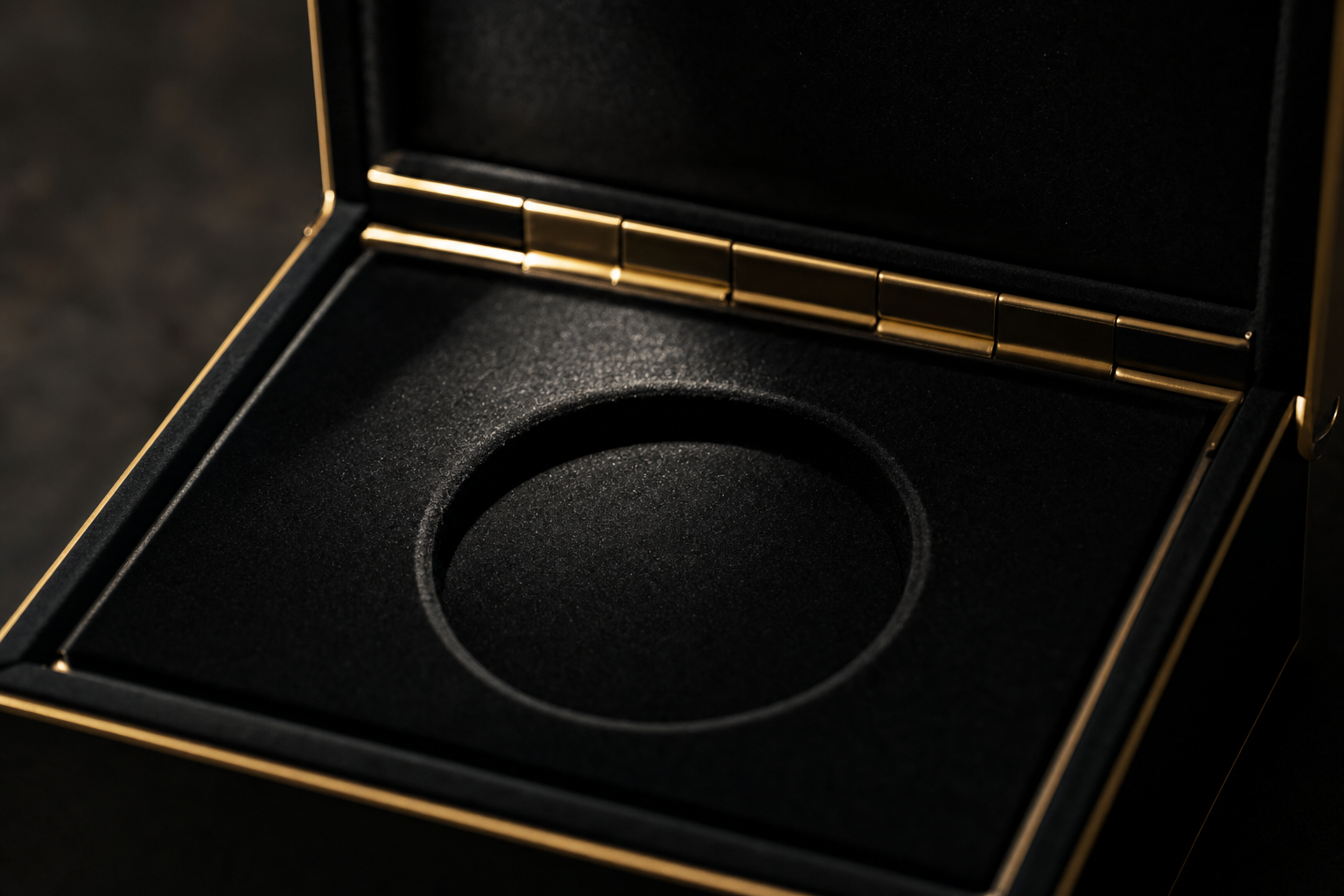
- An accompanying case and a matching coin capsule in original condition.
A well-known pitfall: silver coins with a similar springbok design from other countries are occasionally referred to, incorrectly, as Krugerrands. Only the embossed inscription KRUGERRAND identifies the original. Kettner Edelmetalle relies on ISO-compliant authenticity verification, so that every piece is checked before being shipped. Suitable protective accessories can be found in the coin capsules category.
Storage, care and tax classification
Finished coins are more sensitive than plain bullion items. Colour layers, gilding and holograms should not be touched directly wherever possible. Individually capsuled storage, dry conditions and avoiding any attempts at cleaning that could damage the finish have all proven effective.
- Only handle coins by the edge and while wearing cotton gloves.
- Use the original capsule and case to protect against scratches and environmental influences.
- Store larger collections securely, for example in coin cassettes or a cylinder safe.
Tax specifics for silver
Tax notice
Unlike investment gold, silver coins are subject to VAT in Germany. For imported collector's coins, the margin scheme is often applied, which can reduce the effective tax rate. This is general information and does not constitute tax advice.
Anyone wishing to invest in physical silver beyond the special edition will find further classics in the wide silver coin range and a complementary form of investment in silver bars.
Who the Special Edition is suitable for
The finished Krugerrand editions appeal above all to collectors and enthusiasts who value design, limitation and emotional connection. They make an excellent gift with a lasting character or an individually assembled themed collection. They are also popular as an entry point into the world of collector's coins, because they combine the familiar Krugerrand design with the appeal of something special.
Anyone looking exclusively at the precious metal value, on the other hand, is better served by the standard strike or classic bullion products. A good collection often combines both: solid investment Krugerrands as a foundation and a few carefully chosen special editions as highlights. Related collecting worlds are opened up, for instance, by the partially gilded classics.
Frequently asked questions about the Krugerrand Special Edition
What is the difference between the Special Edition and the regular silver Krugerrand? +
The standard edition is a pure bullion coin made of 999 silver, traded close to the silver price. The Special Edition additionally receives a special finish, for example partial gilding, colouring, or a hologram or black finish, and is released in very small mintages. This turns it into a collector's piece.
How large are the mintages of the finished editions? +
The mintages are deliberately small and, depending on the design, are often only 50, 100 or a few hundred pieces. This limitation is a key feature and clearly distinguishes the special editions from the standard strikes, which are sometimes unlimited.
Does the finish affect the silver content? +
No. The coin continues to consist of 999 fine silver with a weight of one troy ounce. Partial gilding, colour or coating are only applied as an ultra-thin layer and do not significantly alter the fine weight.
How are finished Krugerrands best stored? +
Ideally, they should be stored individually capsuled in the original case, in a dry place and protected from being touched. Colour and coating layers are sensitive, so cleaning attempts should be avoided. Cotton gloves and suitable coin capsules provide reliable protection.
Are collector's editions subject to VAT? +
Silver coins are in principle subject to VAT in Germany. For imported collector's coins, the margin scheme often applies, which can lower the effective tax rate. This is general information and does not replace professional tax advice.
How can I recognise a genuine Krugerrand? +
The original always bears the embossed inscription KRUGERRAND above the springbok, the face value of R1, and the details of fine silver content and weight. A numbered certificate of authenticity, the correct dimensions and a reeded edge provide additional security.
- Themes
 YouTube Offers
- Krugerrand Special Edition