Only 3 left to order
1 oz Silver Triple Maple Leaf Gold Green 2026 (Mintage: 100 | Hologram | Gilded)
£150.58
excl. UK import VAT and shipping
Ships from 27/11/2026

 More than 300,000
 Over 30 years
 Secure shipping
 Google: 4.9/5


The elephant is the same on all three coins. What changes is the gold: from stage to stage, more of it lies on the silver.

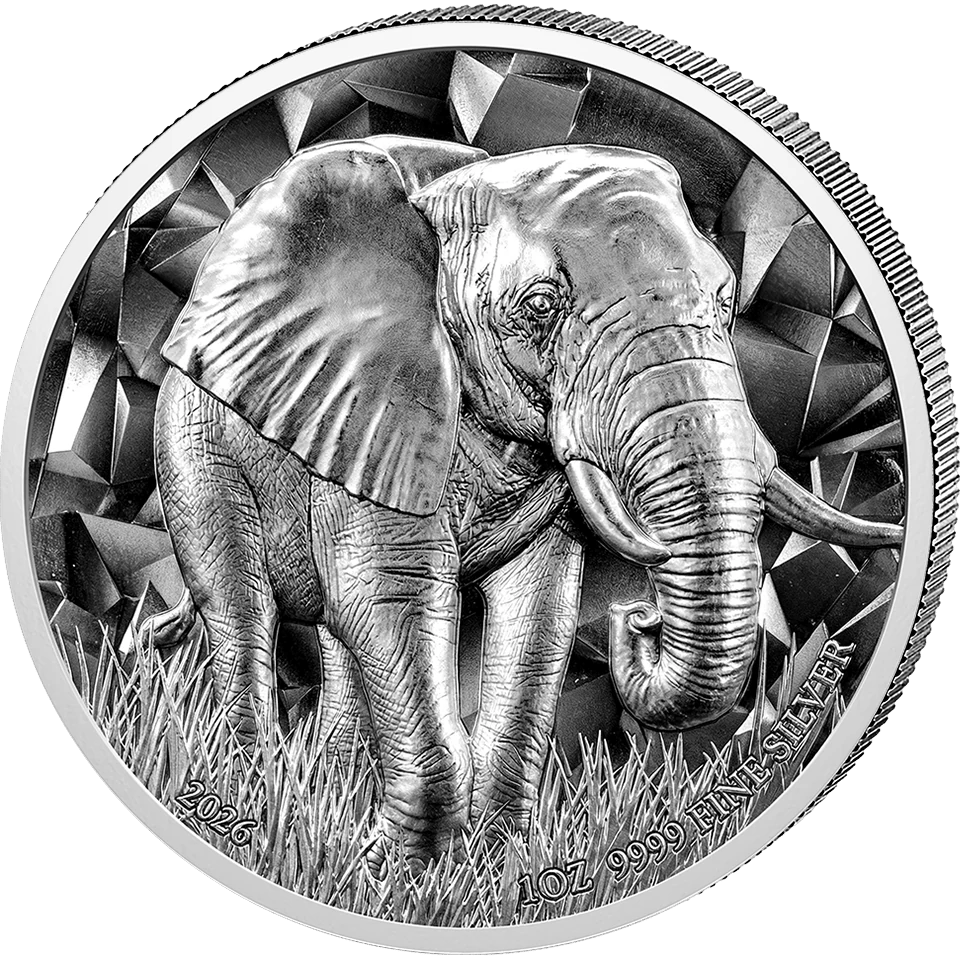

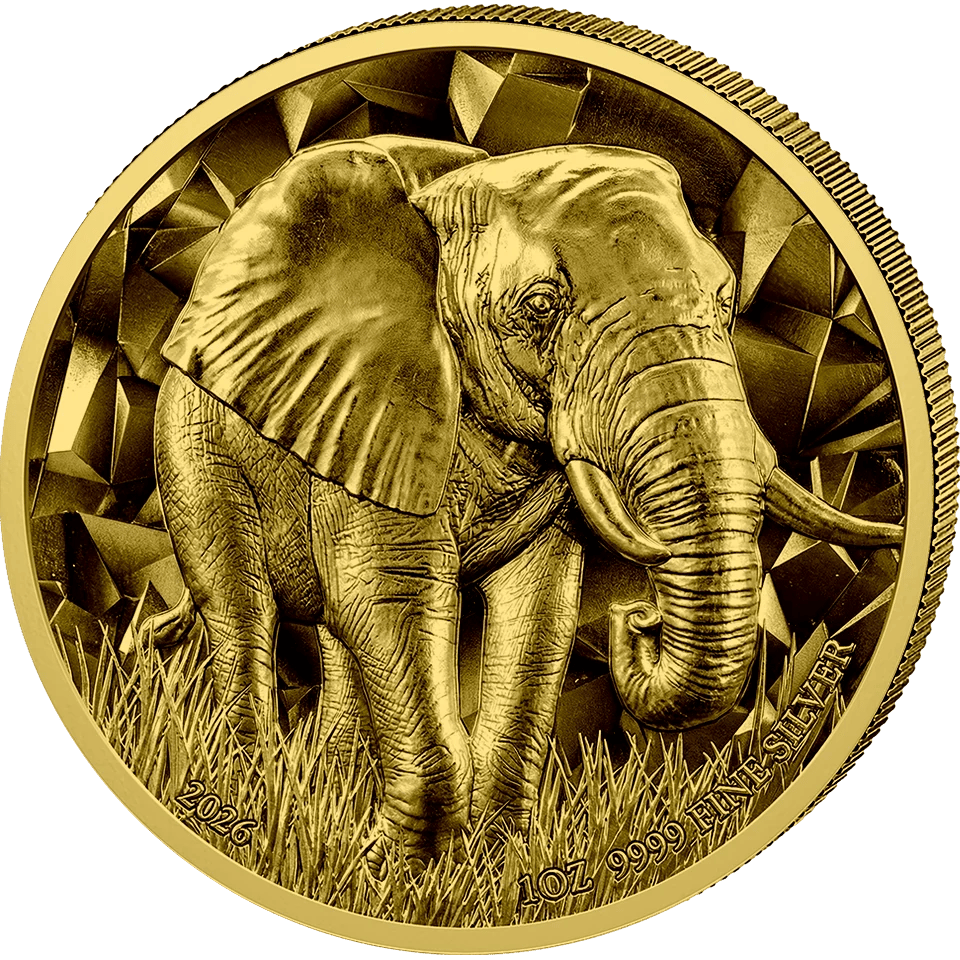
All three come from Kettner Edelmetalle: country of issue Liberia, face value 20 dollars, 1 ounce (31.1 g) of silver with a fineness of 999.9/1,000, 40 mm in diameter. On the first, the whole coin stays silver. On the second, the elephant and the rim are golden, and the crystal field behind them looks dark. On the third, the whole surface is golden. The photos are on the same scale, so ears, trunk and rim can be compared directly.
The Perth Mint has described how colour gets onto its coins. At the start there is a camera, at the end a cabinet with UV light.
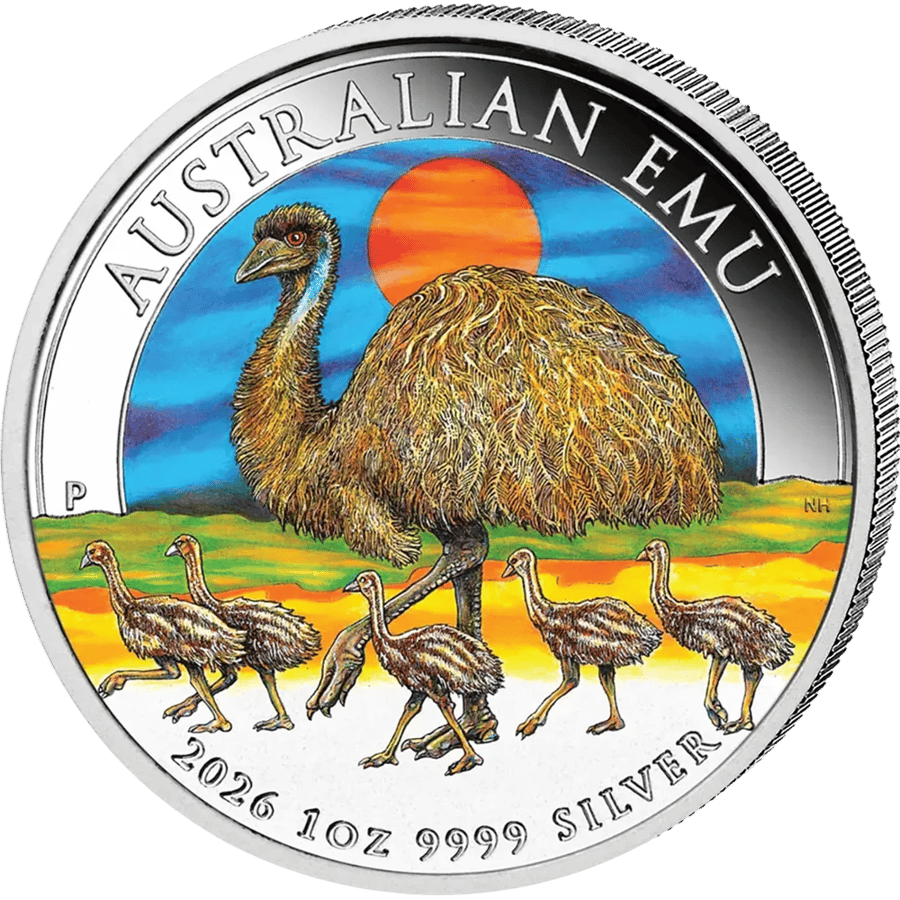
The mint used to apply the colour by pad printing; today it uses an LED UV printer developed specifically to colour coins. First, a digital camera records the areas of the design that receive colour. Then the printer applies a primer, on top of it white and then the colours. After that, the coins go into a UV cabinet for a set time.
Any coins which are blemished are melted back down, cast back to blocks of metal, ready to begin the process again until perfection is reached.
The Perth Mint, “How are coins coloured?”, 16 November 2022
No mint whose information we have read states how thick the gold on a coin is. A report from 1946, however, shows the order of magnitude.
At the time, the American National Bureau of Standards described how gold layers on jewellery, watch cases and insignia can be measured. One example from the report: 0.00025 mm of gold, that is 250 nanometres. One square centimetre with this layer contains 0.49 mg of gold.
Our own calculation for comparison: 250 nanometres is one four‑hundredth of a sheet of paper. That is about 750 gold atoms stacked one on top of another.
 Ludwigsburg PalaceLudwigsburgAt night, gold rimGold rim
For a long time, metal was gilded in fire. In the 19th century, people learned to do it with electricity.
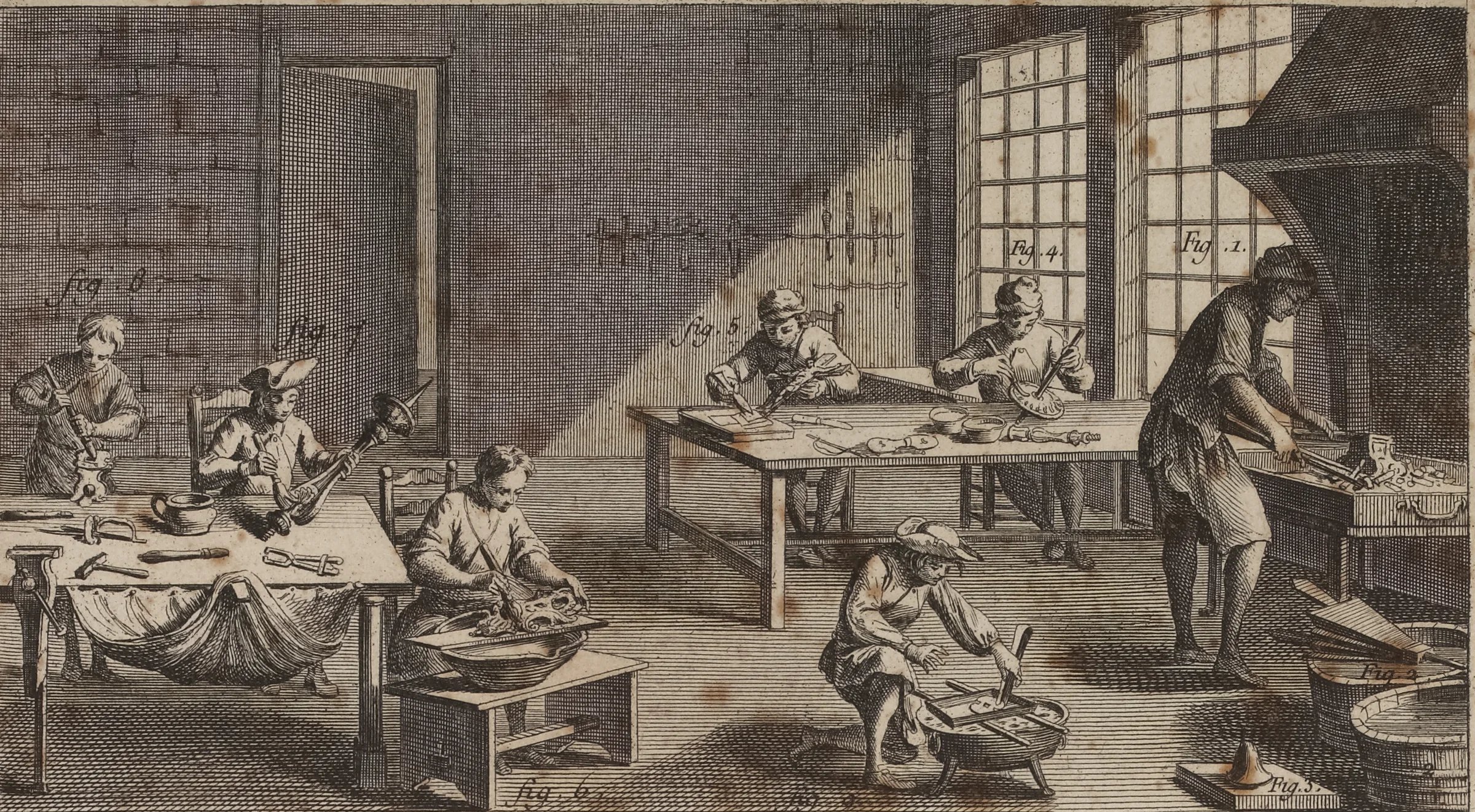
In fire gilding, an amalgam of gold and mercury was brushed onto the piece, which was then heated carefully until only the gold remained.
Up to 1840 plated silver goods were made only by rolling or soldering thin sheets of silver upon copper.
Dictionary of National Biography, 1889, vol. 17, “Elkington, George Richards”
From 1836 the Elkingtons applied for patents. The liquid best suited to electroplating with silver and gold was found by John Wright, a surgeon from Birmingham.
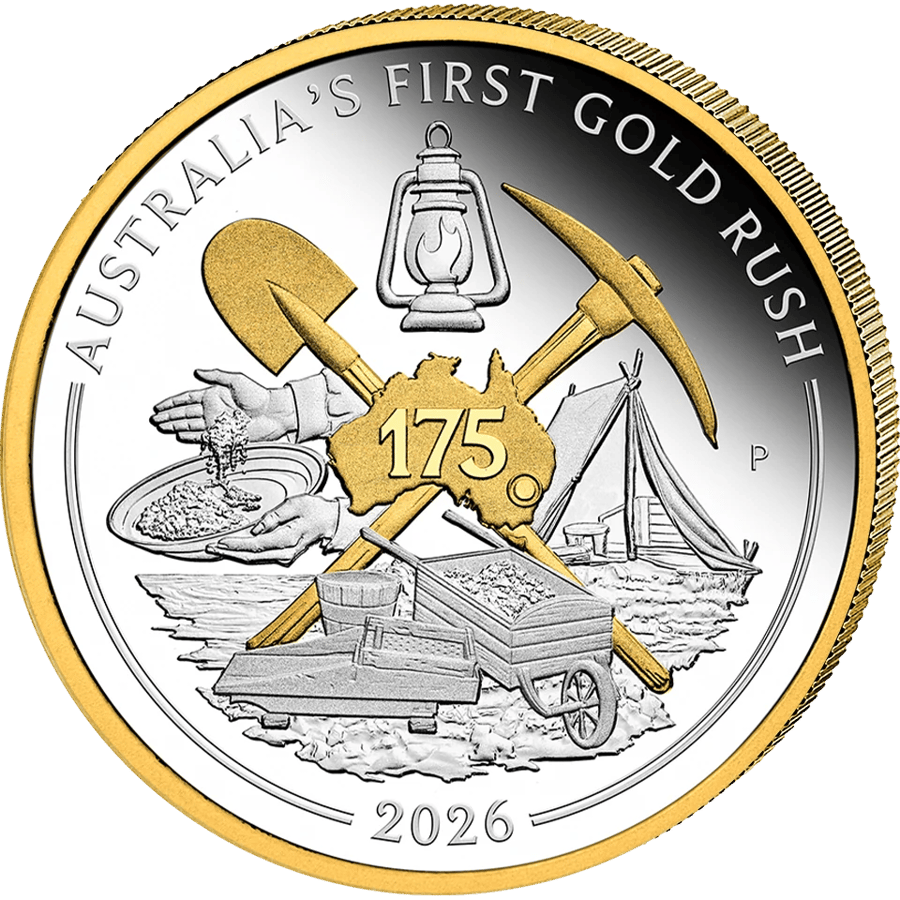
For gilding, the Perth Mint in most cases dips the coin into a liquid containing gold; the current carries the gold onto the exposed silver. Its article from 2023 does not describe how only some areas become golden.
The duration of the electric current determines how many microns of gold are applied to the coin.
The Perth Mint, “Finishing touches make all the difference to coins”, 3 August 2023
The case of the two golden elephants holds a card. Three details are on it.
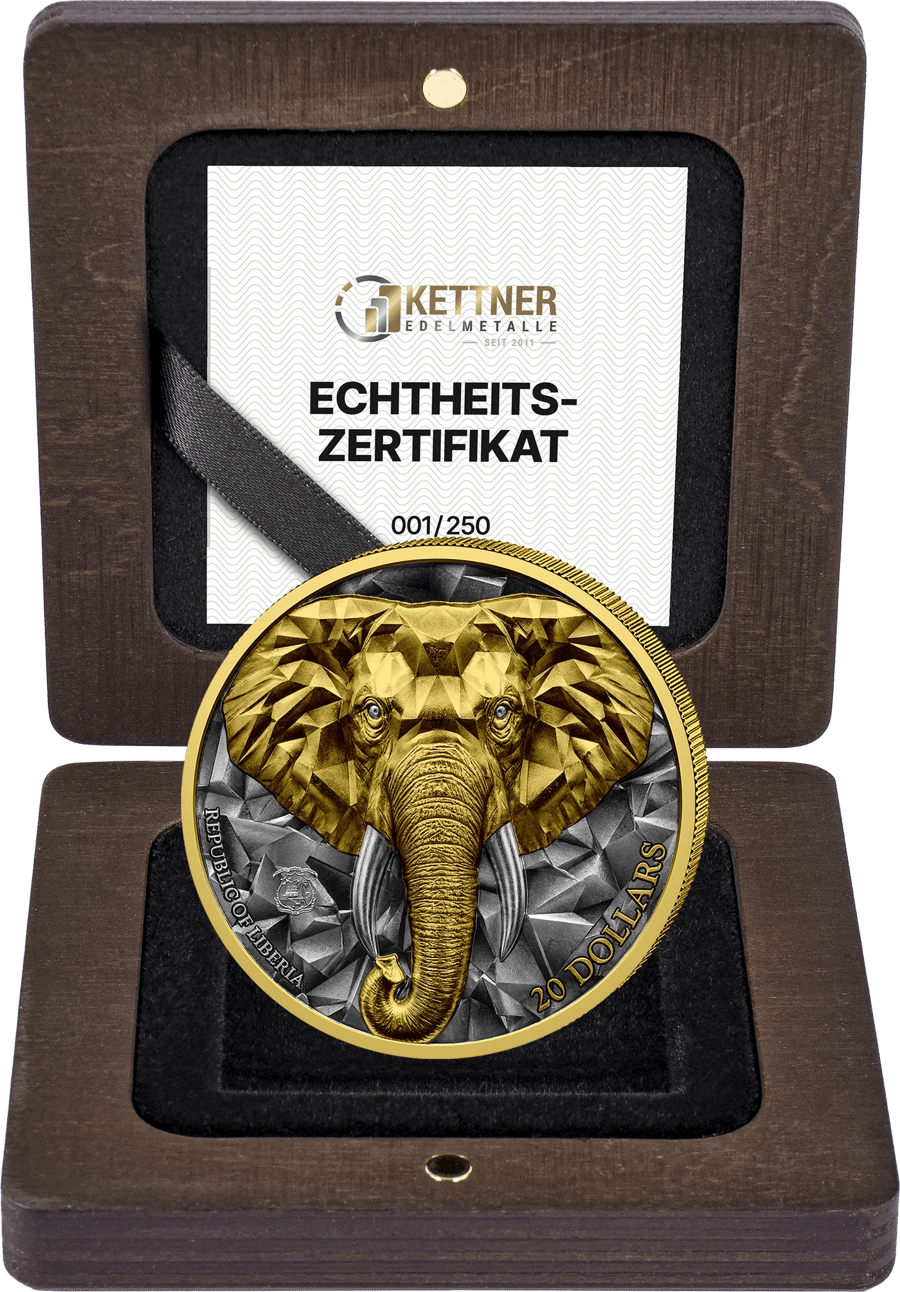
The number after the slash corresponds to the mintage of 250 pieces. The card does not say how thick the gold or colour is, or who applied it.
Mints keep figures as well. In its list, the Perth Mint distinguishes between the “Maximum Mintage” and the “Declared Mintage”. On its product page for the coloured 2021 Quokka in proof, it gives the maximum mintage and a numbered certificate.
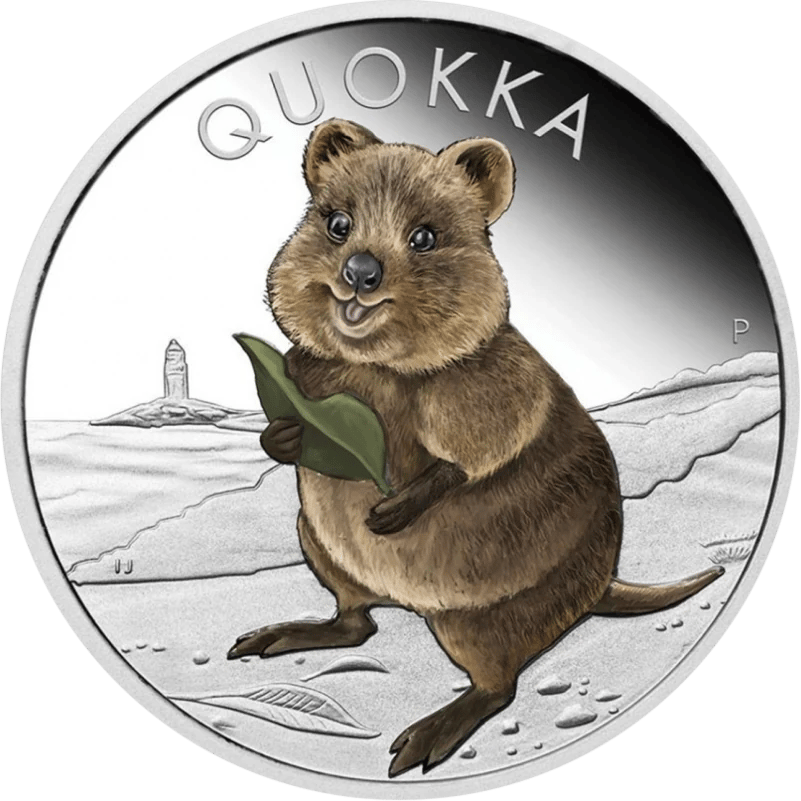
Quokka 2021 1oz Silver Proof Coin
SKU 21H49BAA
- Maximum Mintage
- 5,000
- Finish
- Proof, Coloured
Accompanied by a numbered certificate of authenticity, the coin is housed in a classic display case with a clear lid.
Gold and colour lie on the surface of the coin. What harms it is described by two mints and a government institute for conservation.
The Royal Canadian Mint advises anyone who is not a specialist not to clean coins; even wiping them with a soft cloth can damage the surface. Coins should always be held by the rim, and one should talk over them as little as possible, because tiny droplets of saliva can leave spots that no longer come off. According to the Perth Mint, proof, coloured and gilded coins need a protective acrylic capsule. So that they do not rub inside it, the rim must be the thickest part of the coin.
Polishes will damage gilding.
Canadian Conservation Institute, CCI Note 9/7, care of silver
 Heidelberg CastleHeidelbergAt night, gold rimGold rim
 Veredelt
Stay informed with product launches, financial news and exclusive offers. Sign up for our free newsletter today.
By entering your email address and clicking the "Submit" button, you give the following consent: "I agree to be informed by email about new products, financial news and exclusive offers, and therefore consent to the processing of my email address for the purpose of sending the newsletter. I can revoke this consent at any time without giving reasons, with effect for the future. The lawfulness of processing carried out prior to revocation remains unaffected."