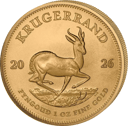
1 Ounce Gold Krugerrand 2026
£3,138.58
VAT-free and excl. shipping
Available in 2–3 business days

 More than 300,000
 Over 30 years
 Secure shipping
 Google: 4.9/5

Gold coins are equally interesting for investors and collectors alike. Those who invest in gold benefit from coins, compared to bars, with the added chance of appreciation in value. Particularly popular gold coins include Britannia, Maple Leaf, Krugerrand and Vreneli.


In 1865, Switzerland, France, Italy and Belgium founded the Latin Monetary Union. They shared one monetary system, and the public treasuries of every member state accepted the gold coins of the others. That is why the gold pieces of 20 francs and 20 lire look different and yet match in weight, fineness and size. The union ended in 1926.
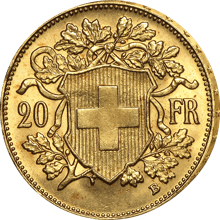 SwitzerlandVreneli 20 francs
The same for all four
Weight, fineness and diameter: 6.45 g · 900/1,000 · 21 mm
Values according to Swissmint for the Vreneli, with the weight rounded. All four gold pieces followed the French monetary system.
Of 24 parts, 22 are gold. This is how British coinage law specifies the Sovereign, and the Coinage Act 1870 already set it out the same way. Even the first modern Sovereign of 1817 was made of 22 carat gold.
Same fineness: 916.7/1,000
The Krugerrand from South Africa and the American Eagle from the USA are struck to the same fineness. The one-ounce pieces each contain one ounce of fine gold; the alloy metal is added on top.
Gold coins wear down in circulation. That is why coinage laws set a minimum weight. In the United Kingdom this still applies today: a Sovereign is legal tender there only as long as it weighs at least 7.93787 grams.

In the German Empire this limit was called the Passiergewicht from 1871. Imperial gold coins that had worn below it were still accepted at full face value by the state treasuries. The Empire withdrew them at its own expense to be melted down.
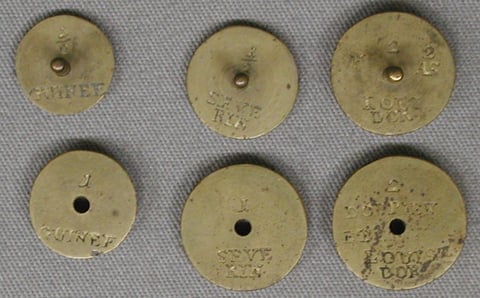
To check the weight, people used coin balances with their own weights for each type of coin.
Stay informed with product launches, financial news and exclusive offers. Sign up for our free newsletter today.
By entering your email address and clicking the "Submit" button, you give the following consent: "I agree to be informed by email about new products, financial news and exclusive offers, and therefore consent to the processing of my email address for the purpose of sending the newsletter. I can revoke this consent at any time without giving reasons, with effect for the future. The lawfulness of processing carried out prior to revocation remains unaffected."