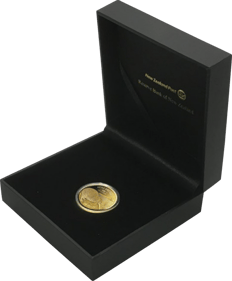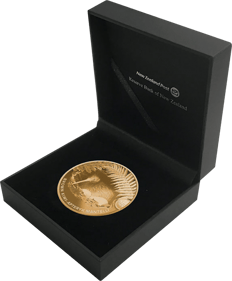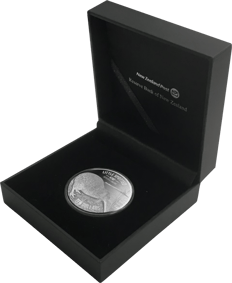
1 oz Silver Kiwi 2025 (Mintage: 2,500 | Proof)
£141.97
excl. UK import VAT and shipping
Available in 2–3 business days

 More than 300,000
 Over 30 years
 Secure shipping
 Google: 4.9/5
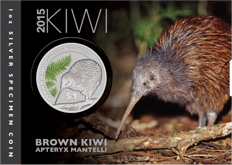
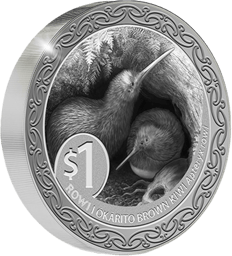
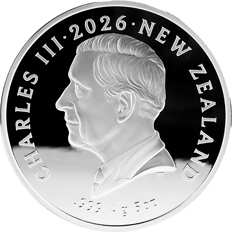
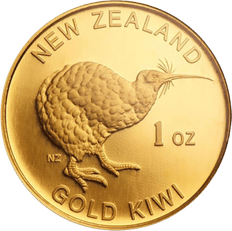
The kiwi bird is one of the symbols of New Zealand. The flightless bird is depicted on the reverse of every Silver Kiwi coin. The design changes slightly each year, primarily in the background. The collector's coin from the New Zealand Mint is offered in limited mintage and could therefore still have enormous upside potential.


Five species of kiwi live in New Zealand: brown kiwi, roroa, little spotted kiwi, rowi and tokoeka, according to the Department of Conservation. The brown kiwi (Apteryx mantelli) is nocturnal: by day it rests in a burrow, a hollow tree or log, or under thick vegetation, and comes out shortly after nightfall, according to New Zealand Birds Online. The chapters show five things that make the kiwi what it is.

According to Martin and colleagues, only in the kiwi do the nostrils, the openings of the nose, lie near the tip of the upper bill; in all other birds they open near the base of the bill or inside, on the palate. Cunningham’s team compared the bill tip of the brown kiwi with those of four species that also probe in the ground. Only in the kiwi were the openings at the front, on average 4.3 to 7.1 mm behind the tip of the bill bone.
About 2.5 mm behind the tip of the bill bone, individual sensory pits branch off from two canals for nerves, left and right. In them sit touch receptors (Herbst corpuscles), small sense organs for vibrations and differences in pressure in the ground: in tissue sections, on average 6.32 per pit were visible in the kiwi (38 pits from four birds), and 10.27 in the bar-tailed godwit (15 pits from one bird). Sandpipers, kiwi and ibises are only distantly related; their bill tips with sensory pits arose independently of one another.
The olfactory bulbs, the parts of the brain that process smells, are relatively larger in the brown kiwi than in all 55 other bird species that Corfield and colleagues compared. Whether the kiwi finds its food more by touch or by smell remains open.
The nares of kiwi were downward-facing and shielded dorsally by ‘curtains’ of keratin.
Diagram, not a measurement
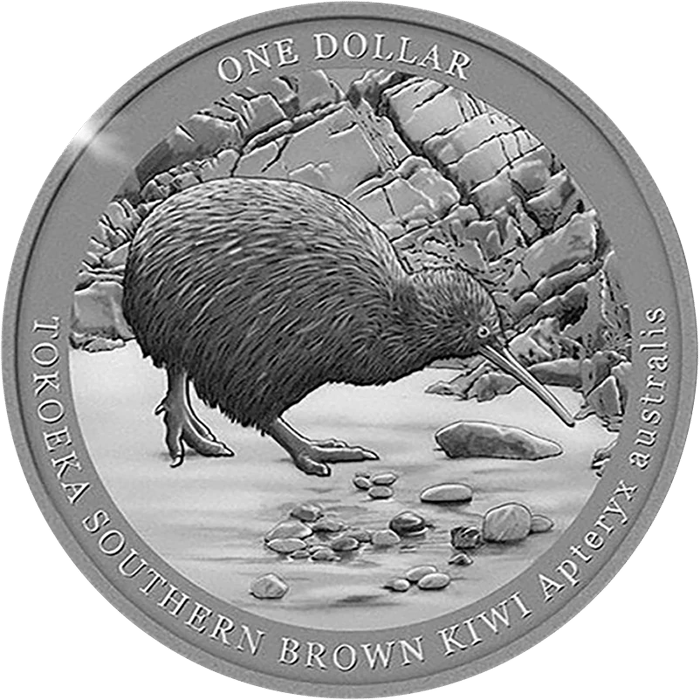
The coin shows a kiwi of the species tokoeka with its bill lowered, on a beach with scattered stones in front of rocks.
The eye of the brown kiwi is 7.0 mm across, measured on two eyes. For its body weight it is clearly smaller than expected from a comparison with 104 flying bird species. The visual field of each eye, the area it takes in at once, is 125° wide. The binocular field at the front, where both eyes see the same thing, is almost entirely missing, and behind the head lies a large area without sight. Martin’s team measured the visual fields on one brown kiwi and one bird of the species roroa.
The optic nerve, which carries the image to the brain, is 0.77 mm thick in the brown kiwi and 1.58 mm in the pigeon. Several genes for opsins, the visual pigments of colour vision, are switched off in the genome of the brown kiwi, likely only after the ancestor of today’s kiwi arrived in New Zealand, according to Le Duc and colleagues.
the bill falls at the very periphery of the visual field and the birds cannot see their own bill tip.
Head and bill from above; diagram, the angles are given in the text
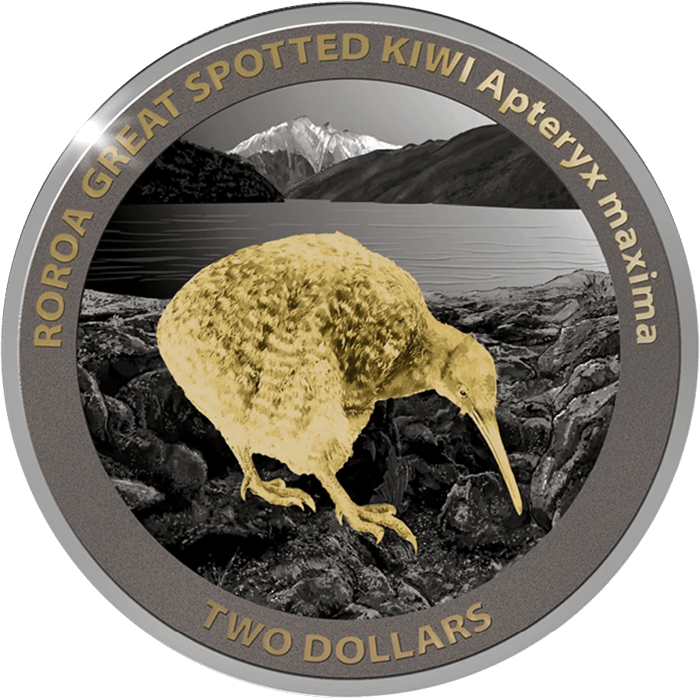
The coin shows a golden kiwi of the species roroa on dark rocks at the shore of a lake, with mountains behind it.
Kiwi lay very large eggs relative to their body weight. Vieco‑Galvez and colleagues measured how thick the shell is, the hard outer layer of the egg: on average 304.77 micrometres (thousandths of a millimetre) in the brown kiwi, 368.95 in the rowi and 383.96 in the tokoeka from the Haast mountains. The thickness seemed to follow the latitude, thinner in the northernmost species, thicker in the southernmost.
Abourachid, Castro and Provini found a strongly curved pelvis, the bones of the hip, a stiff tail and enlarged ribs in the brown kiwi and the little spotted kiwi. In a female carrying an egg, the egg sits on the belly side under the pelvis; in other birds it sits nearer the spine. In the 3D model of the incubation posture, the enlarged ribs could bear the weight of the bird when it rests on the large egg, in males and females alike. Despite the very long incubation, the embryo works as economically as the embryos of other birds, measured in the brown kiwi (Prinzinger and Dietz).
The eggshell of Apteryx is unusually thin and less porous than allometrically expected possibly as a compensation for a very long incubation period.
Diagram, not a measurement
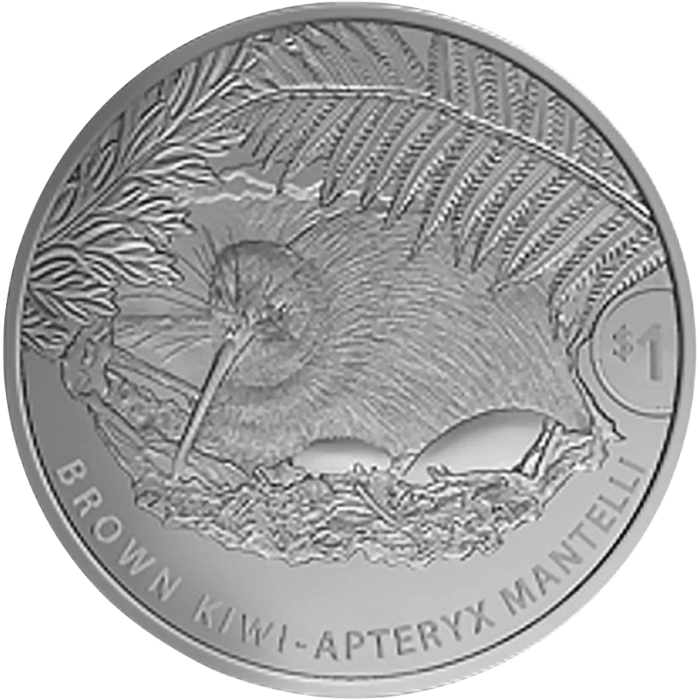
The coin shows a brown kiwi in a nest hollow, two eggs in the nesting material in front of it and a fern frond over it.
Kiwi hatch fully feathered. At about five days old the chicks leave the nest and look for food; they are never fed by their parents, and young kiwi take three to five years to reach full size, according to the Department of Conservation. They bring a reserve with them from the egg: the yolk is the store of food in the egg, and what is left of it at hatching is called the residual yolk.
In the brown kiwi, 48% of the yolk of the fresh egg is found again as residual yolk in the hatched chick; it can serve the chick as its sole source of energy and growth until at least 17 days after hatching.
Prinzinger and Dietz, measured in the brown kiwi (four eggs and chicks)
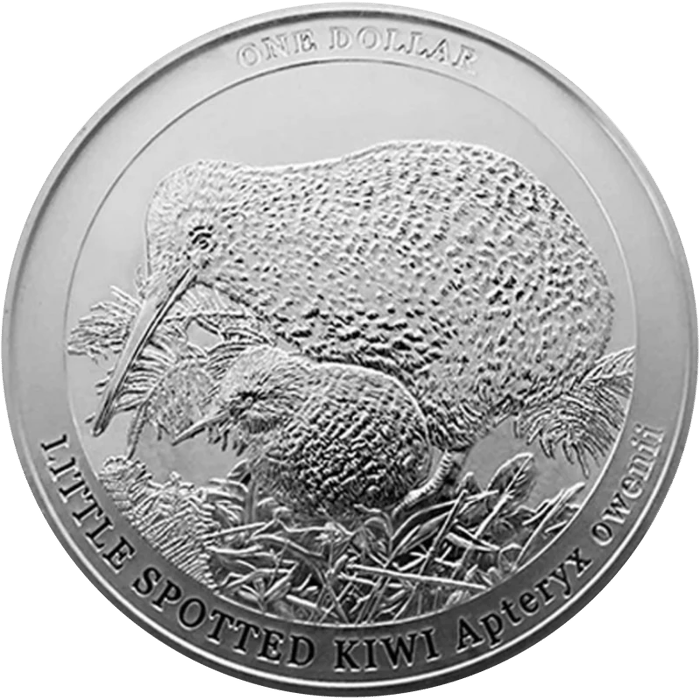
The coin shows a little spotted kiwi, a chick in front of it and grasses at the edge.
The closest relatives of today’s kiwi are the elephant birds of Madagascar; the moa, which lived in New Zealand, are related too, but not the closest, according to the Department of Conservation. Mitchell and colleagues found this in the mitochondrial genomes of two elephant birds. For the team, this argues against a separation of the lineages at the break-up of the supercontinent Gondwana, and for a spread by flight.

According to Grealy and colleagues, data from ancient DNA in eggshells point to a rapid splitting of the palaeognaths, the group to which kiwi and elephant birds belong, 69 to 52 million years ago, long after the break-up of Gondwana. According to Widrig and colleagues, a fossil breastbone supports the view that at least some early relatives of today’s palaeognaths could fly far. In digital casts of the braincase of two species of elephant bird, Torres and Clarke found very small visual centres, as in the kiwi; they interpret this as a sign of a life at night.
For the elephant bird Vorombe titan, Hansford and Turvey give a mean body weight of almost 650 kg. Brown kiwi, roroa, rowi and tokoeka weigh at most 2.0 to 3.0 kg, depending on species and sex (Vieco‑Galvez and colleagues).
Roroa1 ounce (31.1 g) silver1 ounce silverThe nostrils near the bill tip, the small eye and the body around a large egg set the kiwi apart from other birds; added to these are a chick with its own reserve and relatives that lived on Madagascar. Most of this was measured in the brown kiwi, and some things, such as the question of touch or smell, are still open.
 Kiwi
Stay informed with product launches, financial news and exclusive offers. Sign up for our free newsletter today.
By entering your email address and clicking the "Submit" button, you give the following consent: "I agree to be informed by email about new products, financial news and exclusive offers, and therefore consent to the processing of my email address for the purpose of sending the newsletter. I can revoke this consent at any time without giving reasons, with effect for the future. The lawfulness of processing carried out prior to revocation remains unaffected."