





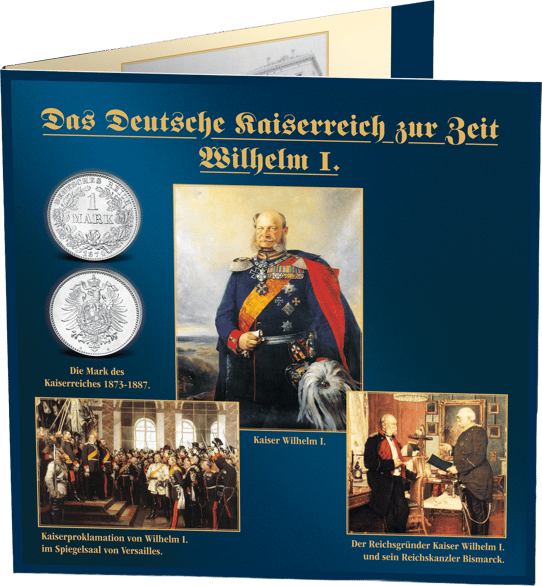


Coin Set of the Imperial Era under Wilhelm I. (1871-1888)
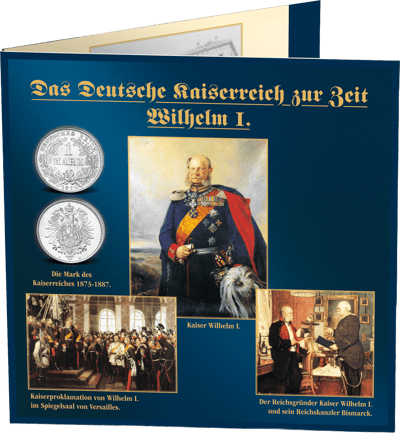

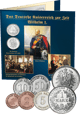












- Originals: money from the founding of the Empire
- Three metals: from Pfennig to Mark
- Blister card: with historical images
- OriginalsSix genuine coins of the first common German currency
- Three metalsBronze, copper-nickel and 900 silver united in one set
- Blister cardWith paintings of the Imperial Proclamation and Chancellor Bismarck
 Price alert
  Share
Share
Originals from the German Empire · Wilhelm I
What a mark had to bear

Value, year, imperial eagle and a letter for the mint: all of this was laid down by law. The set brings together six coins from 1 pfennig to 1 mark on one card.
What the law prescribes
Value, year, eagle and a letter
For the mark and the smaller coins, the coinage act of 1873 laid down what they bear:
“bear on one side the statement of value, the year and the inscription ‘Deutsches Reich’, on the other side the imperial eagle and the mint mark”
The coins from 1 mark down to 1 pfennig were the same throughout the Reich.
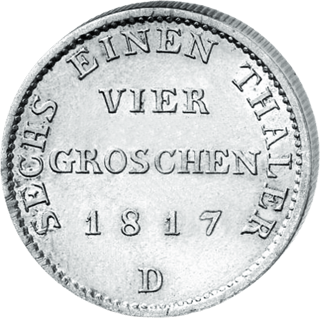
Before the mark
By law: a sixth of a thaler, half a mark
The coinage act of 1873 had silver coins of German stamp worth a sixth of a thaler accepted as half a mark, and those worth a third of a thaler as one mark.
The gold of the mark
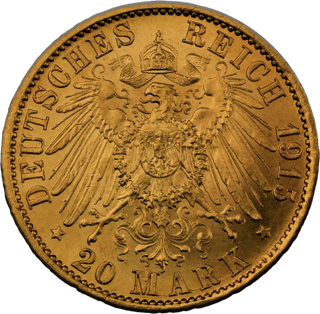
The gold of the German Empire
Twenty and ten marks in gold, 900/1,000: a twenty-mark piece weighs 7.96 grams, of which 7.17 grams is fine gold.

The mark in silver
The silver mark in the hand
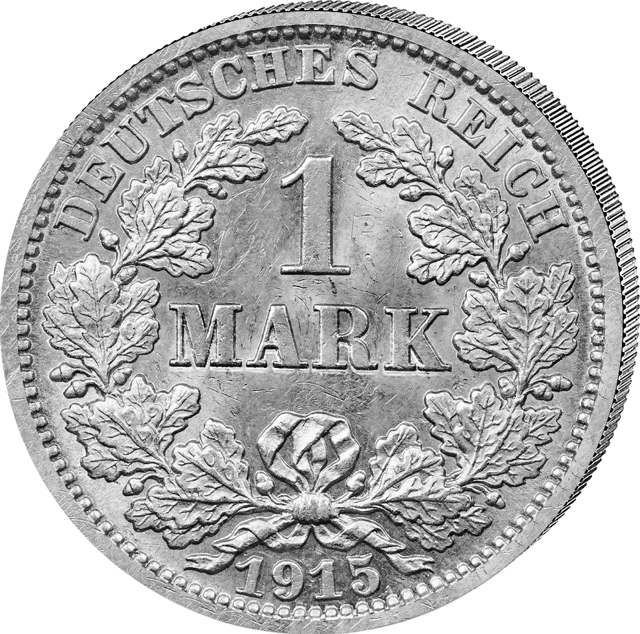
For silver coins, the coinage act of 1873 prescribed pieces of five, two and one mark, and of fifty and twenty pfennig. One pound of fine silver was to yield 100 one-mark pieces, so a mark holds 5 grams of fine silver.
“No one is obliged to accept imperial silver coins in amounts of more than twenty marks …”
Meaning: no one had to accept silver coins for amounts over 20 marks.
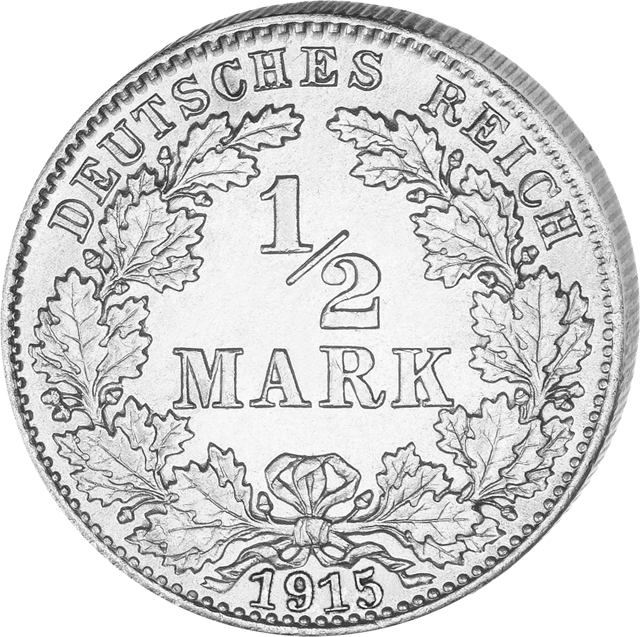
In the law the half mark is called the fifty-pfennig piece: 400 pieces from one kilogram of fine silver, so 2.5 grams of silver per piece.
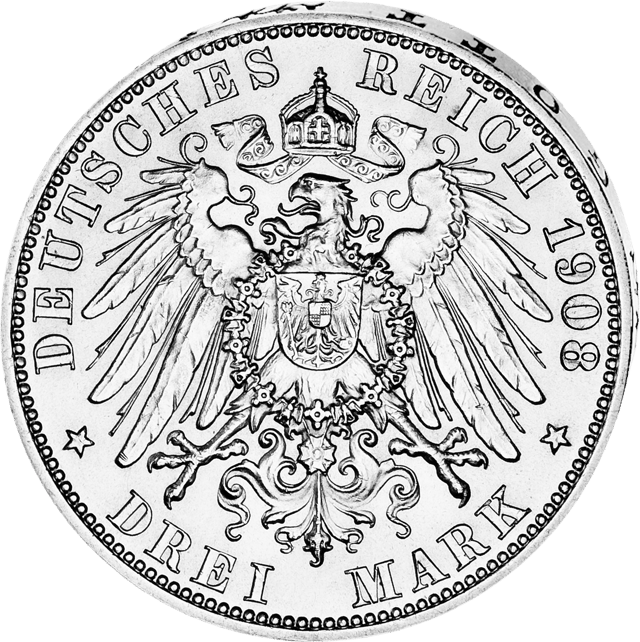
The three-mark piece exists since a law of 1908. It took the place of the Vereinsthaler, prohibited since 1907, and holds 15 grams of fine silver.
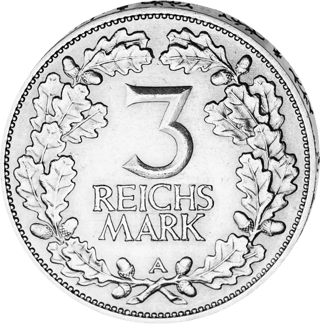
Rentenmark and Reichsmark
The Reichsmark from 1924
The coinage act of 30 August 1924 introduced the Reichsmark; in October 1924 it came into circulation alongside the Rentenmark, one to one.
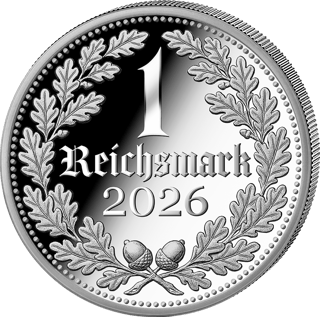
Our strikes
What our strikes take up
Our strikes bear the lettering 1 Reichsmark or 1 Mark in an oak wreath. They are newly struck, no Reichsmark of the past and no legal tender of the Reich.
At a glance
- Type
- Set of originals
- Era
- German Empire
- Ruler
- Wilhelm I
- Number of pieces
- 6 pieces
- Contents
- 1 mark, 50, 10, 5, 2 and 1 pfennig
- Packaging
- Blister card
Details from our product data, the coinage acts and the photo. The year and mint mark of your piece may differ from the photo.

Original and new strike
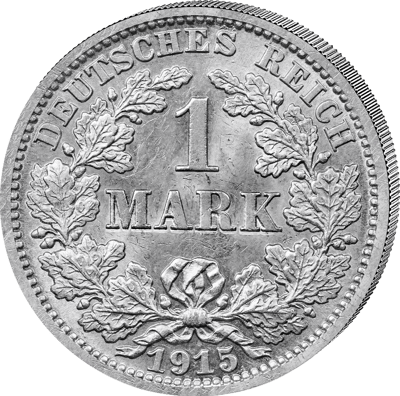
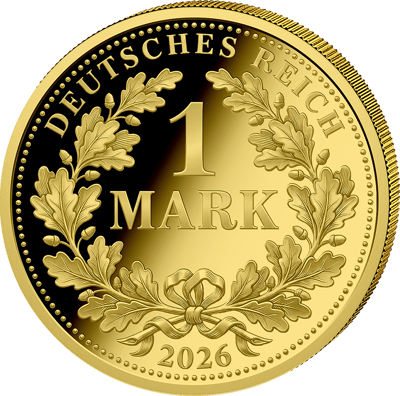
On the left a mark from the German Empire, on the right our strike of 1/200 ounce of fine gold, which takes up DEUTSCHES REICH and 1 MARK in an oak wreath.
One was money throughout the Reich, the other is newly struck: two pieces, one image.
Coin Set of the Imperial Era under Wilhelm I. – six originals from a founding epoch
With this set, you hold a tangible piece of German history in your hands: six original circulation coins from the reign of Kaiser Wilhelm I. (1871–1888), the founder of the Empire and first German Emperor, who was also King of Prussia. Minted on the basis of the Imperial Coinage Acts of 1871 and 1873, these pieces document the birth of the first common German currency in Mark and Pfennig – a milestone in German economic history.
These six coins await you
The set brings together the complete range of small change from that era – from reddish copper to bright copper-nickel to fine silver:
1 Pfennig – bronze, 2.0 g, 17.5 mm (Jaeger 1)
2 Pfennig – bronze, 3.33 g, 20 mm (Jaeger 2)
5 Pfennig – copper-nickel, 2.5 g, 18 mm (Jaeger 3)
10 Pfennig – copper-nickel, 4.0 g, 21 mm (Jaeger 4)
50 Pfennig – 900 silver, 2.78 g, 20 mm (Jaeger 7/8)
1 Mark – 900 silver, 5.56 g, 24 mm, with oak wreath (Jaeger 9)
All denominations bear the inscription "DEUTSCHES REICH" on the value side, along with the respective face value and year of issue, while the reverse features the majestic imperial eagle. The early strikes of this era show the small eagle with a large breast shield – a typical distinguishing feature of the years under Wilhelm I., which was not replaced by the larger eagle until 1891. The depicted years of issue, such as 1874 and 1876, take you directly back to the early days of the young Empire.
An Empire on the rise
Following the founding of the German Empire in 1871, the Mark created a unified currency for all of Germany for the first time, overcoming the patchwork of numerous regional currencies. The small denominations from 1 Pfennig to 1 Mark were the everyday money – the money of the "common man" at the weekly market as well as in the counting house. Unlike the gold and silver coins of the individual federal states, they were designed uniformly across the Empire and bore no ruler's portrait, only the imperial eagle. Thus these pieces passed through countless hands – in an era when Germany rose to become an industrial nation and inventions such as the automobile changed the world.
Gold is humanity's oldest currency and has outlasted all others – yet even the simple circulation and silver coins of the Empire tell of trust in lasting values.
For collectors and lovers of history
This circulated ware comes in authentic, used condition – each coin bears the traces of decades of circulation and thus a piece of lived history. Conditions and years of issue naturally vary, which is what gives each set its individual character. The ensemble is delivered decoratively on a high-quality blister card, designed with historical images and background information on the era of Kaiser Wilhelm I. and Chancellor Bismarck.
Why this set convinces
Six original coins from the era of the Empire's founder Wilhelm I.
Three metals united: bronze, copper-nickel and 900 silver
Tangible evidence of German monetary and economic history
Ideal introduction to the popular collecting field of the German Empire
A wonderful gift idea for numismatists and history enthusiasts
Whether as the foundation of a collection or as a tangible memento of a formative era – this coin set combines historical appeal with the quiet, enduring value of genuine precious metals. Secure an authentic testament to the German Imperial era, bundling the fascination of an entire epoch into just six coins.
Product depiction may differ from the final product.
