





Gold Fanam Ancient India (1600-1750 | Gold of the Maharajas)
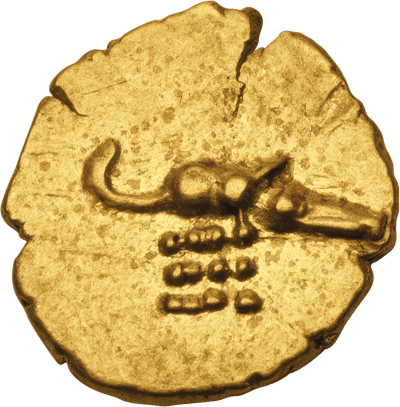
- Gold Investment: value follows gold price
- Historic Money: once in circulation
- Certified: genuine original
- Gold InvestmentIts value is based on gold and follows the gold price
- Historic MoneyKingdoms like Mysore and Calicut had it minted
- CertifiedEvery piece comes with a certificate of authenticity







- Gold Investment: value follows gold price
- Historic Money: once in circulation
- Certified: genuine original
 Price alert
 Share

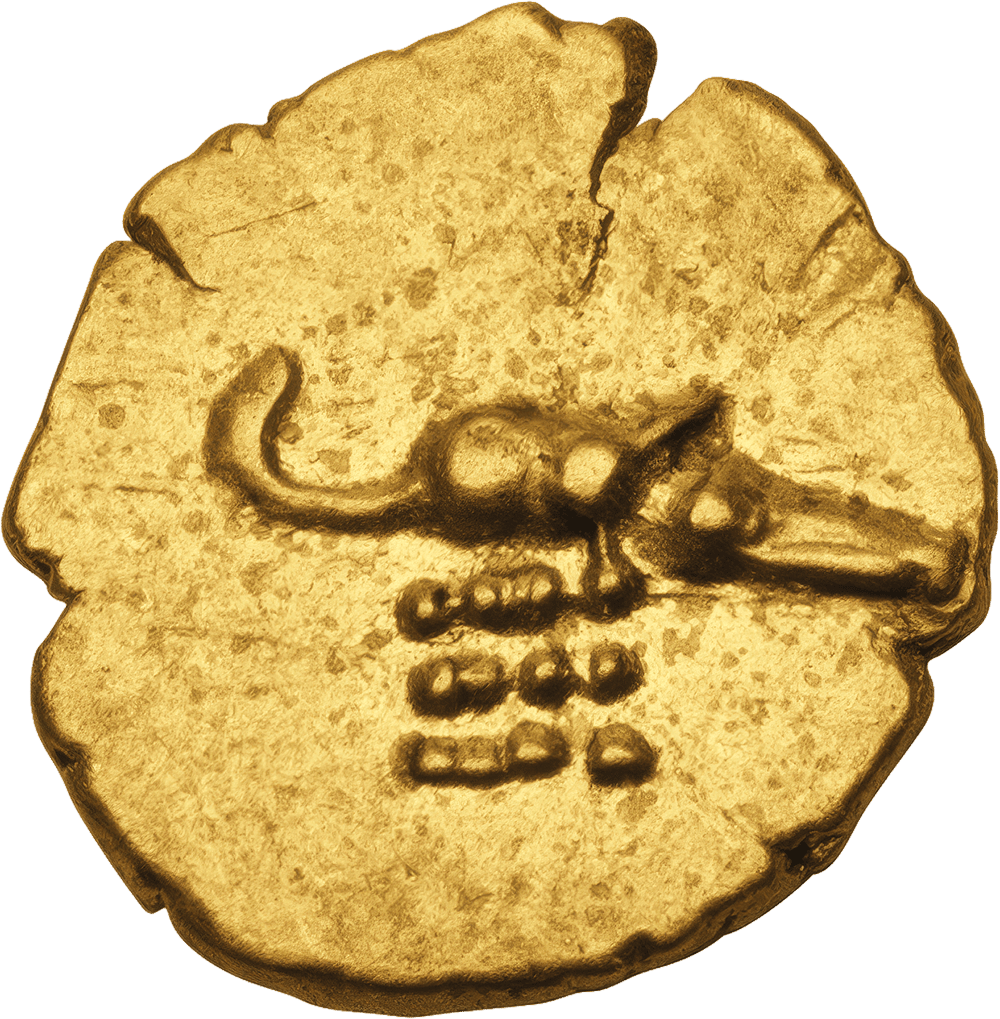
South India
The gold fanam.Gold from the kingdoms of South India.
Struck between 1600 and 1750 at the mints of South Indian kingdoms. In the money of these lands the fanam was a fraction of the gold pagoda.
- Age
- over 250 years
- Coin
- Fanam, gold
- Weight
- 0.3 g
Struck between 1600 and 1750 at the mints of South Indian kingdoms. In the money of these lands the fanam was a fraction of the gold pagoda.
- Age
- over 250 years
- Coin
- Fanam, gold
- Weight
- 0.3 g

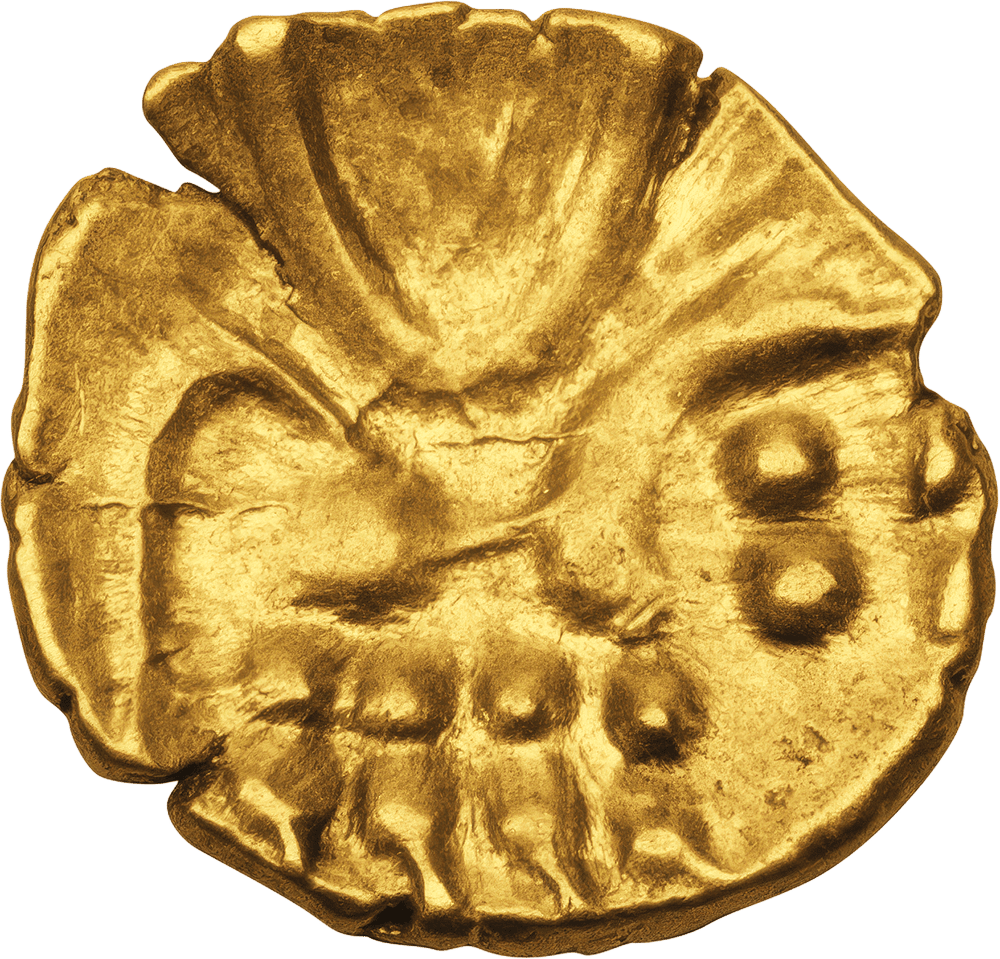
The other side
Rings, dots and a fan.
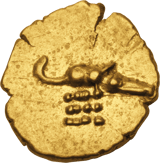
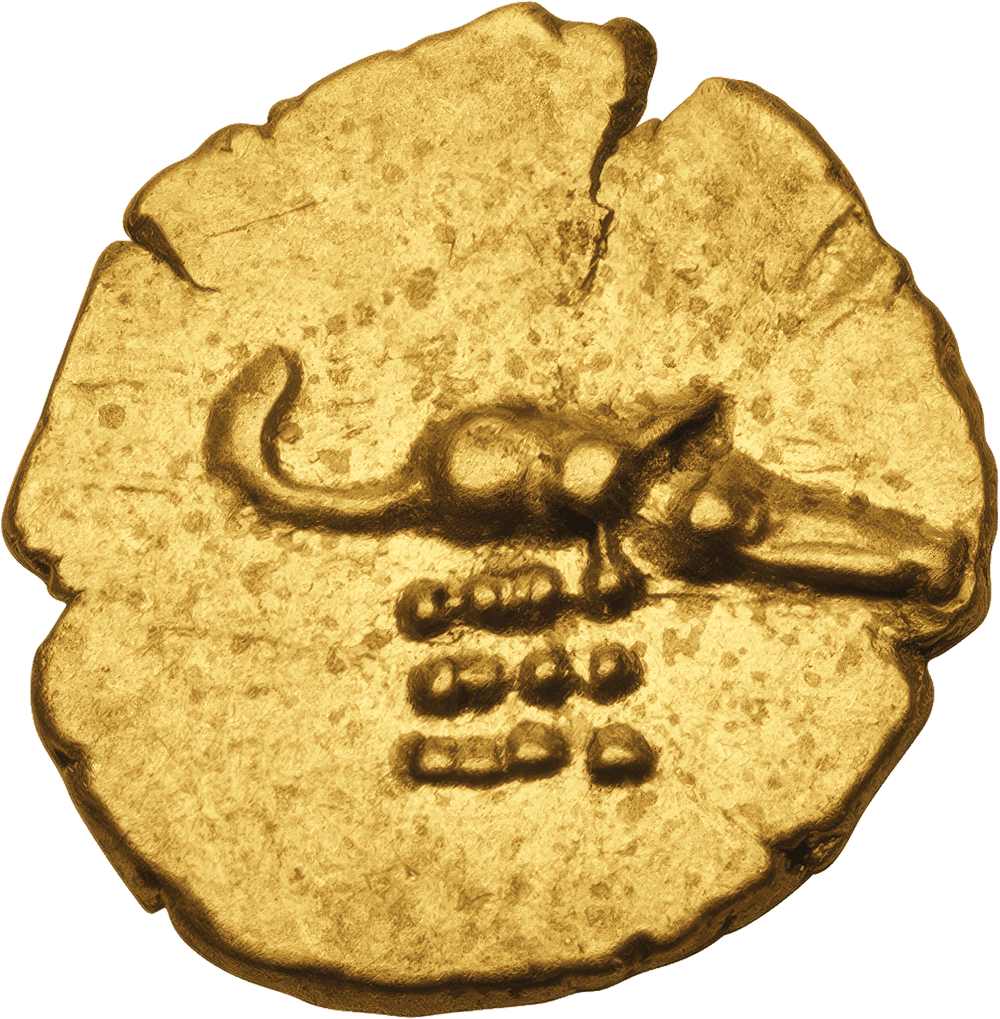
One side shows an animal figure above 3 rows of dots, the other a fan, 2 rings with a dot and a row of dots. Every mint cut its own dies.
How much gold a fanam contains differs from mint to mint.

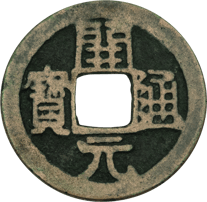
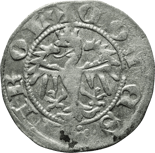

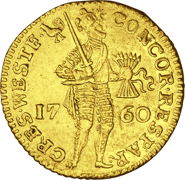
Size comparison
12 coins, one scale.
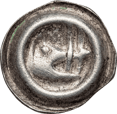
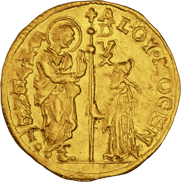
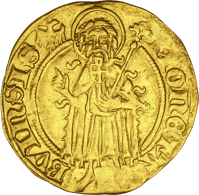
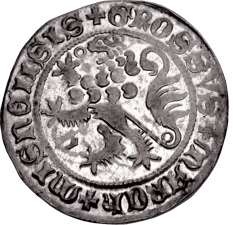
All 12 lie on the table in their true proportions, the oldest on the left. Your piece measures 8 mm.
- Cash coin24 mm · 2.6 g
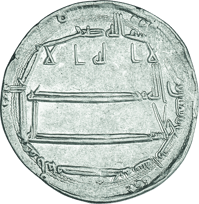
- Dirham23 mm · 2.9 g
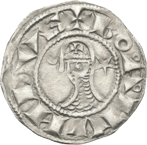
- Denier17 mm · 0.83 g
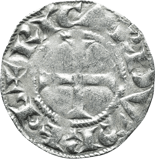
- Denier of Poitou18 mm · 1 g
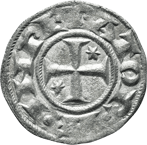
- Denier of Sicily17 mm · 0.7 g
- Bracteate13.5 mm · 0.2 g
- Zecchino21 mm · 3.5 g
- Gold gulden23 mm · 3.9 g
- Prince’s groschen27 mm · 2.85 g
- Kreuzer18 mm · 0.7 g
- Gold fanam8 mm · 0.3 gthis page
- Trade ducat21.4 mm · 3.5 g
The heaviest piece is not the widest: the gold gulden weighs almost twenty times as much as the bracteate and is still narrower than the groschen. Gold is almost twice as dense as silver.
Timeline
From 621 to 1797.
Each bar shows the years from which the pieces of a type come. For the zecchino that is 468 years, for the prince’s groschen only 13.
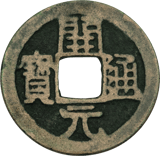 Tang dynasty621 to 907
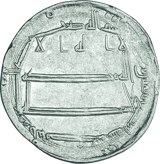 Abbasid caliphate8th and 9th centuries
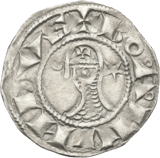 Principality of Antioch1163 to 1232
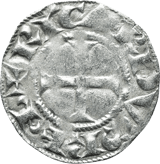 County of Poitou1189 to 1196
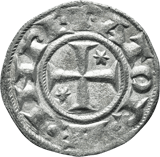 Kingdom of Sicily1194 to 1197
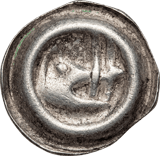 Town of Schweidnitz14th and 15th centuries
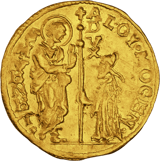 Republic of Venice1329 to 1797
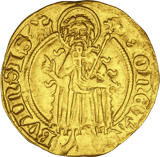 Electorate of Cologne1371 to 1463
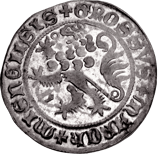 House of Wettin1393 to 1406
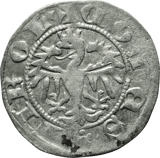 Tyrolfrom 1477
 South India1600 to 1750 · Your piece
 United Provinces1739 to 1794

12 coins.Over 1,100 years.
From 621 to 1797 and from China to the North Sea: every one of these coins was money that people paid with.
Fanam from Ancient India – the Coinage of the Maharajas
- Design: Stylised, almost abstract animal figures, usually interpreted as a boar and a lion, along with rows of dots and curved lines. Each piece was hand-struck, which is why the image sits slightly differently on every coin.
- Material / Fineness: Genuine gold in historical coin alloy. The fineness varies depending on the mint and period of minting, with a gross weight of around 0.3 grams.
- Producer: India. The pieces were struck at various mints of the South Indian kingdoms, roughly between 1600 and 1750.
- Dimensions and denomination: around 8 mm in diameter, denomination Fanam
- Condition: circulated specimen, a genuine, previously circulated original with certificate of authenticity
It holds history made of gold: for centuries, the Fanam was the small denomination coin used by the maharajas, merchants and temple towns of South India. With this piece, you hold genuine minted gold in your hand that already changed hands more than 250 years ago along the Malabar Coast and in the trading ports. This makes it well suited for starting a gold investment in very small steps.
The Smallest Coin Unit from the Gold Realm of South India
The gold Fanam is one of the oldest coin units of the Indian subcontinent. It was likely already minted in the 9th century, and on Ceylon, present-day Sri Lanka, since the 14th century. It was most widespread in the 16th century. In particular, the types from the Malabar Coast, first the Kaliyugaraman Fanam and later the Viraraya Fanam, soon circulated throughout South India. Their weight of 0.3 to 0.4 grams was derived from the seed of the Manjadi plant, a traditional unit of weight for gold.
Within the monetary system, the Fanam was a fraction of the golden pagoda. Kingdoms such as Mysore, Calicut, Cochin and Travancore had it minted. The European trading companies also adopted this proven denomination. In Madras, the rupee was fixed at 12 Fanam in 1791. Later issues, such as the Fanams of Tipu Sultan of Mysore, show how long these coins shaped the monetary system in the south.
Genuine Gold Instead of a Mere Souvenir: Its Investment Character
This Fanam is not a souvenir, it is a physical gold investment. Its substance is the precious metal it contains, and its value is determined by the gold price. Gold is humanity's oldest currency. It has outlived kingdoms, dynasties and countless paper currencies. This trust lives on in every gold coin.
- Preservation of value: For thousands of years, gold has been regarded as a reliable inflation hedge.
- Stability in turbulent times: Physical gold is a tangible asset without counterparty risk and thus a proven crisis hedge.
- Building wealth in small steps: Even small amounts of gold add up over the years to a considerable fortune.
- Tradability: Gold is traded worldwide and can be sold again at any time.
Fanam or Modern Small Bar?
A 1-gram gold bar has a uniform fineness of 999.9/1,000 and a precisely defined weight. The Fanam is different: it is made of a historical gold alloy whose fineness varies depending on its origin. In return, it offers something a bar does not have, namely genuine money that was in circulation for centuries. Many investors therefore combine both: bars for standardised fine gold, together with a historical means of payment from the era of the maharajas.
Condition: Traces of Centuries
These pieces are circulated means of payment and bear corresponding traces: darker patina, individual centring, nicks, wear and, in some cases, weaker areas of the legend. This is precisely what makes them appealing. Since the year of minting, mint and reverse variant can differ, the specimen supplied will differ from the image shown – you receive an original, not a mass-produced product.
Please therefore understand that the image in the shop is expressly a sample image and may differ individually from the item delivered in terms of appearance and condition due to historical circumstances. A certificate of authenticity is included with every piece.
Give the Gift of a Genuine Gold Investment
Whether for a christening, a birthday or a wedding: give the gift of genuine gold with history. Even on a personal occasion, you are acquiring here full-value gold whose value is based on the gold price. Today, as 300 years ago, this metal stands for permanence, and that is something you can pass on in the truest sense of the word.
Hand-struck in the realm of the maharajas, passed down through generations, and today a building block for your wealth in gold.
Product image may differ from the actual product.
