





Trade Ducat Kingdom of the Netherlands (1739-1794 | Golden Age)
- Living History: a genuine one-of-a-kind piece
- World Currency: crossed the oceans
- Knight Design: barely changed since 1586
- Living HistoryOriginal strike from the old Republic with its own journey
- World CurrencyMinted for merchants between Amsterdam and Batavia
- Knight DesignArmored knight with seven arrows for the provinces







- Living History: a genuine one-of-a-kind piece
- World Currency: crossed the oceans
- Knight Design: barely changed since 1586
 Price alert
 Share

United Provinces
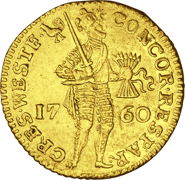
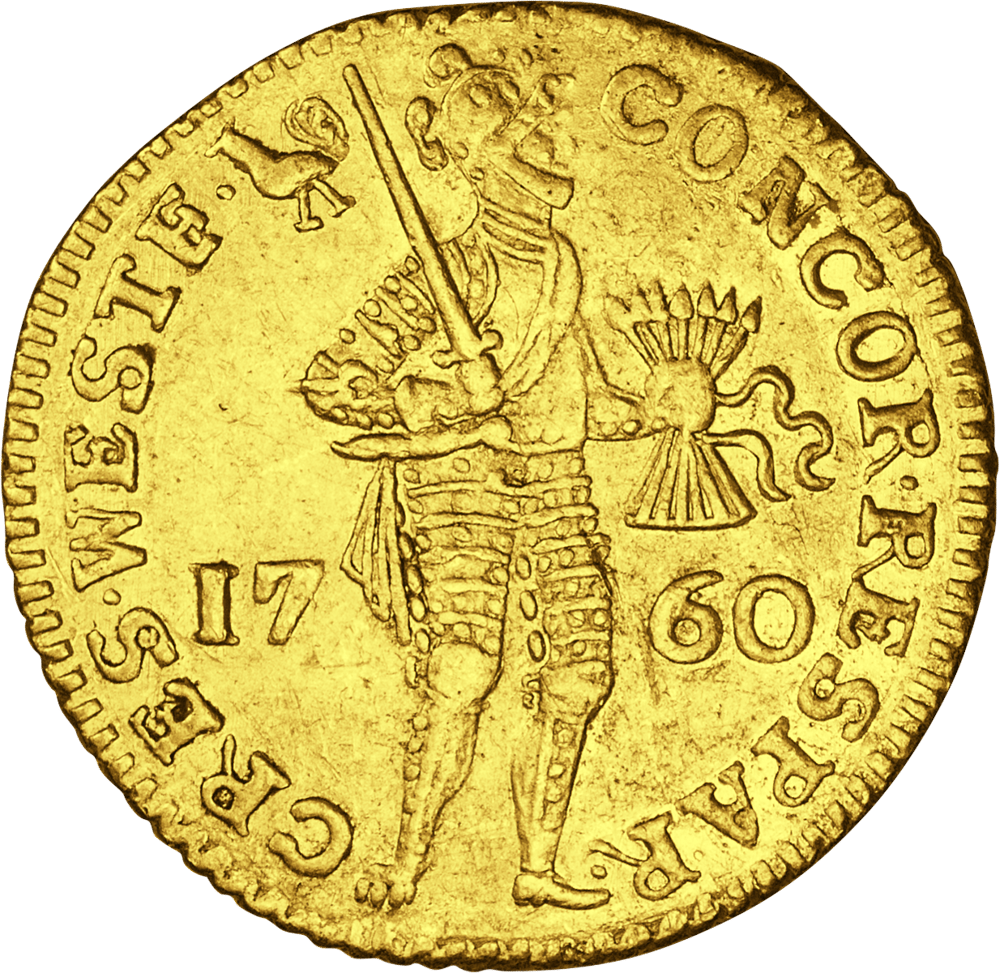
The trade ducat.A knight in gold for the voyage to Batavia.
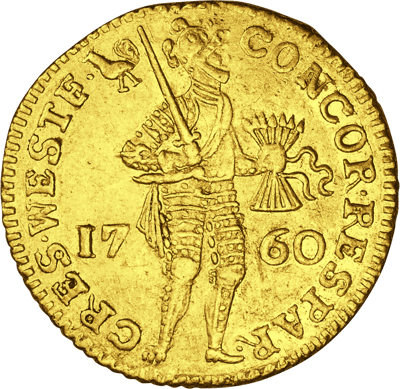
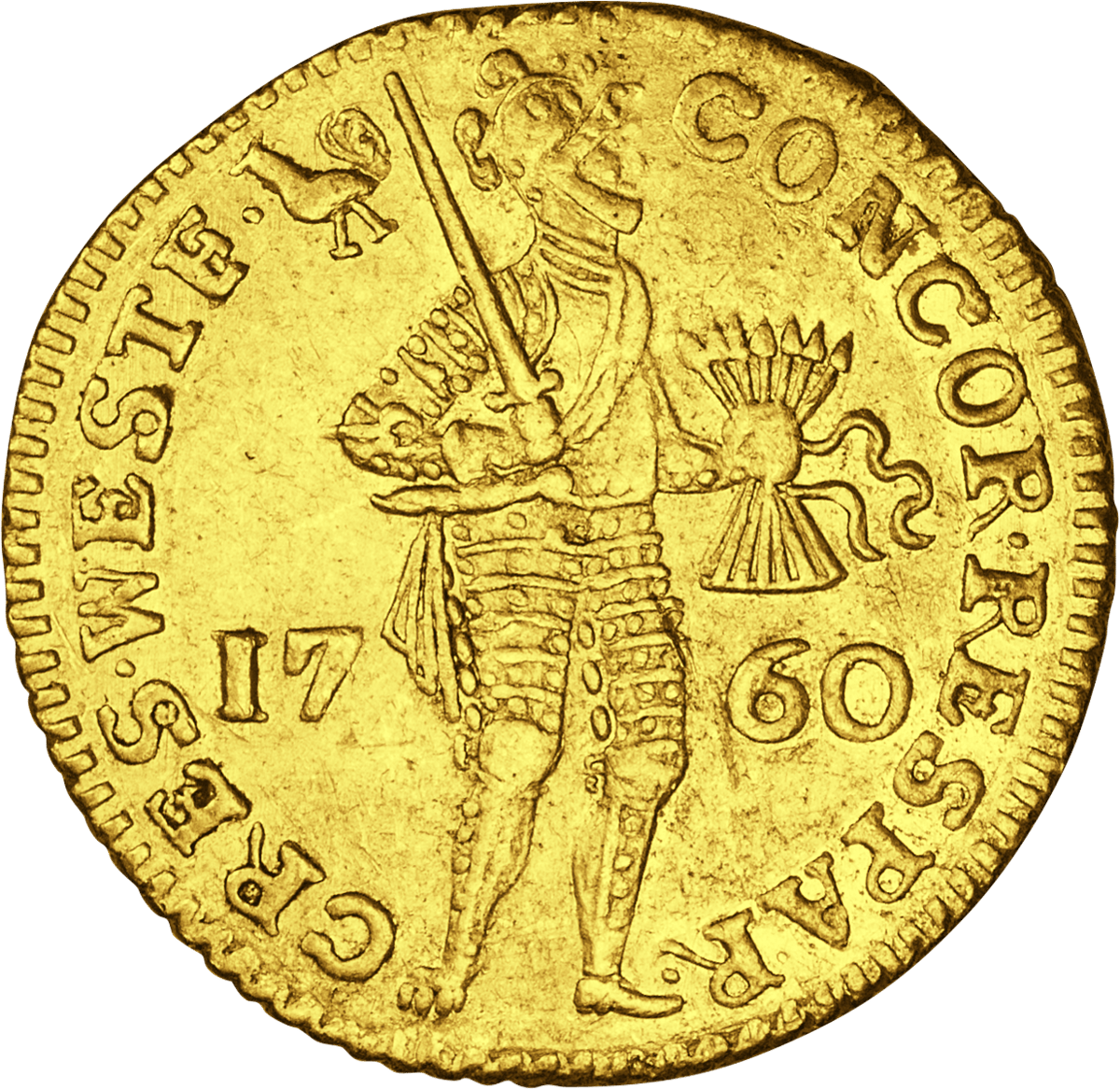
The knight holds a sword and a bundle of arrows, around him runs, abbreviated, CONCORDIA RES PARVAE CRESCUNT: through unity small things grow. The image dates from 1586, and the ducat weighs 3.5 g at 986/1,000.
- Age
- over 200 years
- Coin
- Ducat, gold
- Weight
- 3.5 g
The knight holds a sword and a bundle of arrows, around him runs, abbreviated, CONCORDIA RES PARVAE CRESCUNT: through unity small things grow. The image dates from 1586, and the ducat weighs 3.5 g at 986/1,000.
- Age
- over 200 years
- Coin
- Ducat, gold
- Weight
- 3.5 g

The other side
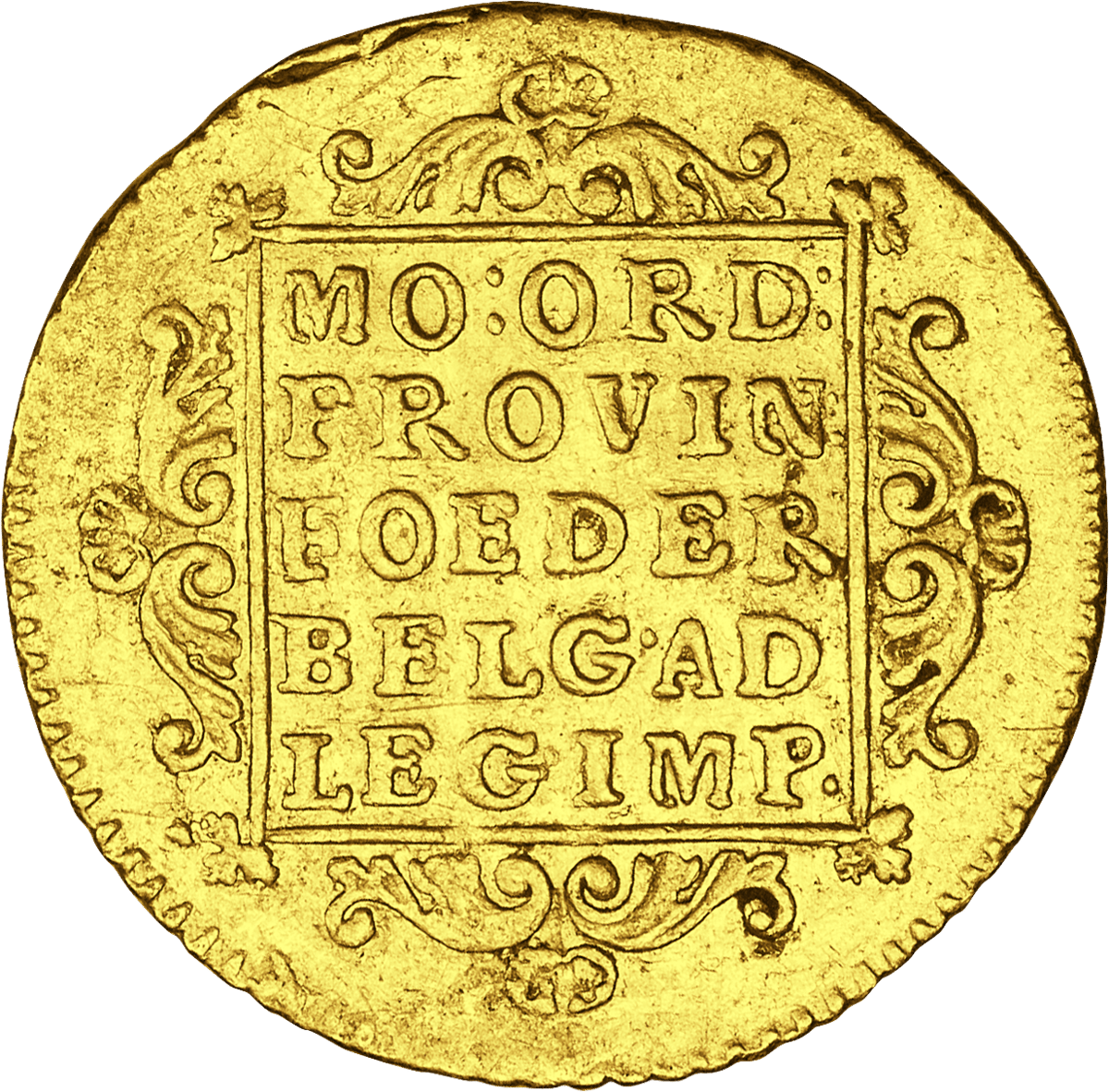
The inscription tablet in 5 lines.
MO ORD PROVIN FOEDER BELG AD LEG IMP: coin of the States of the United Provinces of the Netherlands according to the law of the Empire. The ducat was struck by the provinces of the republic.
The piece shown bears the date 1760 and the mark WESTF for West Friesland.

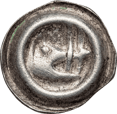
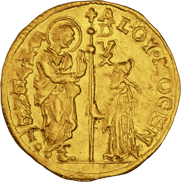
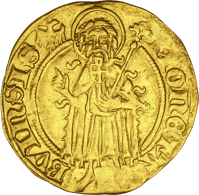
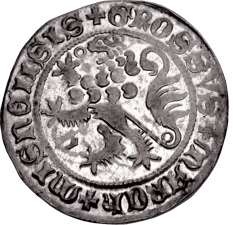

Size comparison
12 coins, one scale.
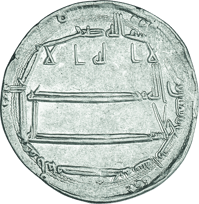
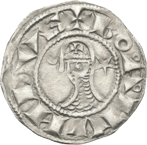
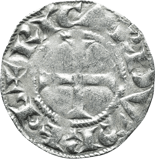
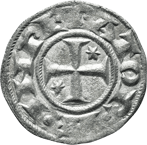
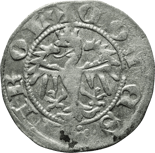
All 12 lie on the table in their true proportions, the oldest on the left. Your piece measures 21.4 mm.
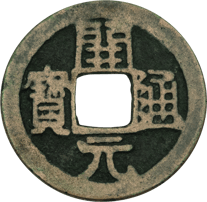
- Cash coin24 mm · 2.6 g
- Dirham23 mm · 2.9 g
- Denier17 mm · 0.83 g
- Denier of Poitou18 mm · 1 g
- Denier of Sicily17 mm · 0.7 g
- Bracteate13.5 mm · 0.2 g
- Zecchino21 mm · 3.5 g
- Gold gulden23 mm · 3.9 g
- Prince’s groschen27 mm · 2.85 g
- Kreuzer18 mm · 0.7 g
- Gold fanam8 mm · 0.3 g
- Trade ducat21.4 mm · 3.5 gthis page
The heaviest piece is not the widest: the gold gulden weighs almost twenty times as much as the bracteate and is still narrower than the groschen. Gold is almost twice as dense as silver.
Timeline
From 621 to 1797.
Each bar shows the years from which the pieces of a type come. For the zecchino that is 468 years, for the prince’s groschen only 13.
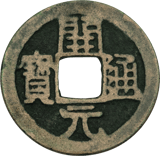 Tang dynasty621 to 907
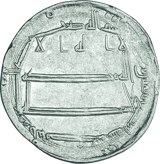 Abbasid caliphate8th and 9th centuries
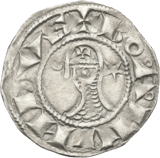 Principality of Antioch1163 to 1232
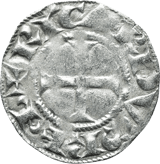 County of Poitou1189 to 1196
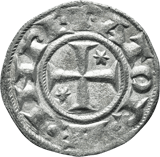 Kingdom of Sicily1194 to 1197
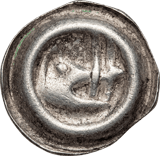 Town of Schweidnitz14th and 15th centuries
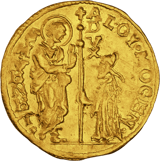 Republic of Venice1329 to 1797
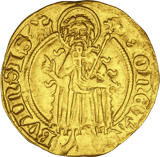 Electorate of Cologne1371 to 1463
 House of Wettin1393 to 1406
 Tyrolfrom 1477
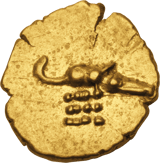 South India1600 to 1750
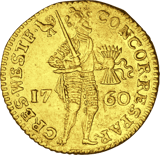 United Provinces1739 to 1794 · Your piece

12 coins.Over 1,100 years.
From 621 to 1797 and from China to the North Sea: every one of these coins was money that people paid with.
The Knight's Ducat: World Currency of the Dutch Merchants
- Design: An armoured knight with a shouldered sword and a bundle of seven arrows, symbolising the seven United Provinces. The reverse bears a Latin inscription within an elaborately ornamented square. This coin design has remained almost unchanged since 1586.
- Material / Fineness: High-quality gold with a fineness of 986/1,000. With a gross weight of 3.50 g, each ducat contains 3.45 g of pure fine gold, and the diameter is 21.4 mm.
- Mint: The provincial mints of the Republic of the Seven United Netherlands, such as Holland, West Frisia or Utrecht. The country of origin is therefore clearly the Netherlands.
- Period & Condition: Original strikes from the years 1739 to 1794. The year of issue and grade of preservation vary, and you receive genuine circulated coins with history.
Whoever holds this trade ducat in their hand is holding a piece of world trade history. It was minted in the 18th century for merchants, shipowners and banking houses between Amsterdam and Batavia, and it crossed oceans. Among all historical gold coins, the Dutch ducat enjoys a special reputation. Hardly any other coin was so well known and so universally accepted in the trading ports of the world.
A Design that Has Endured for Centuries
On the obverse stands the knight, sword in his right hand and the bundle of arrows in his left. The legend gives an abbreviated version of the young Republic's motto (in our example image CONCOR·RES·PAR·CRES): CONCORDIA RES PARVAE CRESCUNT. At the end of the legend, a few letters reveal the origin: HOL stands for the province of Holland, WESTF for West Frisia, and TRA for Utrecht. The year is shown to the left and right of the knight; in our example image this is 1760 with the abbreviation WESTF.
"Concordia res parvae crescunt" – Through unity, small things grow. A motto that could hardly suit a gold ducat of such great impact any better.
The reverse shows a square framed by ornaments bearing the inscription MO. ORD. PROVIN. FOEDER. BELG. AD LEG. IMP. Written out in full, this means: Coin of the Estates of the United Netherlandish Provinces according to the law of the Empire. From 1749 onwards, the ducats from Holland and West Frisia were additionally given a reeded edge, which effectively protected against clipping.
A Trade Ducat in the Glow of the Golden Age
Amsterdam was the trading centre of Europe during the Golden Age. The Dutch East India Company (VOC), founded in 1602, needed a reliable gold coin of consistent quality for this purpose. This role was taken on by the Knight's Ducat, which was minted with a constant weight and fineness over generations.
Production reached its peak in the 18th century. The VOC required enormous quantities for trade with Asia. The ducat was so sought after that the mint in St. Petersburg struck it in the Dutch type for many decades, with the correct weight and fineness. There is hardly a greater compliment for a trade coin. With the end of the old Republic and the founding of the Batavian Republic in 1795, the period of this issue comes to a close. The design itself continues to be minted to this day and is considered one of the oldest unchanged coin designs in the world.
Small Denomination, Great Protection for Your Wealth
3.45 g of fine gold is a flexible unit. This is precisely where the strength of the ducat lies. It is ideally suited as a medium of exchange in times of crisis, since individual gold pieces allow wealth to be divided, sold off gradually, or deployed selectively, without having to break up an entire large ounce.
Gold is the world's oldest currency and has been a proven store of value for over 6,000 years. Even in ancient Egypt it served as a unit of measure for trade. It has never had a value of zero, because it possesses intrinsic worth. Fiat money is printed and controlled by central banks, whereas the supply of gold remains limited. This is why it is rightly regarded as an inflation hedge and a safeguard against currency risks. It is also telling that central banks themselves are among the largest holders of gold in the world. Not without reason is gold called the money of God.
As crisis protection, the trade ducat offers additional security in times of political and economic uncertainty, entirely independent of trust in governments or banks.
- Globally known: The Dutch ducat was traded internationally for centuries and remains a familiar name among connoisseurs to this day.
- Flexible to use: Its denomination makes partial sales easier and makes it well suited as a medium of exchange.
- Tax-attractive: In Germany, profits from the sale of physical gold are generally tax-free after a holding period of at least one year.
- Double appeal: The material value of the gold meets over 230 years of coin history.
- For generations: Gold is durable, retains its physical properties, and is excellently suited for passing on within the family.
Netherlands or Austria: Comparing the Ducat
The obvious comparison is the Austrian 1 Ducat. This well-known restrike of the former trade gold coin always bears the year 1915 and shows the portrait of the Austrian Emperor Franz Joseph I on the obverse. With a fineness of 986/1,000, it has the same fineness, with a gross weight of 3.4909 g, around 3.44 g of fine gold, and a diameter of 19.75 mm. It trades close to its gold value and appeals above all to investors who want to purchase material specifically.
With an almost identical gold content, the Dutch Knight's Ducat offers something no restrike can provide: it is a genuine witness to the 18th century. Because it is circulated coinage, signs of wear and grades of preservation can vary from piece to piece. For many collectors, this is exactly what makes it appealing, since every coin is a unique piece with its own history.
For Investors and Collectors Alike
Whether as an addition to your provisions, as a stylish gift, or as a first step into the world of historical ducats: this gold ducat combines lasting value and history in a single coin. Gold is the big brother of little silver. It has shone for millennia and will never lose this shine. With the trade ducat from the Netherlands, you bring home a piece of this shine and the Golden Age of seafarers.
Product image may differ from the actual product.
